



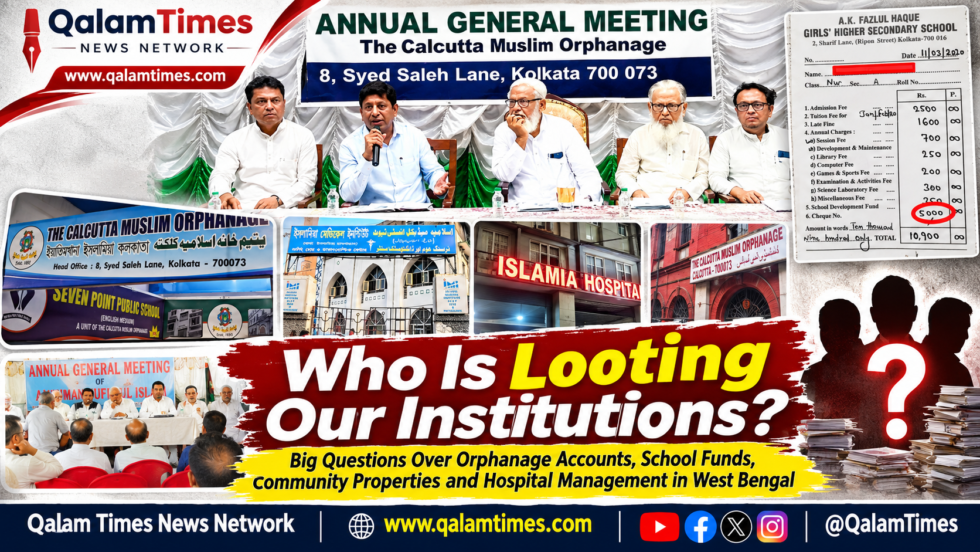
Muslim Institutional Accountability is under scrutiny in West Bengal as questions grow over orphanage accounts, school development funds, community properties, hospital facilities and influential management circles.
— Is a Powerful Circle Looting the Trust of West Bengal’s Urdu-Speaking Muslim Community and Institutions?
By Dr. Mohammad Farooque
Qalam Times News Network | Kolkata | November 3, 2026
There is something deeply shameful about a community being unable to demand proper accounts from institutions it built with its own money. There is something even more disturbing when parents are asked to contribute towards school development, donors are encouraged to support charitable organisations, poor families depend on orphanages and patients look towards community hospitals—yet basic questions about finances, properties and administration remain unanswered.
Who gave a handful of office-bearers the right to behave as though these institutions belong to them? Who authorised anyone to turn positions of public responsibility into permanent centres of personal influence? And why do the same familiar faces keep appearing around different institutions, committees and leadership platforms?
The condition of several Urdu-speaking Muslim institutions in West Bengal demands an uncomfortable public debate. The Calcutta Muslim Orphanage, A.K. Fazlul Haque School, Abul Hasan School, Islamia Hospital and Anjuman Mufidul Islam are not ordinary private establishments. They carry a collective history. They were built through the sacrifices, donations and aspirations of generations.
Yet serious questions are being raised about their financial transparency, property management, committee appointments and institutional performance.
Let us make one thing absolutely clear: a charitable institution is not a private kingdom. A committee position is not a licence to exercise unchecked power. Public donations are not personal money.
THE ORPHANAGE IS NOT ANYONE’S PERSONAL ESTATE
The recent AGM notice of the Calcutta Muslim Orphanage, dated October 10, 2026, scheduled its Annual General Meeting for November 1. The agenda included the annual report and audited accounts for 2024–25, the budget for 2026–27 and approval of six Managing Committee members for one year. But where are the answers to the questions being raised by members?
Why were the accounts for 2025–26 not placed before the AGM? Had the audit been completed? If not, what caused the delay? Were all eligible members informed in time? Were members given sufficient opportunity to examine the financial records?
An institution cannot demand public confidence while treating financial information as though it were a private document. The management must explain the position of the accounts, publish the relevant records in accordance with its rules and clarify how members were informed about the meeting. An AGM is not a private gathering for a selected group. It is the constitutional forum through which members exercise their rights. If members cannot obtain information, ask questions and scrutinise decisions, what purpose does the AGM serve?
₹5,000 FROM A PARENT — WHERE IS THE ACCOUNT?
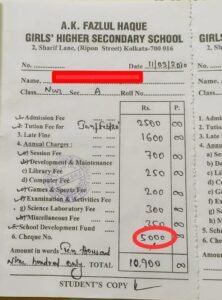
A fee receipt issued by A.K. Fazlul Haque Girls’ Higher Secondary School on March 11, 2020, records ₹5,000 under the School Development Fund. The total payment shown on the receipt is ₹10,900.
That is not a trivial amount for many families. Parents contribute because they believe their money will improve their children’s educational environment. Now the management must answer a straightforward question: where did the development money go? Allegations have been raised that substantial sums were collected from parents at A.K. Fazlul Haque School and Abul Hasan School over several years, reportedly since 2012. The total amount must be established through the actual collection records, receipts and bank statements. Why should parents have to chase school authorities to find out what happened to money collected in the name of building development?
The management should publish a complete year-wise statement showing:
- Total money collected from parents under the Building or Development Fund.
- The bank accounts into which the collections were deposited.
- The amount spent on construction, repairs and development.
- The remaining balance.
- The resolutions authorising the expenditure.
- The audited records supporting every major transaction.
There are also allegations that some funds may have been kept outside the accounts of the parent organisation or deposited into personal accounts. Such allegations must be investigated through bank records and independent audit. If any money was transferred to an individual account, the management must explain the authority, purpose and final accounting of that transaction. Parents are not ATMs. Schools are not collection centres for unexplained funds. A child’s education must never become an opportunity for financial opacity.
THE SAME FACES, THE SAME POSITIONS, THE SAME QUESTIONS
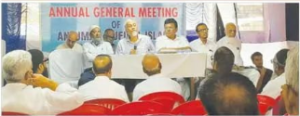

A question repeatedly heard in the community is why the same influential faces appear around so many different institutions. The issue is not that capable people should be prevented from serving more than one organisation. The issue is whether a small circle has gained disproportionate control over leadership, appointments and decision-making. Where are the opportunities for younger administrators, qualified professionals, independent accountants, educationists and genuinely committed community workers? Why should leadership appear inaccessible to ordinary members? Political connections, social influence and personal networks cannot be accepted as substitutes for competence and integrity. A person may hold several titles, attend numerous meetings and appear in every institutional photograph, but the real test is simple: what measurable improvement has been delivered?
How many students have benefited? How many patients have received treatment? How much money has been properly accounted for? How many properties have been protected? How many poor families have received assistance? The community needs performance, not personality cults.
ANJUMAN MUFIDUL ISLAM: NO INSTITUTION IS ABOVE ACCOUNTABILITY
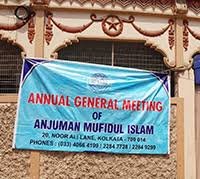
Anjuman Mufidul Islam is one of Kolkata’s historic Muslim charitable organisations. Its long association with education, welfare and social service deserves recognition. But history must not become a shield against scrutiny. An organisation with such a significant charitable responsibility must maintain transparent accounts, disclose its property position, explain its committee structure and make current annual reports accessible to its members and donors. The community must be able to understand how donations are received, where they are deposited, how funds are allocated and what services are being delivered. A historic name is not a substitute for present-day accountability. Past achievements cannot answer questions about current administration. If an institution belongs to the community, the community must be able to see how it is being managed.
75 PHEARS LANE: WHY ARE QUESTIONS STILL UNANSWERED?
The property at 75 Phears Lane has become another subject of public concern. Questions have been raised about why possession or handover has allegedly not taken place despite a court order. The management should publish the relevant court order, explain the current legal position and disclose the steps taken to implement it.
Who is responsible for following up the matter? What legal obstacles, if any, remain? What action has been taken to protect the institution’s interests? A charitable institution cannot afford administrative silence when valuable property is involved. Its members deserve facts, not rumours. Its assets must be protected through lawful action, not left surrounded by unanswered questions.
ISLAMIA HOSPITAL: INAUGURATIONS ARE NOT TREATMENT

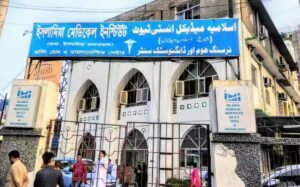
The concerns about Islamia Hospital are equally alarming. It has been alleged that the hospital’s newly installed Cath Lab is not functioning and is awaiting repair, affecting the admission and treatment of cardiac patients. If this is true, the administration must explain why a major medical facility is unavailable. When did the problem begin? What is the cost of repair? Who is responsible for maintenance? Was an appropriate maintenance or insurance arrangement in place? When will the service resume?
Patients do not need photographs of inaugurated equipment. They need functioning equipment, qualified staff and timely treatment. A hospital cannot claim success simply because it has modern machines. The real measure is whether those machines are available when a patient arrives in an emergency. If cardiac patients are being turned away or admissions are being affected because the Cath Lab is not operational, the administration must provide a clear explanation and immediate corrective plan. A non-functional medical facility is not a symbol of progress. It is a question that demands an answer.
WHO IS PROTECTING THE COMMUNITY’S MONEY?
This is the question that connects the entire controversy. The orphanage has members and donors. Schools have parents. Hospitals have patients and supporters. Charitable organisations have contributors and beneficiaries. All of them have a legitimate interest in knowing how the institutions are being managed.
Yet the public repeatedly encounters the same questions: Where are the accounts? Where are the property records? Who approved the expenditure? Who selected the office-bearers? Why are facilities not functioning? Why is information so difficult to obtain?
These are not attacks on Islam, charity or community institutions. They are demands to protect them. Indeed, those who genuinely respect these institutions should be the first to demand transparent administration.
THE COMMUNITY MUST STOP ACCEPTING EXCUSES
The following demands must now be placed before the respective managements:
- Publish the latest audited accounts and annual reports of the Calcutta Muslim Orphanage.
- Explain the absence of the 2025–26 accounts from the AGM agenda.
- Disclose all Building and Development Fund collections at A.K. Fazlul Haque School and Abul Hasan School since 2012.
- Provide bank statements and audited expenditure details for these funds.
- Publish a complete property register, including the legal position of 75 Phears Lane.
- Disclose the rules, resolutions and minutes governing trustee and committee appointments.
- Explain the present condition of Islamia Hospital’s Cath Lab and provide a definite restoration timeline.
- Make the latest accounts, property records and annual reports of Anjuman Mufidul Islam accessible to members and donors.
- Commission independent audits wherever serious financial questions remain unresolved.
- Introduce transparent management procedures so that institutional leadership does not become concentrated in a closed circle.
If the managements believe that the allegations are baseless, they should answer them with documents. If the records establish irregularities, the competent authorities should investigate and take lawful action.
THIS IS A WARNING, NOT A REQUEST FOR FAVOUR
The Urdu-speaking Muslim community of West Bengal must understand that its institutions will not survive on emotional speeches, religious slogans, political connections and ceremonial meetings alone. They need honest administration. They need professional management. They need transparent accounts. They need functioning schools and hospitals. They need leaders who understand that public money carries public responsibility. The people who built these institutions are no longer here to defend every brick and every rupee. The responsibility has passed to the present generation. We cannot allow the sacrifices of our elders to become an opportunity for anyone to accumulate influence without accountability.
No office-bearer is bigger than the institution. No committee is bigger than its constitution. No influential individual is above the law. And no charitable organisation can demand donations while refusing to answer legitimate questions about its finances. If these institutions are truly ours, why are we made to feel like outsiders when we ask for their accounts? Who controls them? Who benefits from them? Who answers for them? The community deserves answers. Not tomorrow. Not after another AGM. Not after another round of speeches.