




Sahida Fakir, a Bengal Muslim woman allegedly sent to Bangladesh as an “infiltrator”, remains separated from her husband and two sons as the NCM seeks Home Ministry action.
Qalam Times News Network
Kolkata, August 28, 2026
Sahida Fakir has been separated from her husband and two children for nearly a month after she was allegedly sent across the India-Bangladesh border following her detention in Navi Mumbai on suspicion of being a Bangladeshi “infiltrator”, despite her family producing several documents to establish her Indian identity.
Sahida Fakir, 40, originally belongs to West Bengal and is currently staying with a family in Satkhira, Bangladesh, according to her husband, Jumman Fakir. Her alleged deportation has left her family struggling to cope with her absence, while rights activists and minority-rights representatives have sought intervention from Indian authorities.
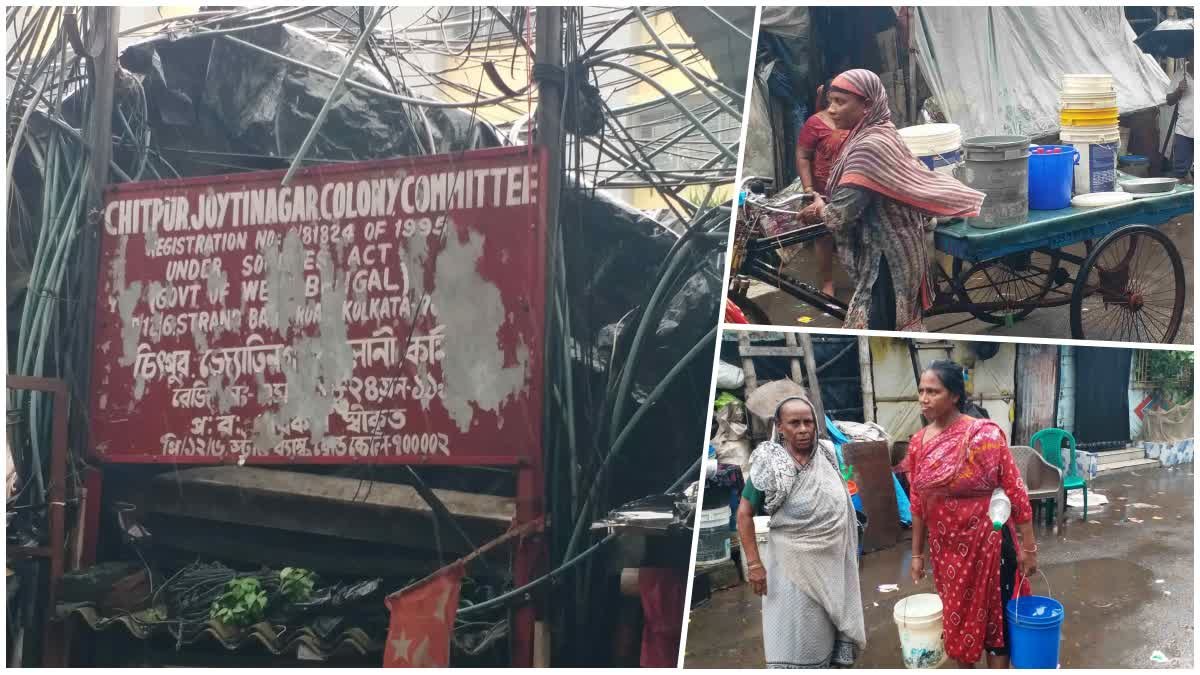
Jumman said the family has never visited Bangladesh and that the separation has placed an enormous emotional and practical burden on him and their two sons.
“It is getting really difficult without her to manage the home, kids and work,” Jumman said. “Every day I long for her and put the kids to sleep while answering their endless questions about why and where their mother is.”
Sahida Fakir Case: Husband Seeks Justice as Family Waits for Her Return
Before Sahida’s detention, Jumman said the couple shared household responsibilities, but she handled much of the daily care of their children. He now has to leave for work after completing household chores, preparing food, washing clothes and dishes, and getting the children ready for school.
He said that when he returned from work previously, Sahida would have food prepared and would have looked after the children after they came home from school.
“While I used to be at work, she used to take care of the kids after they returned home from school,” he said. “She used to keep the food ready before I arrived from work.”
The situation has become particularly difficult because there is no other family member available to care for the children during the afternoon.
Jumman said the boys have had to become self-reliant in ways they were never accustomed to. They sometimes prepare simple food themselves, including boiling eggs, and have occasionally burned their hands while doing so.
“We feel so helpless without her,” he said.
The uncertainty has also created fear in the household. Jumman said he worries that the authorities might similarly question the nationality of his children while he is away at work.
“When I am at work and the kids are at home, I am always worried about them,” he said. “What if the police also brand them as Bangladeshis and send them away in my absence? I am always in fear.”
For Jumman, the absence of his wife has changed the meaning of the place where his family lives.
“It doesn’t look like home anymore without her,” he said.
He repeatedly described it as merely a makaan—a house—rather than a ghar, a home made complete by the presence of a woman.
“Ye to makaan hai, ghar to aurat se hi banta hai,” he said.
The children, he added, keep asking when their mother will return. Their questions have become increasingly difficult because he himself does not know the answer.
“They understand the concept of country and nationality, but they fail to understand how anyone can be sent to any other country for no reason at all,” Jumman said.
He also said that the ordeal has deepened his appreciation for his wife and the work she performed every day.
“I always used to wonder how she manages everything single-handedly; now the amusement and respect have multiplied even more,” he said.
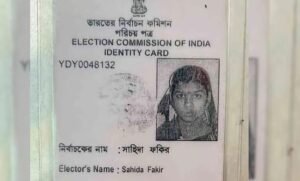
Jumman said he repeatedly approached the police after Sahida was detained in Navi Mumbai. According to him, he produced documents including records that he believed established her Indian identity and citizenship.
He said the family was initially told that Sahida would be released within a few days. Instead, after repeatedly waiting for her release, the family was informed that she had been sent to Bangladesh.
Jumman said police officials dismissed the documents submitted by the family as forged.
“If all these documents can be forged to prove citizenship, then it is a question for the authorities: how can it happen in their presence?” he asked.
He also questioned why Sahida alone was being treated as a Bangladeshi when her siblings and other relatives are Indian.
“I even told them that if she is a Bangladeshi, how are all her siblings and relatives Indian?” he said. “They should send everyone to Bangladesh. Why only her?”
According to Jumman, the Navi Mumbai police allegedly told him that they were showing “mercy” to Sahida’s relatives and siblings, whom the police also allegedly described as Bangladeshis.
Jumman questioned why the same consideration was not extended to his wife.
“Then why can’t they show mercy to Sahida?” he asked. “Why was she sent to a country unknown to her?”
According to the account provided by her husband and earlier reporting on the matter, Sahida was taken to Assam and allegedly pushed across the border into Bangladesh along with a group of people.
She eventually reached Satkhira, where she is now staying with a local family. Jumman said Sahida told him that she had walked for around eight hours through muddy fields after allegedly being sent across the border.
She has reportedly remained under observation by Bangladeshi authorities. Jumman said Sahida told him that the Border Guard Bangladesh (BGB) was monitoring her movements and activities.
She has managed to speak to her husband by telephone two or three times since reaching Bangladesh.
According to Jumman, Sahida said local police had repeatedly asked her to leave and were also monitoring her along with the BGB.
She has also reportedly been warned that if India does not take her back, she could face detention or custody in Bangladesh for allegedly entering the country illegally.
The situation has left Jumman uncertain about how he can bring his wife home.
“I am thinking of approaching the High Court but don’t have enough money,” he said.
The case has drawn the attention of human-rights groups and activists in West Bengal.
The West Bengal Migrant Labourer Unity Forum, also known as Parijayee Shramik Aikya Mancha, along with residents of Gobindapur in North 24 Parganas—identified as the ancestral village of Sahida’s father—has sought intervention from authorities at different levels.
Banglar Manabadhikar Suraksha Mancha (MASUM) has also approached the Calcutta High Court. The rights organisation has alleged that Sahida was illegally arrested and arbitrarily detained before being branded a Bangladeshi despite the documentary evidence cited by her family.
On August 11, human-rights defender and former Delhi Minority Commission adviser Mohammad Saddam Mujeeb filed complaints before the National Commission for Minorities (NCM) and the National Human Rights Commission (NHRC), seeking intervention, an inquiry and protection of Sahida’s rights.
The complaints called for scrutiny of the circumstances surrounding Sahida’s detention and removal, examination of the documents submitted by her family, and determination of the legal basis on which she was allegedly sent to Bangladesh.
Mujeeb also urged authorities to consider steps that could facilitate Sahida’s safe return to India, subject to lawful verification of her nationality.
A significant development came on August 24, 2026, when the National Commission for Minorities wrote to the Secretary of the Ministry of Home Affairs, Government of India, seeking the ministry’s attention to the matter and appropriate action.
The letter, seen by Maktoob, referred to the complaint concerning Sahida and requested the concerned authorities to take appropriate action.
Mujeeb described the NCM’s intervention as an important development, particularly because the case raises questions concerning due process, personal liberty, minority rights, family separation and the lawful determination of nationality.
He said his complaint had asked the commission to obtain a detailed report from the authorities concerned, examine Sahida’s documentary evidence, determine the legal basis of her removal and consider appropriate measures for her safe return, subject to verification of her nationality.
“I welcome the NCM’s intervention and hope that the concerned authorities will now conduct a prompt, transparent and substantive examination of the matter,” Mujeeb said.
He added that he would continue pursuing the case through lawful and institutional channels.
“Every citizen is entitled to due process, and every family deserves justice,” he said.
For Jumman and his two sons, however, the issue remains painfully personal. Every evening, he returns from work to a house that no longer feels like the home it once was, while his children continue asking when their mother will come back. For now, he has no answer.