




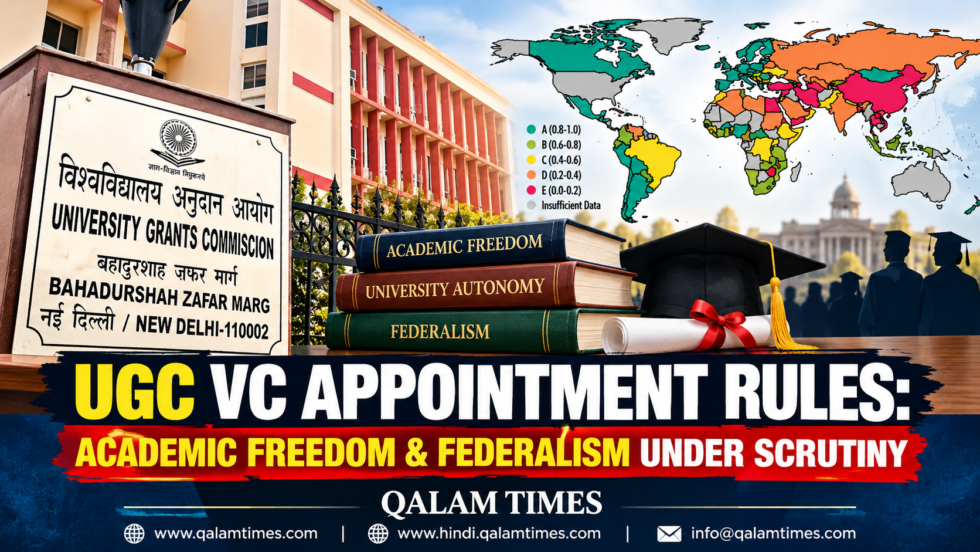
UGC VC Appointment Rules spark debate over academic freedom, university autonomy, federalism and the role of state governments in vice-chancellor appointments.
By Dr. Mohammad Farooque
Qalam Times News Network
Kolkata | October 13, 2026
The UGC VC Appointment Rules have sparked a debate over university autonomy, academic freedom and the constitutional division of powers between the Union and state governments. The University Grants Commission’s draft regulations on the appointment and promotion of teachers and academic staff, released in 2025, propose changes to the selection process for vice-chancellors (VCs). Critics argue that the proposed framework could increase central influence over university administration and reduce the role of state governments.

The controversy has revived concerns about the future of higher education in India, where education falls under the Concurrent List of the Constitution. Under this arrangement, both the Union and state governments have legislative powers in the field, making cooperation between them essential.
The UGC VC Appointment Rules have also raised questions about how university leadership should be selected, who should exercise authority over the process, and how institutions can preserve their independence from political and administrative interference.
Concerns Over University Autonomy and Constitutional Balance
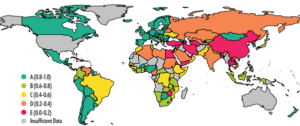
One of the main criticisms of the draft regulations is that they could weaken the role of state governments and university governing bodies in vice-chancellor appointments. Critics fear that a more centralised selection framework may overlook the distinct academic, linguistic and cultural needs of individual states and institutions.
Another contentious issue concerns eligibility for the post of vice-chancellor. According to the document, the proposed framework broadens the pool of eligible candidates beyond conventional academic backgrounds. Opponents argue that university leadership requires substantial knowledge of teaching, research and academic administration, and that appointments should prioritise professional competence rather than political or ideological considerations.
The debate also has a legal dimension. Critics question whether the UGC’s statutory authority under the University Grants Commission Act, 1956, extends to prescribing appointment procedures that may conflict with state university laws. The document refers to judicial decisions, including Kalyani Mathivanan v. K.V. Jeyaraj (2015), in discussions about the applicability of UGC regulations to state universities.
State governments, academic groups and education experts have expressed concerns about the possible implications for federalism, institutional diversity and academic independence. Critics warn that excessive centralisation could weaken regional representation, restrict universities’ ability to respond to local needs and undermine confidence among teachers and students.
The wider debate is therefore about more than the appointment of vice-chancellors. It concerns the balance between national academic standards and the autonomy of universities, as well as the need to protect higher education from undue political influence. The outcome will have important implications for university governance and the relationship between the Union and state governments.