





Anjuman Mufidul Islam Accountability must remain central to its annual general meeting, with transparent reporting, meaningful member participation and clear answers about organisational performance.
Qalam Times News Network
Kolkata, October 27, 2026
An Annual General Meeting Is Not a Ceremony of Self-Congratulation
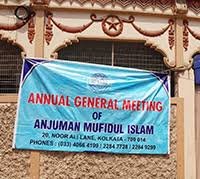
The annual general meeting of Anjuman Mufidul Islam raises an important question about the purpose of institutional governance: is an annual meeting genuinely an opportunity to examine performance and demand accountability, or does it risk becoming a formal occasion for celebrating continuity and reaffirming existing leadership?

An annual general meeting should never be reduced to a gathering where speeches are delivered, positions are acknowledged and the proceedings conclude without meaningful examination of the organisation’s work. Its fundamental purpose is to provide members with an opportunity to understand what the institution has accomplished, scrutinise its decisions, discuss its priorities and ask difficult but legitimate questions about its direction.
Anjuman Mufidul Islam Accountability must therefore be examined through the principles of transparency, member participation and responsible administration—not through ceremonial proceedings or declarations of organisational success alone.
The issue is not whether an organisation should acknowledge its achievements. Genuine achievements deserve recognition. The question is whether those achievements are supported by verifiable information and whether the meeting provides sufficient space to examine shortcomings, unresolved matters and future responsibilities.
An Annual Meeting Must Put Performance Before Praise
An organisation’s annual general meeting should begin with a serious examination of its record. Members should have an opportunity to review the activities undertaken during the reporting period, understand the progress made towards stated objectives and identify areas where further work is necessary. A report presented to members should communicate more than a list of events, meetings or announcements. It should explain what those activities achieved, whom they benefited and what remains unfinished. Where measurable outcomes are available, they should be presented clearly.
If an organisation has fulfilled its commitments, the evidence should demonstrate that. If certain objectives remain incomplete, members should be able to understand the reasons and discuss appropriate corrective measures.
Without this level of examination, an annual meeting risks becoming an exercise in presentation rather than accountability. Institutional continuity, by itself, does not establish institutional effectiveness.
Members Must Have the Freedom to Ask Difficult Questions
The members of an organisation are not merely an audience expected to listen to speeches and approve proceedings. Subject to the organisation’s constitution and applicable rules, they should have meaningful opportunities to raise questions, seek clarification and participate in discussions about institutional priorities.
Questions concerning administrative decisions, the implementation of resolutions, the use of organisational resources and the progress of programmes should be addressed through appropriate procedures.
Disagreement should not automatically be treated as disloyalty, nor should requests for clarification be dismissed simply because they make proceedings uncomfortable. Constructive criticism can help institutions identify weaknesses, improve their procedures and strengthen confidence among their members.
A meeting that allows questions but provides no substantive answers cannot fully serve the purpose of accountability. The quality of institutional governance depends not only on whether questions are permitted, but also on whether concerns are considered fairly and responses are provided transparently.
Financial Reporting and Constitutional Compliance Cannot Be Afterthoughts

Where applicable under the organisation’s governing documents and legal obligations, annual meetings should provide appropriate opportunities to examine financial statements, review administrative responsibilities and assess compliance with constitutional procedures.
Members should be able to understand the financial position of the organisation through the reports and disclosures to which they are entitled. Important decisions should follow established rules, and the process for selecting or confirming office-bearers should be conducted in accordance with the applicable constitution.
These safeguards are not optional decorations. They are essential elements of responsible institutional administration.
At the same time, questions about finances or procedural compliance should be addressed on the basis of documents and verifiable evidence. A demand for transparency is legitimate; an allegation of misconduct requires supporting evidence. Maintaining this distinction protects both members’ rights and the integrity of the institution.
Leadership Must Be Answerable for Commitments, Not Just Positions
The performance of an organisation cannot be assessed solely by the presence of its office-bearers or the continuity of its leadership. Positions carry responsibilities, and those responsibilities should be reflected in the organisation’s work. An annual general meeting provides an opportunity to examine whether stated objectives have been pursued, whether decisions have been implemented and whether the institution’s priorities remain relevant to its members. Where commitments have been fulfilled, the organisation should explain the results. Where progress has been limited, it should identify the challenges and outline the next steps. The central principle is straightforward: leadership should be accompanied by responsibility, and responsibility should be open to examination.
No organisation benefits in the long term from avoiding legitimate scrutiny. Clear reporting and honest discussion can strengthen institutional credibility, while unanswered questions can leave members uncertain about the decisions being made in their name.
The Real Measure of an Annual General Meeting
The significance of Anjuman Mufidul Islam‘s annual general meeting should ultimately be assessed through its documented proceedings, decisions and subsequent actions. Did the meeting provide members with meaningful opportunities to examine reports? Were important questions addressed? Were priorities clearly identified? Were decisions recorded and responsibilities established? Were relevant financial and administrative procedures followed?
These are the standards by which the effectiveness of an annual meeting can be evaluated. They are also reasonable questions for members to raise through the organisation’s established procedures. The available newspaper images do not, by themselves, establish whether these standards were met or breached at this particular meeting. That determination would require the minutes, reports, resolutions and other relevant records. The need for scrutiny, however, remains a valid principle of institutional governance.
Accountability Must Be the Purpose, Not the Slogan
An annual general meeting should leave members better informed about the organisation than they were before it began. It should clarify priorities, provide answers, document decisions and establish a basis for reviewing future performance.
If proceedings concentrate exclusively on speeches, praise and the reaffirmation of existing arrangements, the essential purpose of the meeting risks being overshadowed. If they encourage meaningful discussion, transparent reporting and examination of responsibilities, they can help strengthen the institution’s credibility.
The distinction matters because institutional trust is built through consistent conduct, not simply through formal declarations.
The message is clear: an annual general meeting must be more than a ceremony of self-congratulation. It must be a forum where performance is examined, questions are heard, decisions are explained and responsibilities are taken seriously.
For Anjuman Mufidul Islam, as for any organisation accountable to its members, the lasting significance of an annual meeting lies not in the praise expressed during the proceedings, but in the quality of the answers provided and the work that follows.