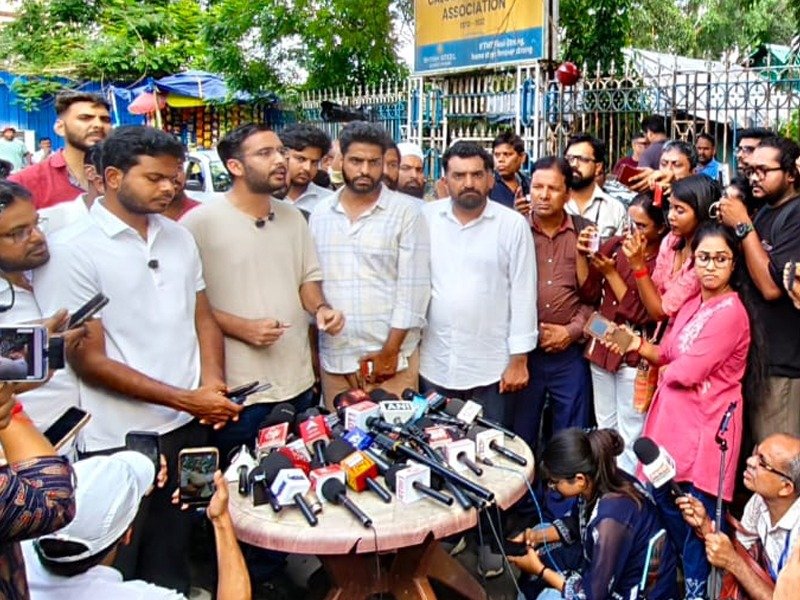





Leadership Accountability takes centre stage after the AIMPLB’s Jantar Mantar dharna was denied permission, raising questions about protest rights, planning, transparency and internal responsibility.
Qalam Times News Network Editorial
New Delhi | September 22, 2026
The cancellation of the All India Muslim Personal Law Board’s proposed dharna at Jantar Mantar has raised important questions about the right to peaceful protest. The Board described the decision as a restriction on democratic expression, while the Delhi Police cited concerns about the expected size of the gathering.

The authorities’ decision deserves public scrutiny. At the same time, leadership accountability requires the organisers to examine their own planning, communication and contingency arrangements. When supporters travel long distances for a national programme, they deserve clear communication and a realistic alternative if permission is withdrawn.

The controversy has also brought renewed attention to Abu Talib Rahmani. Journalist Samiullah Khan has raised questions about individuals associated with the wider circles of Muslim organisational leadership, and some have interpreted his comments as referring to Rahmani. These allegations, however, have not been independently established and should not be presented as proven facts.
That distinction is important. Serious allegations require serious evidence. At the same time, questions about the role and influence of an individual involved in an important representative organisation cannot simply be dismissed as personal attacks. If Rahmani has a significant role in organisational decision-making, the leadership should be prepared to clarify his formal responsibilities, authority and institutional position.
The larger issue is not one individual. It is whether a major community organisation has sufficient safeguards for transparency, consultation and internal accountability. An institution representing millions of people must have room for disagreement and criticism. Treating every internal critic as an opponent can weaken an organisation rather than strengthen it.
The same principle applies to allegations of infiltration, political influence or surveillance. Such claims should neither be blindly accepted nor casually ignored. They must be examined through evidence. Naming individuals without proof can cause serious harm, while ignoring credible concerns can damage institutional trust.
The Jantar Mantar episode therefore provides an opportunity for the AIMPLB to ask difficult but necessary questions: Who was responsible for negotiations with the authorities? Was the possibility of cancellation properly assessed? Were alternative arrangements considered? Were participants informed in time? And who takes responsibility when a major mobilisation does not proceed as announced?
These questions should not be treated as an attack on the institution. On the contrary, answering them openly could strengthen public confidence.
If the allegations concerning Abu Talib Rahmani are incorrect, they can be answered with facts. If they are based on misunderstanding, the misunderstanding can be corrected. And if genuine organisational concerns exist, they should be addressed through transparent institutional mechanisms.
The AIMPLB has every right to continue its constitutional campaign and articulate concerns about religious freedom, personal law and other issues. But the credibility of such a campaign also depends on the organisation’s own commitment to constitutional methods, transparency and accountability.
Leadership is not merely about holding a position; it is about accepting responsibility when decisions succeed—and when they fail.
The Jantar Mantar episode should therefore become more than a dispute over a cancelled protest. It should become an opportunity for greater transparency, stronger internal accountability and better organisational planning.
If Abu Talib Rahmani occupies an influential position, he too has an opportunity to address the questions raised about his role directly and factually. That would be far more constructive than allowing suspicion to grow in the absence of clear answers.
Ultimately, the ordinary supporter who travels hundreds of kilometres, contributes financially or places trust in an organisation has a legitimate right to ask difficult questions. Representative leadership must be strong enough to answer them.
A Clear Call for Transparency in Leadership
The present controversy demands more than statements and counter-statements. The AIMPLB should respond with clear, verifiable information about the planning of the Jantar Mantar programme, its communication with the authorities, the responsibilities of key organisers and the contingency measures considered after permission was withdrawn.
The same standard should apply to questions surrounding Abu Talib Rahmani. If he holds an influential position within the organisation, the leadership should clearly explain his formal role, responsibilities and involvement in important decisions. If the allegations made against him are incorrect, they should be addressed with facts and evidence rather than silence.
Transparency does not weaken an institution; it strengthens public confidence in it. An organisation that speaks in the name of constitutional rights, religious freedom and democratic participation must also demonstrate accountability within its own structure.
The AIMPLB should therefore consider making relevant organisational information available to its members and supporters, including the decision-making process behind major programmes, lines of responsibility and procedures for handling disagreements and complaints.
This is not a demand for personal attacks or public accusations. It is a demand for clarity, evidence and institutional accountability.
The ordinary supporter who travels hundreds of kilometres, contributes financially or places trust in the organisation deserves nothing less. The time has come for answers—not suspicion; transparency—not silence; and accountability—not personalities.