



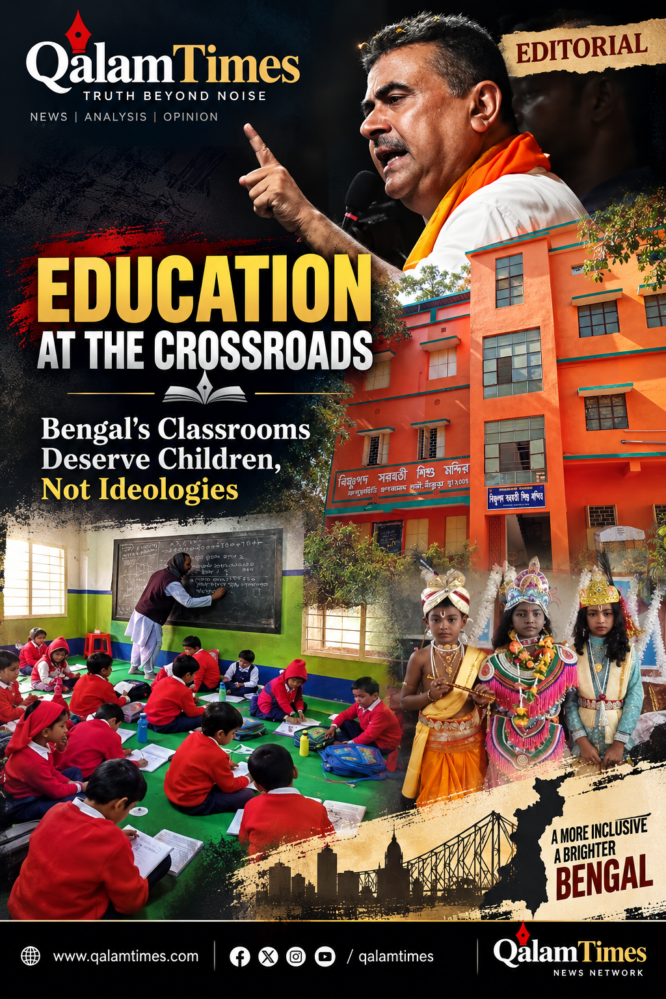
Education in Bengal faces a crucial test as the BJP backs 1,000 RSS-linked schools amid questions over ideology, TMC inaction, equality and constitutional values.
Qalam Times News Network
KOLKATA | September 4, 2026
EDUCATION is supposed to open a child’s mind, not close it. It should teach young citizens how to think, question, understand history and respect differences—not instruct them which community deserves admiration and which should be viewed with suspicion. That is why the reported plan to establish at least 1,000 Vidya Bharati schools across West Bengal within a year deserves far more serious public scrutiny than a routine announcement about expanding the education sector.
The political irony is difficult to ignore. The BJP government now speaks of expanding an RSS-linked educational network while attacking the previous Trinamool Congress government for allegedly allowing educational institutions to become “polluted”. Yet the record presented in the report raises an uncomfortable question for both sides: if TMC believed such institutions posed a problem, why did its government fail to act decisively against the RSS-affiliated schools it had itself identified? In 2018, the state government reportedly identified more than 120 RSS-affiliated schools operating without the required no-objection certificates and announced action, but subsequent reports indicate that the promised action did not materialise.
When Government Failure Creates Space for Ideological Expansion
This is where the debate must move beyond BJP versus TMC. Both governments should answer for their responsibilities to Bengal’s children.
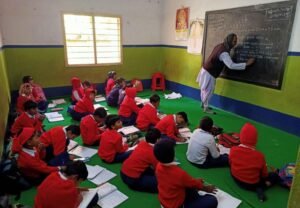
The TMC government’s alleged failure to enforce its own regulatory position created a vacuum. The report describes how RSS-linked schools expanded during the TMC period while government schools in several rural areas struggled with teacher shortages, weak attendance and inadequate supervision. Parents, understandably concerned about the quality of their children’s education, began looking elsewhere.
That failure cannot now be used as a justification for replacing one weakness with another.
The BJP government has a different responsibility. If it genuinely believes that these schools provide valuable education, it must be prepared to answer basic questions about curriculum, constitutional values, institutional accountability, teacher recruitment, financial transparency and equal treatment of students from different communities.
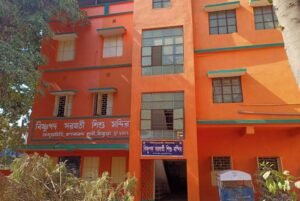
The reported proposal to establish 1,000 more Vidya Bharati schools therefore demands transparency before expansion. A government cannot simply celebrate the growth of an ideological educational network while leaving unanswered questions about what children are being taught and how that teaching shapes their understanding of India’s extraordinary religious, cultural and linguistic diversity.
The issue becomes even more serious when political slogans are brought directly into educational policy. The chief minister reportedly argued that the idea of “one country, one Constitution, one symbol, one leader” should extend to education, including a single system for universities and higher education institutions. He also questioned separate administrative arrangements for Aliah University and other universities.
There is nothing wrong with demanding common academic standards. There is, however, a profound difference between uniform standards and uniformity of thought.
India’s Constitution does not require every child to emerge from school with the same cultural identity. It requires the State to protect equality, dignity and freedom of belief. A common education system should therefore mean common academic quality—not the erasure of legitimate cultural, linguistic, tribal or religious identities.
Bengal’s Children Deserve Education of History, Not Historical Politics
The most disturbing part of the report is not the existence of schools run by a particular organisation. Private and voluntary educational institutions have always existed in India. The deeper concern is the allegation that some RSS-linked schools have promoted a strongly majoritarian interpretation of history and identity among young children. The report contains accounts from students, teachers and residents alleging that Hindu cultural narratives are sometimes presented as superior while other communities are portrayed negatively.
These claims deserve independent investigation rather than political dismissal.
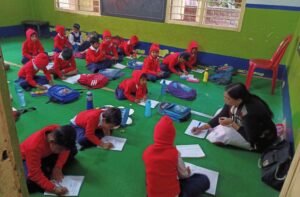
A child should learn about the Gita and the Ramayana if they are taught as important parts of India’s cultural and literary heritage. The same principle must apply to the country’s many other traditions. Learning about Hinduism cannot become an excuse for presenting Muslims, Christians, Buddhists, Sikhs, tribal communities or any other group as outsiders to the Indian story.
The report also raises questions about the treatment of Adivasi identity. Some teachers interviewed reportedly described tribal communities as “forest-dwelling Hindus”, while local voices argued that communities such as the Santhals possess distinct religious and cultural traditions.
That debate cannot be settled by political slogans. It requires scholarship, constitutional sensitivity and, above all, respect for the communities whose children sit inside these classrooms.
There is another uncomfortable dimension. The report describes teachers alleging low wages, weak employment benefits and centralised organisational control in some Saraswati Shishu Mandir schools. If the proposed expansion is to happen on such a large scale, the government must also examine the welfare, qualifications and working conditions of teachers.
The BJP government should not expect the public to accept ideological expansion without institutional accountability.
But the TMC cannot escape responsibility either. Its years in power provided ample opportunity to strengthen government schools, enforce regulations consistently and ensure that private or ideological institutions operated within the law. Instead, according to the report, RSS-linked schools continued to expand while many government schools in rural Bengal faced serious difficulties.That is the real political failure.
Bengal does not need governments that merely fight over who controls the educational narrative. It needs governments that build excellent public schools where parents do not feel compelled to choose between poor infrastructure and ideological instruction.
If the state has the resources and political will to facilitate 1,000 new schools, it should have the same determination to repair existing government schools, recruit teachers, strengthen inspections, improve libraries and laboratories, and restore confidence among parents in rural Bengal.
The question is not whether Vidya Bharati should be allowed to exist. The question is whether any educational organisation—RSS-linked, religious, private, charitable or government-run—should be permitted to place ideology above constitutional citizenship and educational integrity.
The answer must be no.
The BJP government should publish clear information about the proposed schools, their curriculum, recognition status, funding arrangements, teacher qualifications and regulatory oversight. The TMC, meanwhile, owes Bengal an explanation for why earlier promises of action against allegedly unauthorised RSS-linked schools did not produce the results announced in the Assembly.
Neither party can claim the moral high ground simply by pointing at the other.
Education is too important to be treated as another battlefield in Bengal’s political war. A child entering a classroom should encounter curiosity before propaganda, evidence before mythology presented as fact, and citizenship before partisan identity.
If the government truly wants “one education system”, then let that system be united by constitutional values, scientific temper, academic freedom, historical honesty and equal dignity for every child.
Bengal’s classrooms should produce citizens capable of living together—not generations trained to distrust one another.
That is the standard by which both the BJP government and the TMC’s record should be judged.And that standard must begin with EDUCATION.