




Voter List Irregularities in Pilibhit, Uttar Pradesh, lead to action against two election officers and the removal of a computer assistant after discrepancies are reported in 10,470 voter records.
Qalam Times News Network
Pilibhit, October 23, 2026
Voter List Irregularities: Election Authorities Take Action After Congress Raises Allegations
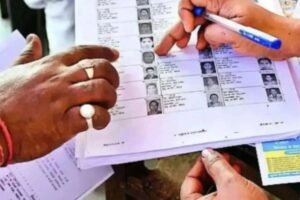
Voter List Irregularities have come under scrutiny in Uttar Pradesh after an investigation reportedly identified discrepancies affecting 10,470 voter records in the Pilibhit Sadar Assembly constituency. Following the findings, action was initiated against two Electoral Registration Officers (EROs), while a computer assistant was removed from service. The development has drawn attention to the accuracy of electoral records and the procedures followed when voters’ details are changed.
The investigation followed allegations by the Congress and the Samajwadi Party, which questioned the reliability of voter information in the constituency. The voter list irregularities became a major political issue after Congress leaders claimed that thousands of voters had different names and personal details associated with identical Electoral Photo Identity Card (EPIC) numbers. The complaints prompted the office of the Uttar Pradesh Chief Electoral Officer to examine the matter.
Congress Raises Questions Over Identical EPIC Numbers
A few days before the reported action, Congress leaders Supriya Shrinate and Aradhana Misra Mona, president of the Uttar Pradesh Congress Committee, held a press conference to highlight what they described as serious discrepancies in the state’s electoral rolls.
Using Pilibhit Sadar as an example, the Congress claimed that approximately 13,150 voters in the constituency had the same EPIC number despite having different names and identities. The party argued that such inconsistencies required a detailed investigation to establish how the records had been created and whether eligible voters could be affected.
The Samajwadi Party also raised concerns about the electoral records. Following the complaints from both parties, the state election authorities initiated an inquiry into the process used to update voter information.
Investigation Finds Thousands of Applications Without Supporting Documents
The inquiry reportedly uncovered a substantial number of applications seeking changes to voter details in Pilibhit Sadar.
According to the findings cited in the original report, a total of 13,779 Form 8 applications had been submitted for changes to voter information. Form 8 is used under electoral procedures to request corrections to entries in the electoral roll.
Investigators reportedly found that the necessary supporting documents for the changes were not available in the relevant official records. As a result, discrepancies were identified in 10,470 voter entries.
The reported figures indicate that the issue was not limited to a small number of isolated mistakes. Instead, the volume of applications and the absence of the required documentation raised questions about the checks carried out before the changes were approved.
The investigation has therefore focused on how the applications were processed, which officials were responsible for reviewing them, and why the necessary records were reportedly unavailable.
Two Electoral Registration Officers Face Suspension
Following the inquiry, the election authorities took action against two Electoral Registration Officers associated with Pilibhit Sadar. A computer assistant working in connection with the electoral records was also removed from service.
The authorities reportedly directed that further proceedings be initiated against the three individuals in accordance with the applicable law.
The action is intended to establish accountability for the handling of voter information and determine whether official procedures were followed during the revision process.
However, administrative action and the identification of discrepancies do not, by themselves, establish that the errors were deliberately created to manipulate an election. Any question of individual wrongdoing or intent must be determined through the relevant inquiry and legal proceedings.
The Pilibhit case has renewed attention on the importance of maintaining accurate voter lists. Electoral rolls are a fundamental part of the democratic process because they determine who is registered to vote and help election authorities administer elections.
Errors involving names, identity numbers or other personal details can create confusion for voters and undermine confidence in the administration of electoral records. For this reason, applications to correct voter information must be processed carefully, with the required documentation preserved and the prescribed checks completed.
The reported findings in Pilibhit raise questions about whether the relevant procedures were adequately followed and what safeguards are needed to prevent similar discrepancies in the future.
For the Congress, the findings may provide additional grounds to demand greater transparency and accountability in the preparation and revision of electoral rolls. The party had publicly raised the issue, arguing that the discrepancies required urgent examination by the election authorities.
The development could also become part of the party’s wider political criticism of Chief Election Commissioner Gyanesh Kumar and the Election Commission’s handling of electoral matters.
Nevertheless, the investigation’s findings should be distinguished from the broader political claims surrounding them. Discrepancies in voter records require correction and accountability, but determining whether they resulted from administrative failures, procedural violations or deliberate wrongdoing requires evidence.
The Pilibhit episode highlights the need for election authorities to ensure that changes to voter records are properly documented and independently verifiable.
A thorough review of the affected entries, the applications submitted and the decisions made by the officials concerned will be important in determining the full extent of the problem. Corrective measures should also ensure that eligible voters are not unfairly affected by errors in official records.
The case has placed electoral transparency back in the public debate. As political parties continue to question the reliability of voter lists, the response of election authorities and the findings of subsequent proceedings will be important in determining whether the discrepancies were confined to Pilibhit Sadar or point to wider administrative concerns.