



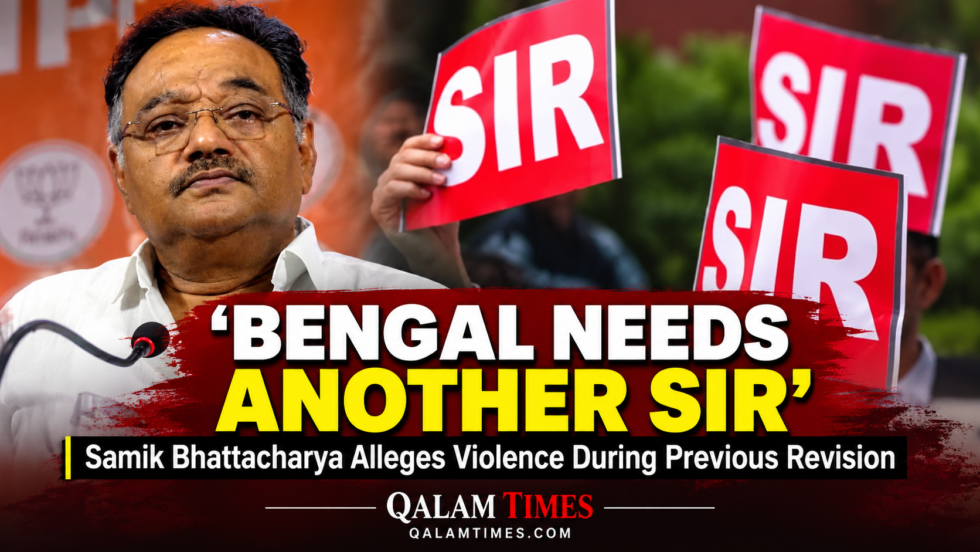
Bengal SIR debate intensifies as BJP chief Samik Bhattacharya demands a fresh electoral roll revision, alleges violence during the previous exercise and comments on protests and Durga Puja.
Qalam Times News Network
Kolkata, October 17, 2026
Bengal SIR Debate: West Bengal BJP president Samik Bhattacharya has called for a fresh Special Intensive Revision (SIR) of electoral rolls in the state, alleging that violence, intimidation and destruction of documents disrupted the previous exercise. The Rajya Sabha MP argued that another revision was necessary to ensure that the electoral process could be conducted without obstruction.
Bhattacharya accused the previous Trinamool Congress-led government of failing to ensure the smooth conduct of the earlier exercise. He alleged that electoral documents were seized and burnt, election officials were assaulted and government offices were set on fire. He also claimed that Block Development Officers (BDOs), anganwadi workers and the BJP’s Booth Level Agents (BLAs) faced attacks during the process. These allegations were made by the BJP leader and have not been independently established in the account provided.
Bengal SIR : Bhattacharya Criticises Protests, Rejects Allegations Against BJP
Reiterating his demand for another Bengal SIR, Bhattacharya defended Chief Election Commissioner Gyanesh Kumar against accusations of electoral malpractice. He argued that the Election Commission’s work deserved recognition rather than allegations of vote theft, maintaining that the previous revision had been affected by serious disruptions.
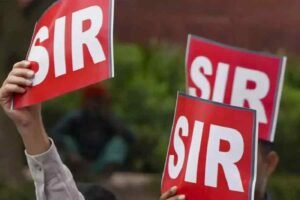
Commenting on protests organised by the CJP over the electoral roll revision, the BJP leader acknowledged that peaceful agitation was a legitimate democratic right. However, he questioned the political motivations behind the demonstrations and claimed that the groups involved lacked substantial public support.
“Mobocracy can never replace democracy,” Bhattacharya said, warning against actions that could create disorder or undermine the authority of constitutional institutions, including the administration and judiciary.
The BJP state president also denied that his party was responsible for attacks on CPI(M) book stalls near Durga Puja pandals in Kolkata. Rejecting any association with such incidents, he said that this was not the BJP’s approach and invoked Bengal’s long-standing tradition of religious and intellectual diversity.
Quoting the saying attributed to Ramakrishna Paramahamsa, “Jato mat, tato path” — meaning that different beliefs can lead to different paths — Bhattacharya emphasised the importance of pluralism in the state’s social and cultural life.
Durga Puja Celebrations and Changing Administrative Climate
Bhattacharya also spoke about the atmosphere surrounding Durga Puja under the new state government. He alleged that, in previous years, organisers in some areas had faced administrative restrictions over the timing of idol immersion, sometimes requiring police and official permission.
Praising this year’s festive installations, he highlighted the way several puja committees had used their pandals to address broader social concerns. Among his examples was an installation in Bagbazar that drew attention to the declining condition of commercial theatre.
His remarks brought together two prominent themes in West Bengal’s current political discourse: the conduct of electoral processes and the role of cultural celebrations in reflecting social and political change.
The demand for another Special Intensive Revision, the allegations surrounding the previous exercise and the controversy over protests and attacks on political book stalls are likely to remain subjects of public debate. The claims made by Bhattacharya represent the BJP leader’s position on these issues; independent verification and responses from the parties concerned would be necessary to establish the disputed facts.