




Dhirendra Shastri row intensifies in Bengal as Suvendu Adhikari defends the seer and calls for arrests over alleged effigy/photo burning during protests.
By Qalam Times News Network
Kolkata | September 10, 2026
Suvendu Adhikari says the seer Dhirendra Shastri merely expressed his views, as BJP leaders remain divided over his remarks on meat during Durga Puja
The Dhirendra Shastri controversy over meat consumption during Durga Puja has taken a fresh political turn in West Bengal, with BJP leader and Leader of the Opposition in the state Assembly Suvendu Adhikari defending the religious preacher and saying those who burned his effigy or photographs during protests should face police action.
The Dhirendra Shastri row intensified after the religious preacher, speaking at a programme in Liluah in Howrah, appealed to Hindus in Bengal not to allow the sale of meat around Durga Puja pandals during the Navratri period. His remarks triggered a wider debate over religion, food habits and Bengal’s cultural traditions.

Speaking in the West Bengal Assembly on Thursday, Adhikari described Shastri as a saint who had expressed his own religious and cultural views. He argued that people had the freedom to agree or disagree with those views because, according to him, Shastri had not forced his opinion on anyone.
Adhikari said Shastri had visited Liluah and spoken about nationalism, the concept of Akhand Bharat and Indian culture. He maintained that expressing an opinion should not be treated as imposing that opinion on others.
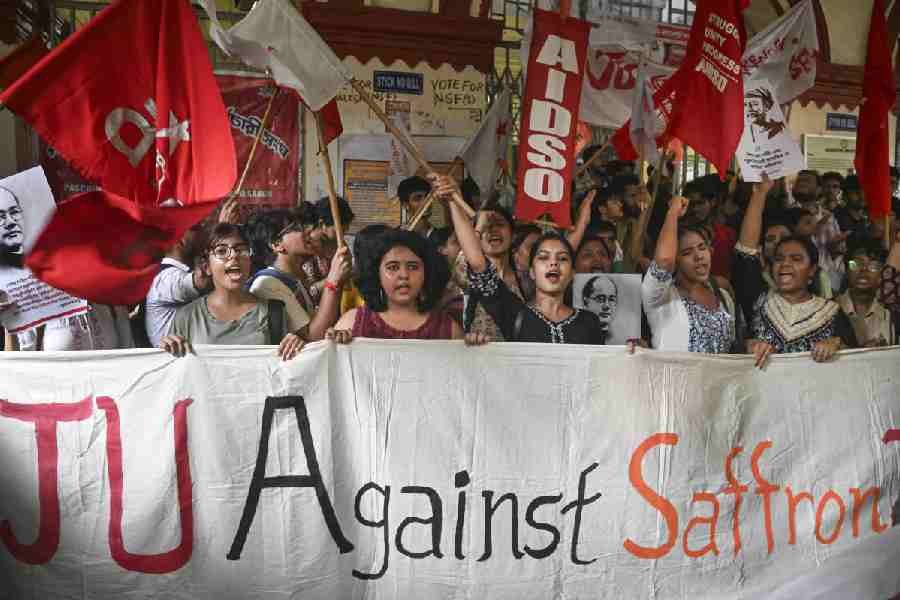
The BJP leader also referred to a protest outside Bhawanipur Police Station in Kolkata, where Shastri’s photographs were allegedly burned. Adhikari said he had directed the Kolkata Police Commissioner to identify those involved and take action against them, including arrest where legally warranted.
The demand for action has added another dimension to an already heated controversy that has exposed differences within the BJP’s Bengal unit. While Adhikari has defended Shastri’s right to express his views, several prominent Bengal BJP leaders have criticised the preacher’s appeal concerning meat during Durga Puja.
BJP leaders oppose Dhirendra Shastri‘s remarks on Bengal’s food culture
The controversy originated with comments made by Dhirendra Krishna Shastri at a religious gathering in Liluah, Howrah.
During the programme, Shastri appealed to Hindus in Bengal to ensure that meat was not sold around Durga Puja pandals during Navratri. He said that even people who did not install a Durga idol at home could support such a restriction around the puja pandals.
The remarks quickly became a political issue, with critics arguing that food habits are a deeply rooted part of Bengal’s social and cultural identity. They said that an outside religious figure should not prescribe what Bengalis should eat during their festivals.
The criticism has not been limited to political opponents of the BJP. Several senior leaders within the party’s Bengal organisation have also publicly distanced themselves from Shastri’s position.
Bengal BJP president Samik Bhattacharya has strongly objected to the suggestion that Bengalis should change their traditional food habits at the direction of a religious figure from outside the state.
Bhattacharya argued that Bengalis should be allowed to follow their own customs and decide what they eat. He questioned whether Bengalis could be told that they should not eat fish or meat and referred to historical traditions associated with the worship of Goddess Kali.
He also invoked Swami Vivekananda while making his point, referring to traditions in which meat offerings have been associated with certain forms of worship.
BJP leader Agnimitra Paul also criticised the suggestion that Bengalis should be instructed about their food choices.
Paul argued that Bengal has a distinctive cultural identity and said people traditionally save money throughout the year to enjoy special foods, including mutton and hilsa, during the festive season.
Her position was that no outside individual should dictate what Bengalis can or cannot eat.
BJP leader Dilip Ghosh also entered the debate, pointing to the traditional practice of animal sacrifice in some parts of Bengal during Durga Puja and the subsequent consumption of the meat as prasad.
Ghosh argued that such practices should not automatically become a political controversy and emphasised that individuals should have the freedom to choose their food.
The dispute has created an unusual political situation within the BJP in West Bengal. While Suvendu Adhikari has defended Dhirendra Shastri’s right to express his religious views and called for action against those who allegedly burned his photographs, other prominent BJP leaders have challenged the substance of Shastri’s appeal.
At the heart of the controversy is a larger question about the relationship between religious expression and regional cultural practices. Bengal has a diverse culinary and religious heritage, and food traditions associated with Durga Puja vary considerably across communities and regions.
The political debate has consequently moved beyond Shastri’s original remarks and into questions surrounding cultural identity, individual choice, religious expression and the extent to which public figures should comment on local traditions.
For the BJP, the issue is particularly significant because the contrasting statements from its Bengal leaders have brought internal differences into public view.
The immediate flashpoint, however, remains the alleged burning of Shastri’s photographs during a protest. Adhikari’s call for identification and arrest of those responsible has shifted part of the debate from the preacher’s remarks to the legality of the protest itself.
The matter is likely to remain politically contentious in the run-up to the Durga Puja season, with different political and social groups continuing to debate religion, food, culture and individual freedom in West Bengal.