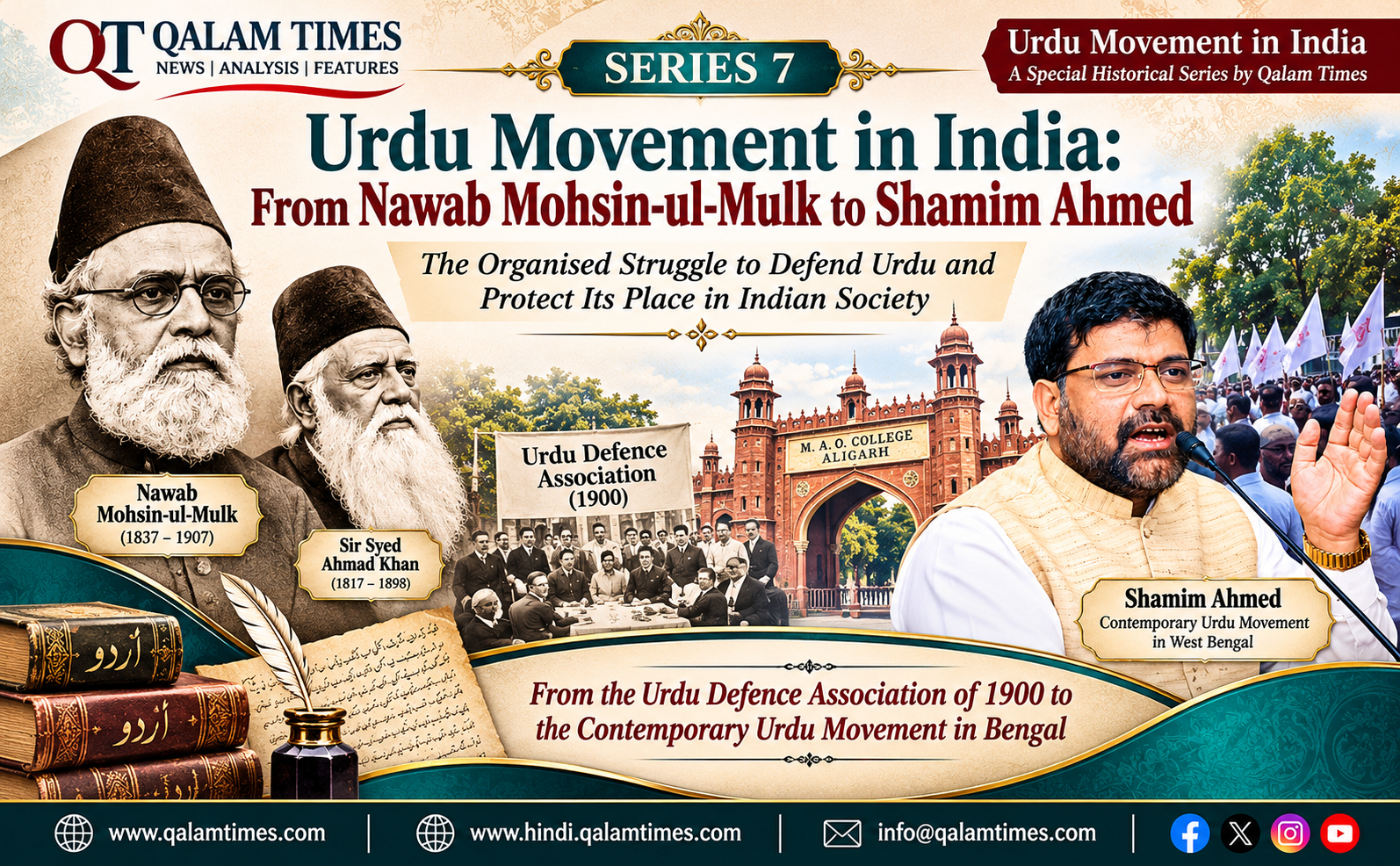




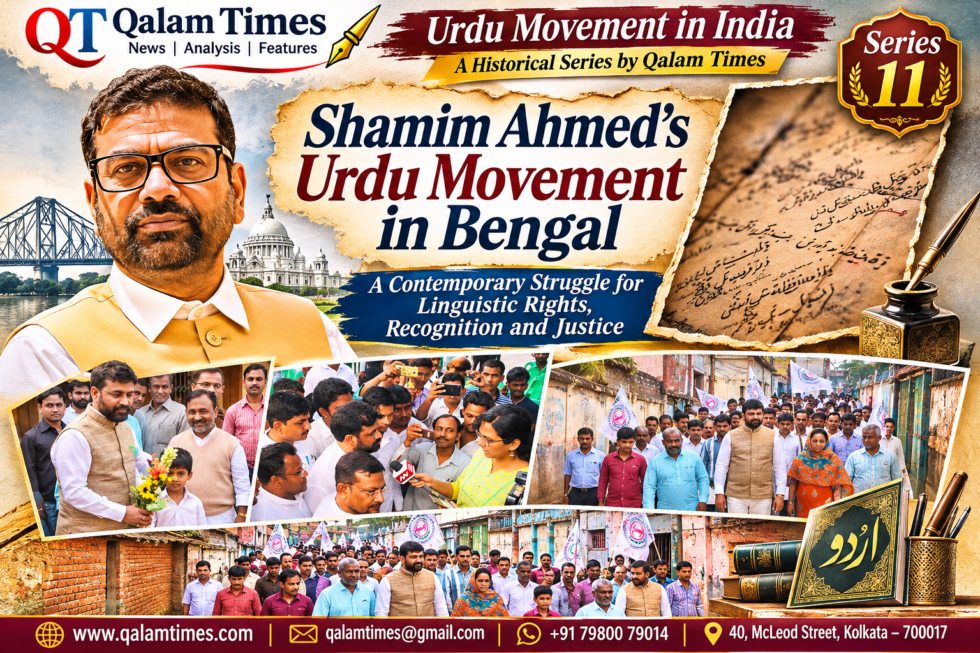
Shamim Ahmed’s Urdu Movement in Bengal highlighted the demand for Urdu recognition, educational opportunities, linguistic rights and public participation. Explore the background and significance of this contemporary struggle in Series 11.
From Historical Language Movements to a New Campaign for Urdu in West Bengal
Qalam Times News Network
Kolkata | November 29, 2026
Shamim Ahmed’s Urdu Movement represents an important chapter in the contemporary history of the struggle for Urdu in West Bengal. It emerged from a continuing concern that Urdu, despite its deep historical, literary and cultural roots in India, was not receiving the recognition and practical support its speakers believed it deserved.
The history of Urdu in India is not simply the history of a language. It is also a history of education, literature, cultural interaction and public participation. From the nineteenth-century efforts of Sir Syed Ahmad Khan and Nawab Mohsin-ul-Mulk to the institutional work of Maulvi Abdul Haq and the Urdu movements in Bihar, different generations have raised their voices to protect and promote the language. In West Bengal, Shamim Ahmed’s campaign brought this longstanding question into a contemporary public and political context.
The movement sought to draw attention to the position of Urdu speakers, the availability of educational opportunities in their language and the need to translate official assurances into meaningful action. Its significance lies in the effort to make Urdu a matter of public discussion rather than leaving its future entirely to literary organisations, individual writers or occasional cultural programmes.
The Background of a Contemporary Movement
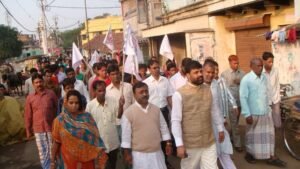
West Bengal has a diverse linguistic and cultural history. Bengali has a central place in the state’s public life, but Urdu also has a longstanding presence, particularly in Kolkata and several other areas. Urdu-speaking communities have contributed to the state’s social, educational, literary and cultural development over generations.
However, the presence of a language within society does not automatically guarantee adequate educational facilities, administrative attention or institutional opportunities for its speakers. The demand for Urdu recognition therefore became connected with wider questions of access, representation and the responsibilities of public institutions.
It was against this background that Shamim Ahmed’s campaign began to attract attention. The central concern was not merely the symbolic recognition of Urdu. The larger question was whether the language could receive the practical space necessary for its continued development and whether the concerns of Urdu-speaking people could be heard by the authorities.
Shamim Ahmed’s Urdu Movement : From Individual Concern to Collective Mobilisation
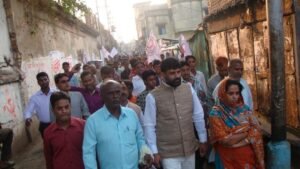
One of the important features of the movement was its emphasis on bringing people together around a common linguistic concern. Public meetings, organisational activities and discussions provided opportunities to explain the difficulties faced by Urdu speakers and to encourage wider participation.
The activities recorded during 2011 and the beginning of 2012 reflect an effort to develop public awareness and build a broader platform for the language. These initiatives were significant because they attempted to connect people from different backgrounds through a shared demand: Urdu should receive proper attention in the social and institutional life of West Bengal.
A language movement cannot survive through the efforts of one individual alone. It requires the participation of teachers, students, writers, journalists, community representatives and ordinary speakers. The campaign’s wider purpose was therefore to encourage Urdu-speaking people to recognise that the future of their language also depended upon their own involvement.
Recognition Must Lead to Practical Rights
The question of Urdu recognition has several dimensions. Official recognition is important, but it becomes meaningful only when it is reflected in everyday life.
For Urdu-speaking students, the availability of educational opportunities is a major concern. For teachers, the question involves the development of institutions and the creation of suitable opportunities to teach the language. For writers and cultural organisations, it involves the preservation and promotion of Urdu literature. For ordinary citizens, it concerns the ability to use their language and have their legitimate demands acknowledged.
Shamim Ahmed’s movement brought these connected issues into public discussion. It highlighted the difference between accepting Urdu as part of India’s linguistic heritage and ensuring that Urdu speakers can exercise their language-related rights in practice.
This distinction is essential. A language may receive praise in speeches and public ceremonies, but its future depends on schools, educational institutions, publications, cultural platforms and sustained administrative attention.
The Importance of Public Participation
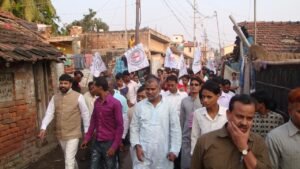
The movement also raised a broader question about the responsibility of Urdu-speaking society. The preservation of a language cannot be left entirely to governments or political representatives. Families must encourage children to read and write it; educational institutions must provide opportunities to learn it; writers and journalists must continue producing meaningful literature and public discussion; and community organisations must work consistently for its development.
At the same time, public authorities have an important responsibility. Where legal provisions and official policies recognise the rights of linguistic communities, those provisions must be implemented effectively. People should not have to depend solely on individual influence or repeated appeals to obtain facilities that are legally and administratively due to them.
The movement’s wider message was that Urdu should not be treated merely as a matter of cultural sentiment. It should also be discussed in terms of education, equal opportunity, public policy and democratic participation.
A Contemporary Chapter in a Longer Historical Tradition
The Urdu movement in Bengal did not emerge in isolation. It belongs to a much longer tradition of public efforts to protect the language and strengthen its position in Indian society.
Sir Syed Ahmad Khan recognised the importance of Urdu in the intellectual and educational life of his time. Nawab Mohsin-ul-Mulk became associated with organised efforts to defend its position during the Hindi-Urdu controversy. Maulvi Abdul Haq devoted his life to the development of Urdu language, literature and institutions. In Bihar, political representatives, writers and language activists also worked to secure a stronger place for Urdu.
The circumstances of these historical movements were different from those of contemporary West Bengal. Their organisations, political environments and immediate demands were not identical. Nevertheless, they shared an important concern: a language with a substantial community of speakers should not be deprived of opportunities for development and public recognition.
Shamim Ahmed’s campaign can therefore be understood as a contemporary expression of this wider historical concern. It should not be described as a direct organisational continuation of those earlier movements, but its demands can be examined within the same broad history of linguistic rights and public advocacy.
Why This Movement Deserves Historical Attention
The importance of a movement is not measured only by the number of meetings it organises or the immediate response it receives from the authorities. Its historical significance also depends on the questions it raises, the public awareness it creates and the extent to which it encourages a community to think about its future.
Shamim Ahmed’s Urdu Movement deserves attention because it placed the condition of Urdu in West Bengal within a wider discussion about language, education, democratic rights and public responsibility. It also reminds the Urdu-speaking community that cultural pride must be supported by educational commitment, institutional participation and organised civic engagement.
The movement provides an opportunity to examine how Urdu’s historical legacy can be connected with the challenges faced by its speakers in contemporary India. It also invites a serious discussion about the gap that can exist between official recognition and the actual availability of facilities.
The Beginning of a Five-Part Chapter
This instalment, Series 11, introduces the contemporary Urdu movement associated with Shamim Ahmed in West Bengal. The four forthcoming instalments will examine its different dimensions in greater detail: the background and development of the campaign; its public meetings and organisational activities; the relationship between Urdu recognition, education and official policy; and its place within the wider history of Urdu movements in India.
The objective is to present a documented and balanced account of the movement, its demands and its significance without confusing historical parallels with direct organisational links.
The struggle for Urdu has passed through different periods and taken different forms. Its history has been shaped by scholars, reformers, political figures, teachers, writers and ordinary citizens. In West Bengal, Shamim Ahmed’s campaign added a contemporary chapter to that continuing story.
Urdu’s future will depend not only on the achievements of earlier generations but also on the commitment of those who speak, teach, read and work for the language today.