





First Muslim Senator Abdul El-Sayed makes history by defeating Mike Rogers in Michigan, becoming the first Muslim American elected to the US Senate.
First Muslim Abdul El-Sayed defeats Republican Mike Rogers in a landmark victory, opening a new chapter in American political representation and strengthening the progressive wing of the Democratic Party.
Qalam Times News Network
Washington,November 4, 2026
First Muslim Senator Abdul El-Sayed has made history in the United States after securing a landmark victory in Michigan’s closely watched Senate election, becoming the first Muslim American ever elected to the US Senate. His triumph over Republican challenger Mike Rogers represents a significant political breakthrough, not only for the Democratic Party but also for Muslim representation in the highest legislative institution of the United States.
The victory of First Muslim Senator Abdul El-Sayed carries significance beyond the boundaries of Michigan. It marks an important moment for millions of American Muslims and immigrant communities who have long sought greater representation in the country’s political decision-making institutions. The result also demonstrates how a candidate with a progressive political agenda, a grassroots campaign and a strong focus on everyday economic concerns can overcome established political structures in a fiercely contested battleground state.
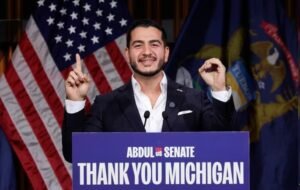
El-Sayed, 42, is the son of Egyptian immigrants and a physician by profession. Before entering the Senate race, he established his reputation as a public health expert and administrator. Unlike many conventional political candidates, he had never previously held an elected public office. His journey from a relatively unsuccessful gubernatorial campaign to winning one of the most consequential Senate contests in the country reflects a remarkable transformation in his political fortunes.
The Democratic candidate defeated former Republican Congressman Mike Rogers in a contest that attracted national attention because of its implications for the balance of power in Washington. Michigan’s Senate seat became vacant following the retirement of Democratic Senator Gary Peters, making the election particularly important for both political parties.
A Political Victory Against Established Power and Anti-Muslim Rhetoric
The road to victory was far from straightforward. El-Sayed faced an intensely competitive campaign, political resistance and repeated attempts by his opponents to question his political loyalties and public image. Republican campaign messaging sought to associate his progressive politics with communism and even portrayed him as a potential security threat. Allegations concerning his supposed links to extremist organisations also became part of the political controversy, although El-Sayed rejected such accusations.
The campaign demonstrated how religious identity and questions of national security can become deeply politicised during American elections. Democratic supporters criticised the attacks as Islamophobic, arguing that political disagreements should not be turned into attempts to undermine the legitimacy of a candidate because of his faith or family background.
Despite these challenges, El-Sayed continued to concentrate on issues that directly affected ordinary citizens. His campaign placed healthcare affordability, economic inequality, corporate influence over politics and the rising cost of living at the centre of its political message.
Addressing supporters in Detroit after his victory, El-Sayed expressed gratitude to Michigan voters and described the result as a historic achievement. Declaring, “Michigan, we did it!”, he spoke of his pride and honour at being elected to represent the state in the United States Senate.
His victory also highlighted the importance of grassroots political mobilisation. During the campaign, he attracted substantial crowds across Michigan, including in areas traditionally considered strongholds of the Republican Party. His ability to reach beyond the conventional Democratic voter base helped turn his campaign into a major political movement.
Healthcare, Economic Justice and the Fight Against Corporate Influence
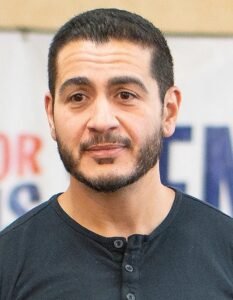
One of the central pillars of El-Sayed’s campaign was his commitment to making healthcare accessible and affordable. Drawing upon his professional experience in public health, he argued that access to medical treatment should not depend on an individual’s financial circumstances.
He strongly advocated universal healthcare and the Medicare for All proposal, challenging the structure of America’s expensive, largely private healthcare system. His message resonated with families struggling with medical bills, insurance costs and the financial uncertainty associated with serious illnesses.
El-Sayed also promised to confront the growing influence of wealthy donors, corporate interests and powerful lobbying organisations in American politics. His demand to get money out of politics became another defining feature of his campaign.
He argued that elected representatives should be accountable to ordinary voters rather than wealthy individuals and powerful institutions capable of spending enormous sums to influence political outcomes.
His campaign also addressed the economic difficulties confronting working-class Americans, particularly rising living expenses, inflation and the growing gap between wealthy households and ordinary families.
A Difficult Democratic Primary and an Unusual Political Twist
El-Sayed’s journey to the Senate began with a fiercely contested Democratic primary in which he defeated Congresswoman Haley Stevens, a candidate backed by sections of the party establishment.
The primary battle exposed ideological divisions within the Democratic Party, particularly between its progressive wing and more establishment-oriented political leadership. El-Sayed’s victory demonstrated that a grassroots campaign could challenge candidates with considerably greater institutional and financial support.
The controversy continued into the general election when Stevens, after losing the Democratic nomination, publicly endorsed Republican Mike Rogers shortly before voting day. The endorsement created an unexpected political complication for El-Sayed, but it ultimately failed to prevent his victory.
His success therefore represents more than a personal electoral achievement. It is also a significant development in the continuing struggle over the ideological direction of the Democratic Party.
What His Election Means for American Muslims
The election of Abdul El-Sayed is a landmark in the history of Muslim participation in American national politics. Muslim Americans have increasingly become visible in local, state and federal political institutions, but securing a seat in the United States Senate represents a new milestone.
His achievement sends a powerful message about democratic participation, political diversity and the possibility of reaching the highest levels of public office regardless of religious or immigrant background.
However, the importance of his victory should not be understood solely through the lens of religious representation. His election also reflects a broader political debate about healthcare, economic opportunity, foreign policy, social equality and the accountability of elected representatives.
El-Sayed has attracted attention for his criticism of American military assistance to Israel and his outspoken position on the humanitarian situation in Gaza. These views became controversial subjects during the election campaign, particularly among voters and political organisations with differing positions on American foreign policy in the Middle East.
His supporters see his willingness to challenge established positions as part of a wider commitment to political independence and accountability.
A New Chapter in American Politics
Abdul El-Sayed’s victory in Michigan is likely to have consequences extending well beyond the state. For the Democratic Party, it offers evidence that progressive candidates can compete successfully in politically competitive states by focusing on economic concerns and public welfare.
For Muslim Americans, it represents a historic breakthrough in political representation. For immigrant communities, it demonstrates that the American political system can provide opportunities for individuals whose families arrived in the country from different parts of the world.
As El-Sayed prepares to take his place in the United States Senate, expectations will be high. Voters will look to him to translate his campaign promises into legislative action, particularly on healthcare, economic justice and political reform.
His historic election has already secured him a place in American political history. The greater test, however, will be whether he can turn this extraordinary electoral mandate into meaningful change for the people he has promised to represent.