




Nana Patekar’s Kargil War story reveals how the veteran actor left cinema behind in 1999, joined soldiers near the LoC and later served at a military hospital.
From three years of military training for Prahaar to spending nearly two months with troops in the Kargil conflict zone, Nana Patekar’s association with the armed forces went far beyond the silver screen.
By Qalam Times News Network
New Delhi | October 8, 2026
Nana Patekar was not merely an actor who portrayed soldiers on screen. At a crucial moment in India’s history, he stepped away from his film career and sought an opportunity to be alongside Indian troops during the 1999 Kargil War. The veteran actor, who died in Goa on Thursday at the age of 75 following a cardiac arrest, had already developed a strong connection with the armed forces through his work on the 1991 film Prahaar: The Final Attack.
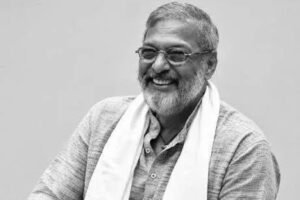
Nana Patekar’s association with the military was far deeper than preparation for a film role. For Prahaar, which he wrote and directed in addition to playing the lead character of Major V.S. Chavan, he underwent extensive training with the Maratha Light Infantry for around three years. That experience later became significant when India went to war in the mountains of Kargil.
From Military Training to the Kargil Front
When fighting intensified in Kargil in 1999, Patekar wanted to contribute in a more direct way. He approached senior military officials with a request to accompany soldiers in the conflict zone. He was reportedly told that such permission could only be granted by the Defence Ministry.
Patekar then contacted the then Defence Minister George Fernandes, whom he knew personally. During his appearance on Amitabh Bachchan-hosted Kaun Banega Crorepati in 2024, the actor recalled how he explained his military background to Fernandes and asked whether he could go to the war zone.
According to Patekar’s account, when Fernandes asked when he wanted to leave, the actor replied that he wanted to go immediately.
Permission was eventually granted, allowing Patekar to travel to areas associated with the Kargil conflict in August 1999. He spent a considerable period with soldiers and visited difficult and strategically important locations, including Dras, Leh, Kupwara, Baramulla and Sopore. Reports of his experience say he spent roughly 60 days around troops and frontline areas.
The experience was physically demanding. Patekar later recalled that he weighed around 76 kilograms when he reached Srinagar but returned weighing about 56 kilograms — a loss of roughly 20 kilograms during his time in the region.
A Different Side of the War
Patekar’s memories of Kargil were not limited to military positions or the atmosphere of the battlefield. He also recalled his time with a Quick Reaction Team and his experience helping at a military hospital in Srinagar.
The hospital left a particularly lasting impression on him. He described seeing the bodies of soldiers who had been killed in combat and witnessing the difficult work involved in preparing the mortal remains before they were sent back to their families.
He also remembered meeting an injured soldier who desperately wanted to return to the battlefield despite suffering from a severe injury. The encounter, according to Patekar’s account, exposed him to a side of war that could never be fully captured by cinema.
For the actor, those experiences changed his understanding of suffering, courage and human resilience.
Patekar later said that he did not regard his decision to go to Kargil as an act of extraordinary heroism. Instead, he viewed it as his own way of contributing to the country.
His message to fellow actors was equally reflective. He argued that artists need to understand the many forms of happiness and suffering around them if they want their work to remain meaningful. For him, real-life experiences outside the film industry could fundamentally alter an actor’s understanding of emotion and character.
A Career Built on Intensity and Authenticity
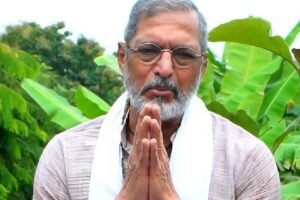
Born on January 1, 1951, Patekar built a career spanning theatre, Marathi cinema and Hindi films. He became known for an unmistakable voice, intense performances and a willingness to portray complicated, flawed and unconventional characters.
His performances in films such as Parinda, Krantiveer, Prahaar, Khamoshi, Ab Tak Chhappan, Natsamrat, Yeshwant, Welcome and Taxi No. 9211 established him as one of Indian cinema’s most distinctive performers.
His work earned him three National Film Awards, while his contribution to both mainstream and serious cinema made him a respected figure across generations.
But his public life was not confined to acting.
Patekar was particularly associated with efforts aimed at supporting farmers and rural communities affected by drought and agrarian hardship. Alongside actor Makarand Anaspure, he was closely associated with the NAAM Foundation, which worked with farmers and villagers in drought-affected regions of Maharashtra.
Political Leaders Pay Tribute
News of Patekar’s death prompted tributes from political leaders across India. Prime Minister Narendra Modi remembered the actor for his exceptional contribution to cinema and said his performances would continue to be remembered by generations.
Suvendu Adhikari also expressed deep sorrow over the actor’s death. In a message shared on social media, Adhikari described Patekar as one of Indian cinema’s most genuine and distinctive voices and highlighted his performances in films including Parinda, Krantiveer, Prahaar and Ab Tak Chhappan. He also praised the actor’s humility and his commitment to social causes and rural communities.
Maharashtra Chief Minister Devendra Fadnavis remembered Patekar not only for his contribution to Marathi and Hindi cinema but also for his humanitarian work, particularly his efforts on behalf of farmers.
Congress leader and Leader of Opposition in the Lok Sabha Rahul Gandhi described Patekar’s death as heartbreaking, recalling the lasting impression he had made through his characters and performances.
Union Minister Nitin Gadkari expressed personal grief and said he shared a close and friendly relationship with the veteran actor. Other political figures, including Karnataka Deputy Chief Minister D.K. Shivakumar and Aam Aadmi Party leader Arvind Kejriwal, also paid tribute to Patekar.
Patekar’s death marks the end of a remarkable chapter in Indian cinema. His appeal came not simply from his ability to deliver powerful dialogue, but from the intensity and realism he brought to his characters.
His journey also extended well beyond films. His military training for Prahaar, his decision to travel to the Kargil conflict zone and his later social work offered a different picture of the man behind the actor.
The Kargil episode, in particular, remains one of the lesser-known chapters of his life. At a time when the country was focused on a difficult and bloody conflict, Patekar chose to step away from the security of his profession and experience the realities faced by soldiers and medical personnel.
The veteran actor’s last rites are scheduled to be held at his farmhouse in Maharashtra’s Pune district with state honours, according to representatives of his social organisation.
Nana Patekar leaves behind a body of work that spans decades, but his legacy is not restricted to the characters he played. For many admirers, it also lies in the moments when he stepped outside the world of cinema — whether to stand with soldiers during the Kargil conflict or to support farmers and rural communities in distress.
That combination of artistic intensity, personal simplicity and social commitment is likely to remain an important part of how Indian cinema remembers him.