



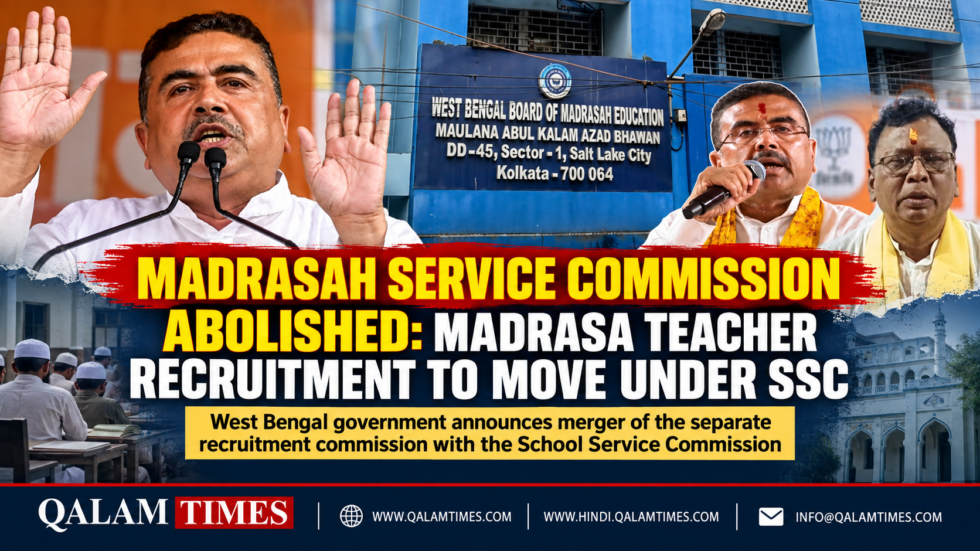
Madrasah Service Commission abolished in West Bengal as the government shifts madrasa teacher recruitment to SSC amid a wider review of madrasa institutions.
Qalam Times News Network
Kolkata | October 7, 2026
Madrasah Service Commission is set to be abolished in West Bengal, with the state government announcing that teacher recruitment for recognised madrasas will henceforth be brought under the School Service Commission (SSC). The move marks a significant change in the state’s existing recruitment structure for madrasa teachers. Reports published on October 7 say the decision was announced by Chief Minister Suvendu Adhikari.
The Madrasah Service Commission was established under the West Bengal Madrasah Service Commission Act, 2008, specifically to oversee recruitment to teaching and non-teaching posts in recognised aided madrasas. The Supreme Court’s July 2026 judgment also records the statutory framework under which the commission operated and notes that the 2008 law created a separate mechanism for selection and appointment in recognised aided madrasas.
Madrasah Teacher Recruitment to Come Under SSC
Under the reported restructuring, teacher appointments in madrasas will be handled through the School Service Commission rather than through a separate recruitment body. The government has presented the move as an attempt to bring greater uniformity and transparency to teacher selection.
The change comes against the backdrop of a wider review of madrasa institutions across West Bengal. A state verification exercise covering Kolkata and 22 districts reportedly found 2,132 madrasas with valid approval, while around 2,396 institutions were operating without the required government approval or affiliation. The government subsequently ordered action against 252 madrasas and issued show-cause notices to another 100 institutions.
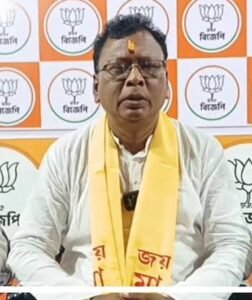
Minority Affairs Minister Khudiram Tudu has said the government’s action followed the findings of the verification exercise. Officials examined issues including management, student enrolment, teaching staff, infrastructure, registration and sources of funding. The government has maintained that institutions facing notices would be given an opportunity to provide the necessary authorisation or explanations before further action is taken.
A Separate Recruitment System Since 2008
The West Bengal Madrasah Service Commission came into existence in 2008. Before the separate commission was established, recognised aided madrasas had operated within an earlier framework in which teacher appointments could be made on the basis of recommendations from the regional School Service Commissions.
The Supreme Court’s July 2026 judgment provides important historical context: the 2008 Madrasah Service Commission Act subsequently created a dedicated statutory mechanism for selecting teachers and non-teaching employees in recognised aided madrasas. The court also noted that the commission’s recommendation was made mandatory under the legislation.
The proposed merger therefore represents a reversal of the separate recruitment arrangement that has existed for nearly two decades.
Government’s Wider Madrasah Policy
The reported decision follows several other measures concerning madrasa education since the new government took office. In September, the state ordered closure notices for 252 madrasas following a verification drive, while another 100 institutions were served show-cause notices. The government said the exercise was intended to establish accurate information about madrasa operations and identify institutions functioning without the necessary approvals.
The issue has also generated political debate. Supporters of the government’s action have described the verification and regulatory measures as necessary for ensuring compliance with educational and administrative requirements. Critics, meanwhile, have questioned the government’s approach and raised concerns about the manner in which madrasa institutions are being treated.
Suvendu’s Outreach to Minority Voters
The decision comes at a politically significant moment in West Bengal. Ahead of the October 6 by-elections in Nandigram and Rejinagar, Chief Minister Suvendu Adhikari publicly appealed to minority voters to establish what he described as a political “friendship” with the BJP. During a campaign address in Nandigram, Adhikari said minority voters would not be forced to chant “Jai Shri Ram” and could instead say “Bharat Mata ki Jai”. He also urged minority voters to reconsider their political relationship with the BJP.
The remarks formed part of the BJP’s campaign outreach in constituencies with significant minority populations, particularly Rejinagar. Adhikari had earlier described the by-elections as a “test” for minority voters, while the BJP’s state leadership subsequently sought to emphasise that the party does not differentiate between voters on the basis of religion.
The abolition of the separate Madrasah Service Commission, if implemented through the necessary statutory and administrative process, could therefore have significant implications for future teacher recruitment in recognised madrasas across West Bengal. The precise transition mechanism, including how existing recruitment processes, pending selections and employees of the commission will be handled, will be important details to watch in the government’s formal orders.