



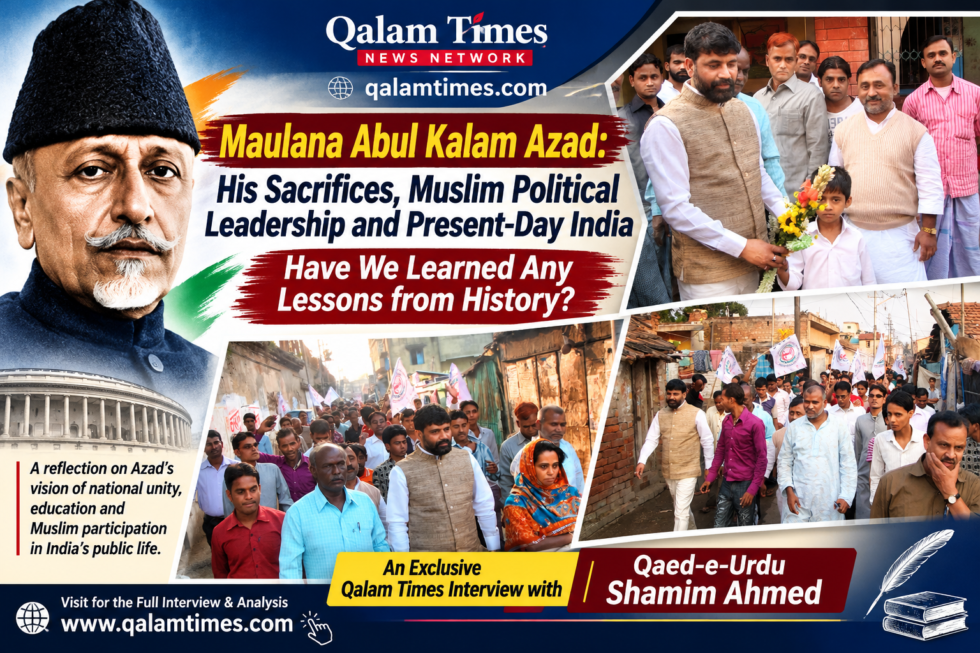
Maulana Abul Kalam Azad’s sacrifices, vision of national unity and commitment to education remain relevant today. In an exclusive Qalam Times interview, Qaed-e-Urdu Shamim Ahmed examines Muslim political leadership, its challenges and the lessons India must learn from Maulana Abul Kalam Azad’s legacy.
Qalam Times News Network
Kolkata, November 21, 2026
An Exclusive Conversation on Maulana Abul Kalam Azad’s Legacy, Muslim Leadership and the Future of India
Maulana Abul Kalam Azad occupies a distinguished place in the history of India’s freedom struggle. His life was defined by sacrifice, intellectual commitment, political courage and an unwavering belief in national unity. He devoted himself to India’s independence, Hindu-Muslim harmony and the idea of a united Indian nation. Through his writings, speeches and political activities, he challenged British colonial rule and placed the interests of the country above personal comfort, political ambition and individual gain.
Nearly eight decades after independence, however, an important question demands serious consideration: Does the present-day Muslim political leadership in India reflect Maulana Abul Kalam Azad’s principles, political wisdom and vision of the nation? Have we genuinely learned from his sacrifices, or have we reduced his name and legacy to speeches, public gatherings and occasions of political convenience?
In an exclusive conversation with Qalam Times, Qaed-e-Urdu Shamim Ahmed, a prominent social and intellectual voice and human rights activist, shared his views on these questions. He argued that remembering Azad merely as a historical personality or India’s former Education Minister would be an incomplete assessment of his contribution. Azad was a statesman, thinker, journalist, freedom fighter and national leader who remained committed to his principles even during the most difficult phases of his political life.
Maulana Abul Kalam Azad ‘s Politics Was Guided by Principles, Not the Pursuit of Power
According to Qaed-e-Urdu Shamim Ahmed, one of the most remarkable aspects of Azad’s political life was that he never regarded politics as a means of securing personal benefits or acquiring positions of authority. For him, politics was a responsibility and an instrument of service to the nation and its people.
Qaed-e-Urdu Shamim Ahmed said: “Maulana Abul Kalam Azad dreamed of an India where no citizen would face discrimination on the basis of religion; where people belonging to every faith and community would enjoy equal respect and rights; and where the identity of Muslims would remain fully compatible with the broader idea of Indian nationhood. He firmly believed that India’s progress and strength could only be achieved through the collective efforts of all communities.” He explained that Azad consistently opposed the idea of Partition and repeatedly tried to convince Muslims that their future was not separate from India. Rather, he believed that their destiny was closely connected with the shared cultural, political and social fabric of the country. This was not simply a political position. It reflected his deep understanding of history and his far-reaching vision of India’s national identity.
What Was Azad’s Message to Indian Muslims?
In Qaed-e-Urdu Shamim Ahmed’s assessment, Azad did not want Muslims to restrict themselves to demanding their rights. He wanted them to establish a meaningful presence in education, politics, the economy, journalism, culture and national institutions.
Qaed-e-Urdu Shamim Ahmed observed: “An important aspect of Azad’s thinking was that Muslims should examine their own weaknesses, make education their highest priority, develop political awareness and play a constructive role in the country’s collective system. He wanted the community to move beyond pessimism, a sense of deprivation and political inactivity. In his view, an educated, aware and politically conscious community would be better equipped to protect its rights.”
This message, he believes, has become even more relevant in the present circumstances. Muslims must look beyond electoral politics and demonstrate their abilities in educational institutions, administrative services, the judiciary, journalism, business, social organisations and policy-making.
A community’s progress cannot depend exclusively on its participation in elections. It also requires knowledge, institutional strength, economic independence and sustained engagement with democratic structures.
Present Muslim Political Leadership and Maulana Abul Kalam Azad ‘s Ideals
During the conversation, the question of whether contemporary Muslim political leadership represents Azad’s ideas and political vision was discussed at length. Qaed-e-Urdu Shamim Ahmed emphasised the need for honest introspection and a serious assessment of the community’s leadership.
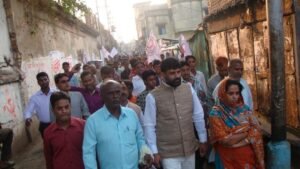
He identified several major challenges facing Muslim political leadership today, including political fragmentation, internal disagreements, a shortage of widely accepted leadership, educational backwardness and the inability to provide a clear social and political direction to younger generations.
Qaed-e-Urdu Shamim Ahmed said:”Azad’s politics was founded on principles, knowledge, reasoning, broad-mindedness and a sense of national responsibility. We must assess our present leadership against these standards. Is our political leadership guiding Muslims towards education and development? Is it preparing young people for the challenges of the future? Is it effectively raising the genuine concerns of Muslims in Parliament, State Assemblies and other democratic institutions? If the answers to these questions are not satisfactory, we must seriously reconsider our political strategy.”
He also cautioned against judging every political leader by the same standard. There are individuals who are making constructive contributions within their respective fields and capacities. Nevertheless, he believes that the community as a whole needs a long-term political vision based on education, principles and a clear understanding of national responsibilities.
Has Azad’s Name Become a Political Symbol Rather Than a Living Ideology?
Qaed-e-Urdu Shamim Ahmed also raised concerns about the way Azad is remembered in contemporary India. On various occasions, including his birth anniversary, Independence Day and other national events, political leaders and public representatives pay tribute to his contribution. However, an important question remains: Are his ideas being translated into practical action? He remarked:”The best way to remember a leader is not simply to place flowers before his photograph or deliver speeches in his honour. The real tribute is to incorporate his principles into our lives, politics and social conduct. Those who invoke Azad’s name must also ask themselves whether they are working with the same commitment towards national unity, educational progress, religious tolerance and constitutional values that he demonstrated throughout his life.”
According to Qaed-e-Urdu Shamim Ahmed, confining Azad’s legacy within the narrow boundaries of political interests diminishes the significance of his intellectual and national contribution. His legacy should inspire practical action rather than remain limited to ceremonial remembrance.
What Did Indian Muslims Gain and Lose After Independence?
Another important part of the discussion concerned the position of Indian Muslims after independence and the extent to which the community benefited from the sacrifices made by Azad and other freedom fighters.
Qaed-e-Urdu Shamim Ahmed observed that independence brought Indian Muslims constitutional guarantees of equal citizenship, religious freedom, educational and cultural rights, as well as opportunities to participate in the democratic process. However, several collective shortcomings have prevented the community from making full use of these opportunities.
He said:”We must recognise that the future cannot be built merely by referring to the sacrifices of the past. Azad showed us the path of education, national unity and political awareness, and that path required continuous commitment. Unfortunately, on several occasions, we gave greater importance to emotional politics while failing to devote sufficient attention to institution-building, modern education, economic self-reliance and intellectual development.”
He stressed that Muslims must acknowledge their achievements while also examining their shortcomings objectively. Both approaches are essential for the development of any community.
According to him, honest self-assessment is not a sign of weakness. Rather, it is a necessary step towards meaningful progress.
What Should the Younger Generation Learn from Azad?
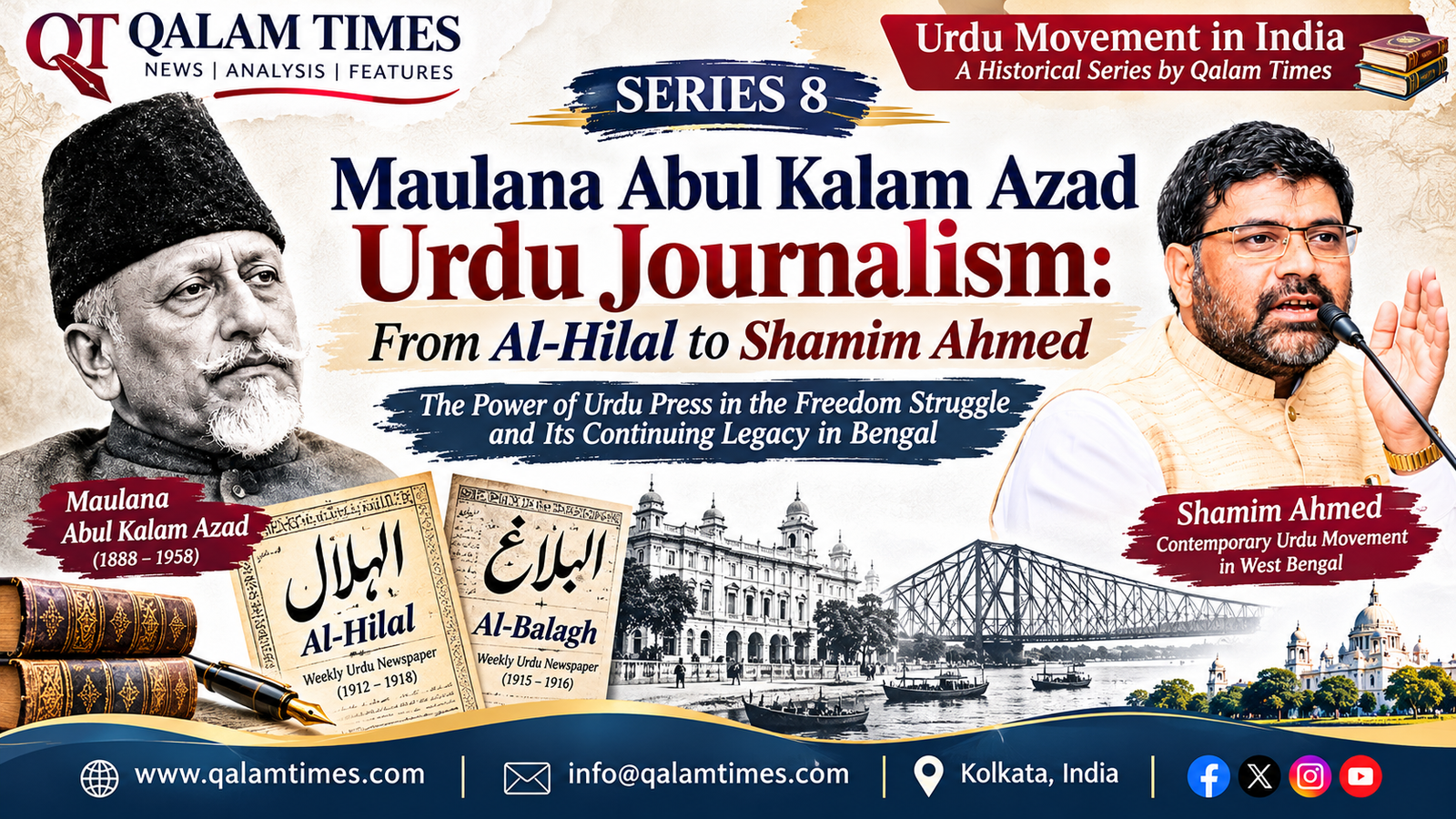
Qaed-e-Urdu Shamim Ahmed urged young people to study Azad’s life, writings and political contributions in greater depth. He believes that Azad’s personality brought together journalism, scholarship, political understanding, religious thought and national responsibility in a way that remains relevant even today. He said:”Young people should not limit their understanding of Azad to a few pages in school textbooks. They should study his journalistic struggle through Al-Hilal and Al-Balagh, read his writings, understand his political vision and explore his speeches. A personality who used the power of the pen as an instrument of resistance against colonial rule has much to teach today’s journalists, intellectuals and political activists.” He further emphasised that the greatest needs of the Muslim community today include quality education, intellectual freedom, modern knowledge, economic stability and social unity. Without progress in these areas, he argued, even the strongest political slogans cannot be transformed into lasting achievements.
Azad’s Dream and the India of Today
Concluding the discussion, Qaed-e-Urdu Shamim Ahmed emphasised that Azad’s philosophy should not be confined to any single religion or community. His vision of India was rooted in shared civilisation, constitutional equality and national unity. He believes that contemporary India also needs the kind of political and social awareness that Azad represented — an approach that encourages dialogue despite differences, unity amid diversity and shared national responsibility alongside religious identities. Qaed-e-Urdu Shamim Ahmed said:”Maulana Azad made sacrifices throughout his life not for any office, position or political advantage, but for an India where every citizen could live with dignity. It is now our responsibility to ensure that his sacrifices do not become merely a part of history. His ideas must become the foundation of our collective future.”
The Fundamental Question We Must Ask Ourselves
Nearly eight decades after independence, Indian society must seriously reflect on a few fundamental questions. Have we truly honoured the sacrifices of Maulana Abul Kalam Azad? Has our political leadership learned from his principles? Have we passed on to the younger generation the intellectual legacy for which he dedicated his life?
Remembering Azad is easy; following his ideals is a far greater responsibility. His philosophy calls upon Muslims to become educated, politically aware, conscious of their constitutional rights and actively involved in the development of the country. It also reminds the wider nation that unity, equality and mutual respect are essential to India’s democratic future. Communities do not move forward simply by taking pride in their glorious past. They progress when they translate the ideas and principles of their great leaders into meaningful action in the present and the future.
The true tribute to Maulana Abul Kalam Azad is therefore not merely to remember his name in speeches and commemorative events, but to keep his ideals alive through our conduct, politics, education and collective commitment to the nation.