





Potato Farmers in West Bengal receive major relief as Chief Minister Suvendu Adhikari announces ₹50 per quintal export subsidy, ₹1,120 assured price, crop insurance support and flood compensation.
Chief Minister Promises ₹50 Per Quintal Export Subsidy, ₹1,120 Minimum Assured Price, Crop Insurance Support and Compensation for Flood-Hit Farmers; Announces End to Restrictions on Inter-State Potato Transportation
Qalam Times News Network
Hooghly, November 5, 2026
Potato Farmers in West Bengal have received a series of significant assurances from Chief Minister Suvendu Adhikari, who announced a comprehensive package of financial assistance, export incentives and protective measures aimed at addressing the long-standing problems faced by the state’s potato-growing community. Speaking at a programme in Pursurah, Hooghly district, on Thursday, the Chief Minister announced that farmers would be free to transport potatoes to other states without unnecessary restrictions, while the government would provide a subsidy of ₹50 per quintal on potatoes exported by road or rail.

The announcement marks an important policy shift in the state’s approach towards potato marketing, inter-state transportation and agricultural support. Potato Farmers have repeatedly faced difficulties when production exceeds domestic demand, particularly when restrictions on transportation and limited access to external markets contribute to falling prices and distress sales. Adhikari accused the previous Trinamool Congress government of creating difficulties for farmers by restricting the movement of potatoes to neighbouring states and alleged that these policies had contributed to financial losses for cultivators.
No Restrictions on Inter-State Potato Transportation
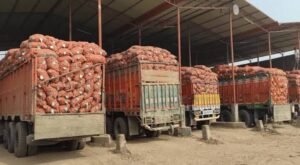
Addressing the gathering, Adhikari recalled the difficulties that potato growers allegedly experienced under the previous administration, particularly when attempting to transport surplus production to markets in Jharkhand, Bihar, Assam and Uttar Pradesh. He declared that his government had issued instructions to ensure that potato-laden vehicles were not unnecessarily stopped at state borders. The Chief Minister said that farmers should have the freedom to sell their agricultural produce wherever they could obtain a reasonable market price. According to him, restrictions on the movement of potatoes had previously prevented cultivators from accessing markets outside West Bengal, leaving them with limited options when local supply exceeded demand. Under the new announcement, the state government will provide an incentive of ₹50 per quintal for potatoes transported to other states by road or rail. The measure is intended to reduce transportation costs and encourage farmers and traders to explore markets beyond West Bengal. The government believes that improved access to neighbouring markets could help reduce pressure on local supply and prevent distress selling during periods of excessive production.
₹1,120 Assured Price and Government Compensation
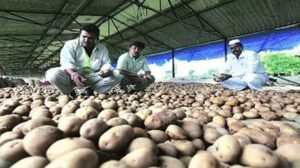
One of the most significant announcements concerned the minimum assured price for potato growers. Adhikari announced that the government would establish a fee-based procurement arrangement with a benchmark price of ₹1,120 per quintal. If the prevailing market price falls below this level, the government would compensate farmers for the difference. The Chief Minister assured cultivators that financial constraints would not prevent the government from extending the promised support. He also alleged that potato farmers had previously suffered because of black marketing, inadequate market regulation and the inability to obtain remunerative prices for their produce. The proposed compensation mechanism is intended to protect farmers against sudden market fluctuations and provide a degree of financial security when prices fall below the announced benchmark. However, the precise eligibility conditions, payment mechanism and implementation guidelines will be important in determining how effectively this assurance translates into actual financial relief for cultivators.
Crop Insurance Premium to Be Paid by the State Government
In another important announcement, the Chief Minister said that potatoes would be brought under the Pradhan Mantri Fasal Bima Yojana (PMFBY), the Centre’s flagship crop insurance programme. He announced that the farmers’ share of the insurance premium would also be borne by the West Bengal government. The decision is intended to reduce the financial burden on cultivators and encourage greater participation in crop insurance. Potato cultivation involves substantial investment in seeds, fertilisers, irrigation, labour and storage. Adverse weather conditions, crop diseases and unexpected agricultural losses can expose farmers to considerable financial uncertainty. By undertaking to pay the farmers’ premium contribution, the state government aims to make crop insurance more accessible and provide additional protection against agricultural risks. The actual benefits will depend on the insurance coverage, enrolment arrangements, assessment of crop losses and timely settlement of claims.
West Bengal’s Potato Production and Cold Storage Position
Providing an overview of the state’s potato production and storage situation, the Chief Minister cited figures for the 2025–26 agricultural year. According to the figures presented at the programme, West Bengal produced approximately 140 lakh metric tonnes of potatoes during the year. More than 75 lakh metric tonnes were reportedly stored in cold storage facilities across the state. Of this quantity, approximately 48 lakh metric tonnes had already been withdrawn by the time of the announcement.The remaining 27 lakh metric tonnes were required to be removed from cold storage by November 30.
Adhikari observed that the existing legal provisions permitted the storage period to be extended up to December 31. Nevertheless, he expressed the government’s expectation that the remaining stock would be gradually released into the market by November 30. The timely release of stored potatoes is particularly important because excessive accumulation can create difficulties for farmers, traders and cold storage operators. At the same time, the availability of adequate market demand and transportation facilities will be crucial to preventing a sudden fall in prices. The government’s export incentive is expected to play an important role in facilitating the movement of surplus potatoes to markets outside the state.
Black Marketing: Government Promises Action Within 24 Hours
The Chief Minister also addressed complaints relating to black marketing and irregularities in the potato trade. He assured farmers that any complaint concerning black marketing would receive attention and that the administration would take action within 24 hours of receiving such a complaint. The assurance comes against the backdrop of repeated concerns raised by cultivators regarding the difference between farm-gate prices and retail market prices. Farmers frequently complain that they receive inadequate returns for their produce while consumers continue to pay substantially higher prices in retail markets. The government has indicated that it intends to strengthen monitoring and take action against those involved in unfair trading practices. Effective implementation, however, will require regular inspections, transparent market information, accessible complaint mechanisms and accountability among officials responsible for agricultural marketing regulation.
Financial Assistance for Flood-Affected Farmers
Apart from the potato-related announcements, the Pursurah programme also focused on financial assistance for farmers affected by floods and other natural disasters. Chief Minister Suvendu Adhikari announced that farmers who had suffered severe agricultural losses due to flooding would receive compensation of up to ₹1.80 lakh. Those who had experienced partial damage would be eligible for assistance of ₹90,000, while farmers suffering comparatively minor losses would receive ₹40,000. The government said that financial assistance was being extended according to the extent of agricultural damage. The Chief Minister also referred to the difficult circumstances of farmers in Bhutni Char, where 10,750 flood-affected cultivators were being provided with seeds to help them resume agricultural activities. The distribution of seeds is intended to support the next cultivation cycle and reduce the difficulties faced by farming families whose agricultural land and crops were affected by flooding.
Electricity Subsidy for Four Lakh Farmers
In a further measure aimed at reducing agricultural production costs, Adhikari announced an electricity subsidy of ₹2 per unit for four lakh farmers. Electricity is an important component of agricultural expenditure, particularly for cultivators dependent on electric pumps and irrigation systems. The subsidy is expected to provide some relief to farmers facing rising cultivation costs and help reduce the financial burden associated with irrigation. The Chief Minister also assured that approximately 46 lakh farmers affected by floods would receive compensation under the government’s announced assistance programme. The details of eligibility, verification and disbursement will determine how quickly the promised assistance reaches the intended beneficiaries.
Krishak Samman Nidhi Launched in Pursurah
The Pursurah event also witnessed the launch of the Krishak Samman Nidhi initiative, through which financial assistance was transferred to eligible farmers. The programme was presented as part of the state government’s wider commitment to agricultural welfare and direct financial support. Adhikari said that the government was committed to ensuring that eligible farmers received the benefits announced under its agricultural assistance framework. The programme is part of a broader effort to strengthen the economic position of farming families through direct transfers, crop-related assistance, electricity subsidies and compensation for agricultural losses.
A Major Test for the Government’s Agricultural Policy
The announcements made in Pursurah represent a substantial set of promises directed towards one of West Bengal’s most important agricultural communities. Potato cultivation plays a significant role in the rural economy of several districts, including Hooghly, Burdwan, Bankura, Paschim Medinipur and other potato-producing regions. For thousands of farming families, the success of an agricultural season depends not merely on production but also on access to markets, reasonable transportation costs, adequate cold storage facilities and the ability to obtain remunerative prices. The new government’s challenge will be to convert these announcements into an effective and transparent system of implementation. The proposed ₹50 per quintal export subsidy, the ₹1,120 benchmark price, government-supported crop insurance and compensation for flood-related losses could provide meaningful relief if the promised measures are implemented without bureaucratic delays. At the same time, farmers will expect transparent guidelines, timely payments and protection against market manipulation. The most important test will be whether these measures enable cultivators to receive a fair return for their hard work rather than remain dependent on temporary announcements and seasonal assurances.