




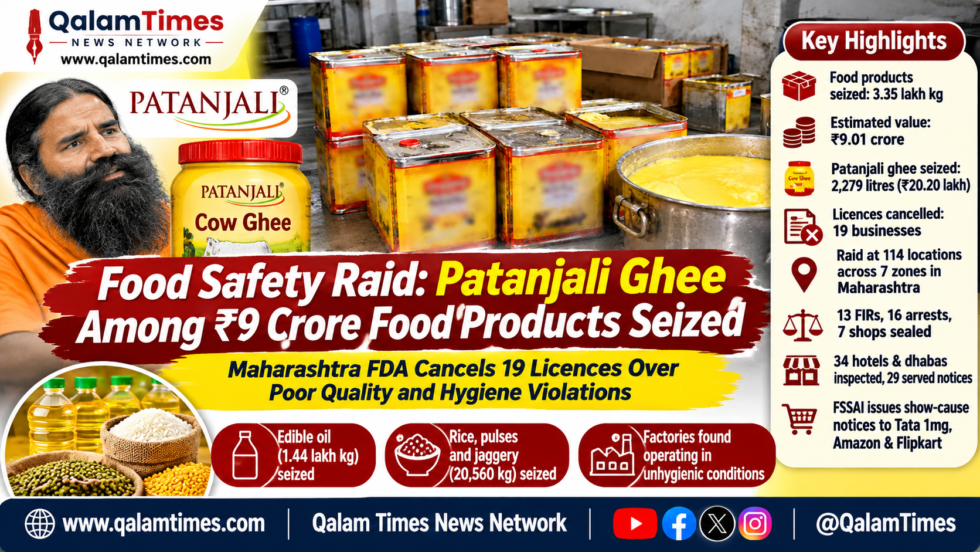
Food Safety Raid in Maharashtra leads to the seizure of food products worth ₹9.01 crore, including Patanjali ghee. FDA cancels 19 licences and takes action over alleged food safety violations.
Maharashtra FDA conducts a state-wide inspection drive during the festive season, confiscating 3.35 lakh kg of food products and taking action against businesses over alleged safety and hygiene violations.
Qalam Times News Network
Mumbai, November 3, 2026
Food Safety Raid operations across Maharashtra have resulted in the seizure of food products worth more than ₹9 crore, including a substantial quantity of Patanjali-branded ghee. The state’s Food and Drug Administration (FDA) has also cancelled the licences of 19 food businesses, including a Patanjali distributor, following inspections that reportedly uncovered serious concerns about product quality, hygiene and compliance with food safety requirements.
The Food Safety Raid was carried out across seven administrative zones, covering 114 locations throughout the state as part of a special enforcement campaign during the festive season. According to the FDA, officials confiscated approximately 3.35 lakh kilograms of food products with an estimated market value of ₹9.01 crore. Authorities said several seized products failed to meet the required food safety standards, while suspected adulteration and unhygienic manufacturing conditions were also among the concerns identified during the inspections.
Patanjali Ghee Seized in Sambhajinagar; Edible Oil and Other Essentials Also Confiscated
One of the significant seizures took place at the warehouse of M/s Divya Mahavitarak, identified as a super distributor of Patanjali Ayurved in Chhatrapati Sambhajinagar. FDA officials confiscated 2,279 litres of Patanjali ghee from the premises, with an estimated market value of approximately ₹20.20 lakh.
Across the wider operation, a total of 4,032 units of ghee were seized. The FDA stated that the confiscated ghee did not satisfy essential food safety requirements. The action also covered suspected adulterated ghee and other food products that were found to be below the prescribed quality standards. The authorities have taken action against businesses connected with the distribution and sale of such products.
The enforcement drive was not limited to dairy products. At the premises of Avenue Supermarts Limited in Bhiwandi, officials seized approximately 1,44,218 kilograms of edible oil. Another 20,560 kilograms of food items, including rice, pulses and jaggery, were also confiscated during the inspections.
The scale of the seizure reflects the FDA’s wider examination of food storage, distribution and manufacturing practices across Maharashtra, particularly at a time when demand for packaged food, cooking ingredients and dairy products generally increases during the festive period.
Licences Cancelled Over Hygiene and Manufacturing Violations
The FDA has cancelled the licences of 19 food-related businesses in Mumbai, Amravati and Chhatrapati Sambhajinagar. The action reportedly followed inspections of food manufacturing facilities where officials identified several alleged violations of mandatory hygiene and safety requirements. According to the information released by the department, some establishments were operating in unhygienic conditions. Inspectors also found inadequate pest-control arrangements, poor sanitation and a lack of essential documents required under food safety regulations.
The FDA’s action is intended to address violations at the manufacturing and distribution levels. Businesses operating in the food sector are required to maintain proper cleanliness, prevent contamination, follow prescribed storage practices and keep the necessary regulatory records. The department has indicated that establishments failing to comply with these requirements may face enforcement measures.
Crackdown on Banned Food Products: FIRs, Arrests and Sealed Shops
The enforcement campaign also extended to the sale and distribution of prohibited food products. Between October 28 and October 31, officials confiscated goods worth approximately ₹79.40 lakh from 17 establishments allegedly involved in selling banned food items. The operation resulted in the registration of 13 FIRs, the sealing of seven shops, the seizure of six vehicles and the arrest of 16 people, according to the reported figures. In a separate inspection exercise, FDA teams visited 34 hotels and roadside eateries, commonly known as dhabas, in Nashik, Chhatrapati Sambhajinagar and Nagpur. Notices were issued to 29 establishments following the inspections. The action indicates that the department is also examining food preparation and service practices in restaurants and roadside food outlets.
FSSAI Issues Notices to Tata 1mg, Amazon and Flipkart Over Collagen Product
In another development concerning food-related product compliance, the Food Safety and Standards Authority of India (FSSAI) has reportedly issued show-cause notices to Tata 1mg, Amazon and Flipkart over alleged irregularities in the labelling and advertising of Tata 1mg Marine Collagen Powder.
The notices concern the manner in which the product was labelled and promoted. The development has brought online marketplaces and digital health-product retailers under scrutiny over their responsibilities in ensuring that products offered to consumers comply with applicable food safety and advertising requirements.
The Maharashtra operation highlights the importance of regular inspections throughout the food supply chain, from manufacturing units and warehouses to retail outlets, hotels and online marketplaces. The seizure of products worth ₹9.01 crore and the cancellation of business licences underline the scale of the regulatory action undertaken by the state authorities.
For consumers, the developments also serve as a reminder to check product labels, packaging, manufacturing and expiry dates, and the credibility of sellers before purchasing food items. However, the seizure of a product during an inspection should be distinguished from a final legal finding of adulteration or wrongdoing; the specific violations and any subsequent action must be established through the relevant regulatory and legal processes.
The FDA’s campaign raises a broader question about how consistently food safety standards are being enforced across large distributors, manufacturing facilities and smaller food businesses. The effectiveness of the operation will ultimately depend not only on seizures and licence cancellations, but also on follow-up inspections, transparent findings and sustained compliance by the food industry.