




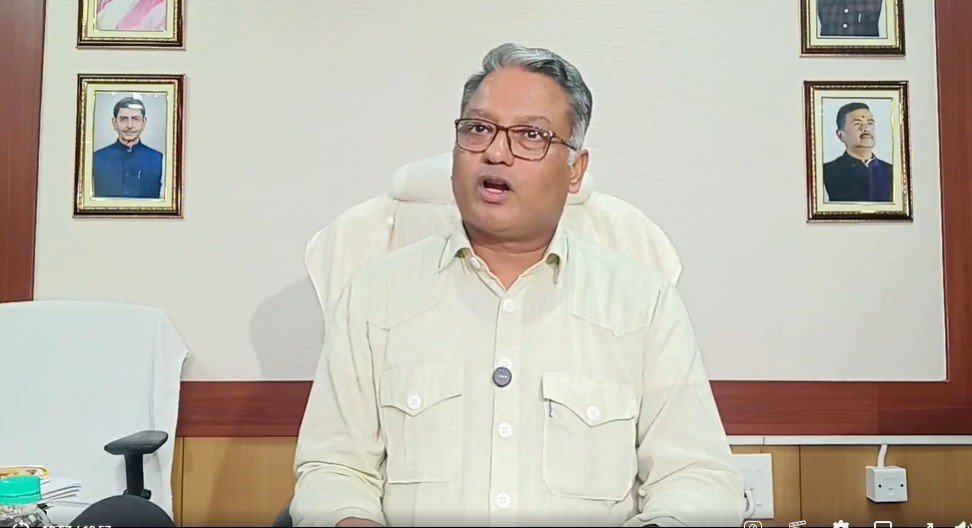
BEd Colleges in West Bengal face major scrutiny after inspections reveal missing institutions, poor infrastructure, attendance concerns and alleged degree-selling practices.
Qalam Times News Network
Kolkata September 3, 2026
West Bengal Inspects 602 BEd Institutions, Finds Serious Infrastructure and Attendance Gaps
BEd Colleges across West Bengal are facing intensified scrutiny following a large-scale inspection drive that has exposed serious concerns over infrastructure, classroom attendance, institutional functioning and the alleged sale of teaching degrees without proper academic engagement.
The state Higher Education Department has reportedly issued show-cause notices to around 450 to 475 BEd Colleges after inspections found widespread irregularities. The authorities have warned that institutions failing to provide satisfactory explanations or correct the deficiencies within the stipulated period could face stringent action, including suspension of admissions and withdrawal of affiliation.

The action comes after BEd Colleges in the state came under the spotlight over allegations that students from outside West Bengal were obtaining degrees without attending regular classes. Higher Education Minister Jagannath Chattopadhyay has expressed strong concern over the alleged commercialization of teacher education and warned that educational institutions cannot be allowed to operate merely as centres for issuing degrees.
Inspections Triggered by Complaint from Neighbouring State
According to the minister, the latest crackdown followed a letter sent by the Chief Secretary of a neighbouring state to the West Bengal government. The letter reportedly raised concerns that students from outside the state were enrolling in institutions offering BEd, polytechnic, ITI and pharmacy courses and obtaining qualifications without attending classes on a regular basis.
The complaint prompted the Higher Education Department to conduct a comprehensive review of the functioning of BEd institutions across West Bengal. During July and August, inspection teams visited 602 BEd colleges as part of the statewide exercise.
The institutions were assessed against a 100-point evaluation matrix covering infrastructure, teaching arrangements, faculty availability, attendance records, classroom facilities and other academic requirements. The overall average score recorded by the colleges was only 51.5 per cent, according to information shared by the minister.
53 BEd Colleges Reportedly Found Non-Existent
One of the most serious findings involved 53 colleges that inspection teams allegedly could not locate at their officially recorded addresses.
In some cases, the teams reportedly found completely different activities operating at the stated locations, while in others the premises were found locked or apparently unused. The findings have raised questions about how such institutions obtained recognition or continued to operate.
Multiple Institutions at the Same Address
Inspection teams also reportedly identified 17 cases in which more than one educational institution appeared to be functioning from the same premises.
Officials allegedly found BEd, polytechnic and pharmacy institutions sharing addresses, with some establishments operating from what appeared to be residential flats or even drawing-room-sized premises. In several cases, the institutions reportedly appeared to have little more than signboards to indicate their existence.
265 Institutions Marked as Non-Functional
The inspection report has also highlighted a large number of institutions with extremely poor infrastructure and academic arrangements.
As many as 114 colleges reportedly scored below 30 marks out of 100. When institutions considered completely non-functional or otherwise seriously deficient were taken together, the department identified around 265 colleges as effectively unfit to continue in their existing form.
Another 121 institutions were reportedly found to have major infrastructure-related shortcomings, putting them under further scrutiny.
Only 151 BEd Colleges Meet Relatively Satisfactory Standards
The inspection did not produce entirely negative findings. Around 151 colleges reportedly secured scores between 65 and 85 per cent, indicating comparatively better compliance with the required standards.
These institutions were said to have maintained basic academic infrastructure, teacher attendance and other requirements, including CCTV-based monitoring and documentation of institutional activities.
Concern Over Students from Outside West Bengal
The scale of students arriving from other parts of India has also become a major issue in the department’s assessment.
West Bengal reportedly produces around 62,000 BEd graduates every year. The minister alleged that a significant number of students from other states enrol in colleges in West Bengal but do not attend regular classes.
Students from Goa, the northeastern states and neighbouring states were reportedly among those travelling to West Bengal for BEd courses. The minister questioned how students who may not understand Bengali could complete a Bengali-medium teacher-training programme without regular academic participation.
He specifically raised the example of students from Goa, including Konkani-speaking students, questioning how they could legitimately complete a Bengali-medium BEd programme if they were not attending classes.
The allegations have raised broader questions about attendance monitoring, examination practices and the regulatory oversight of private teacher-training institutions.
The colleges that received show-cause notices have been given 21 days to respond and address the deficiencies identified during inspection.
The department has indicated that the process will follow the principles of natural justice, giving institutions an opportunity to explain their position and rectify shortcomings before final action is taken.
However, the warning from the Higher Education Department is clear: colleges that fail to provide satisfactory explanations or improve their facilities could face de-affiliation, suspension of admissions and other regulatory action.
The minister has stressed that teacher education cannot be treated as a commercial enterprise in which students simply pay fees and receive degrees without undergoing proper academic training.
The latest inspection drive could therefore become a significant turning point for West Bengal’s BEd sector. If the findings are followed by firm regulatory action, hundreds of institutions may be required to improve their infrastructure, strengthen classroom teaching and ensure genuine student attendance before continuing to admit trainees.
For a state that produces tens of thousands of teacher-training graduates every year, the government now faces the larger challenge of ensuring that a BEd qualification represents genuine academic preparation rather than merely a certificate obtained through financial transactions.