



Park Street Woman Sita Devi meets Shubhendu Adhikari as the Kolkata pavement-living controversy intensifies amid claims involving Mamata Banerjee and Agnimitra Paul.
By Qalam Times News Network
Kolkata, August 25, 2026
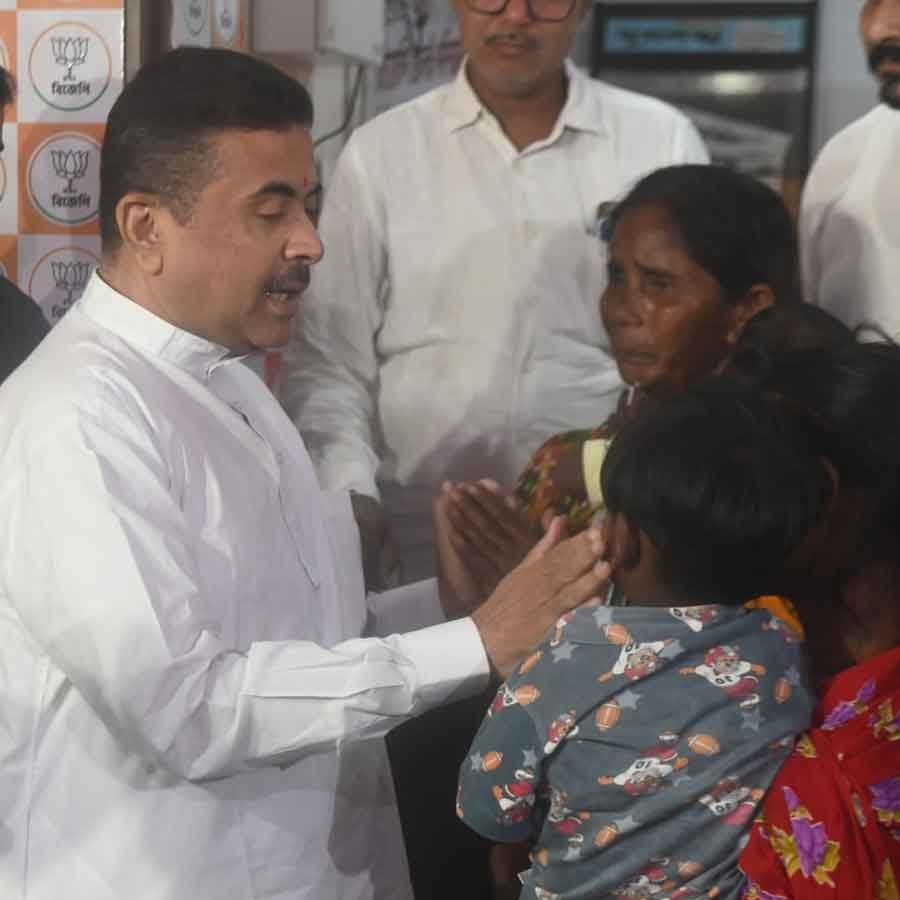
The Park Street Woman who was recently seen heating milk for her child on a pavement in central Kolkata met Chief Minister Shubhendu Adhikari at the BJP office in Salt Lake on Tuesday, bringing the politically charged episode back into the spotlight. The woman, identified as Sita Devi, arrived carrying a child and spoke with the Chief Minister during his public grievance-hearing programme.

The Park Street Woman became the centre of public and political attention after images of her using a stove on the pavement to warm milk for her baby surfaced. The incident triggered a heated political exchange involving the BJP, the Trinamool Congress and former Chief Minister Mamata Banerjee.
Shubhendu Alleges Political Pressure, Offers Housing Assistance to Park Street Woman
After meeting Sita Devi, Shubhendu Adhikari accused Mamata Banerjee of attempting to use the incident for political purposes. According to the Chief Minister, people were allegedly sent to the woman with an offer of money in return for making statements against the BJP.
Shubhendu claimed that the woman rejected such an approach and instead expressed her confidence in him and the BJP. He quoted her as saying that she had faith in the Chief Minister and did not want to get involved in what he described as the “Mamata camp”.
The Chief Minister also said he had advised Sita Devi not to continue living on the pavement. “The pavement is meant for people to walk on,” he said, adding that arrangements would be made to provide the family with a proper place to stay.
Shubhendu further used the occasion to attack both the Left Front and the Trinamool Congress, alleging that successive governments had failed to adequately address the problems of people living on the streets. He claimed that the Left had remained in power for 34 years while the Trinamool Congress had governed the state for around 15 years, yet the plight of such families remained unresolved.
The original controversy erupted after Urban Development and Municipal Affairs Minister Agnimitra Paul reportedly reacted angrily after seeing the woman heating milk for her child on a stove on the Park Street pavement. Her manner of addressing the woman subsequently attracted criticism from sections of the public and opposition political circles.
On Monday, Mamata Banerjee intervened in the controversy through a social-media post. She said that the woman was a helpless mother who had no place to stay and was simply trying to prepare milk for her child. Banerjee argued that the immediate priority should be to provide the family with shelter rather than criticise the mother for using a stove on the pavement.
Banerjee also said that, if the family agreed, she was prepared to take responsibility for them. She suggested that accommodation could be arranged at the home of one of her party colleagues and that arrangements could also be made for the children’s education and food.
Shubhendu responded by questioning why Banerjee was not personally offering accommodation if she was genuinely concerned about the family. He also suggested that any such arrangement would ultimately depend on whether the woman herself agreed to it.
The controversy has therefore moved beyond a question of pavement living and child welfare, becoming another point of confrontation between the BJP and the Trinamool Congress.
Meanwhile, Agnimitra Paul sought to clarify her earlier conduct. Facing criticism over the way she spoke to the woman, Paul admitted that she may have raised her voice and said that she should perhaps have explained the matter in a calmer manner.
At the same time, Paul maintained her position that pavements are intended for pedestrian movement rather than residential use. She also linked the issue to the broader question of maintaining Kolkata’s roads and public spaces in a manner suitable for residents, visitors and future investment.
The episode has now raised a wider question about homelessness, access to shelter and the treatment of vulnerable families living on city streets. What began with a mother heating milk for her child on a Park Street pavement has developed into a sharp political exchange, with both sides using the incident to question the other’s record and approach to the urban poor.