



Freedom of Dissent is essential to democracy as Kolkata venue cancellations and political-pressure allegations raise questions about public space, free expression and accountability.
The allegations surrounding cancelled venue bookings in Kolkata raise a larger question for a democratic society: political disagreement must never become a reason to restrict the legitimate space for meetings, debate and peaceful dissent.
Qalam Times News Network — Editorial Desk
Kolkata | August 19, 2026
Freedom of Dissent: A democracy is not tested when everyone agrees; it is tested when an unpopular, inconvenient or politically uncomfortable voice asks to be heard. The allegations surrounding the Cockroach Janta Party (CJP) and the cancellation of venue bookings in Kolkata therefore deserve attention beyond the immediate political controversy. A city that takes pride in its intellectual traditions and history of public debate must ensure that access to legitimate public spaces does not depend on political approval.
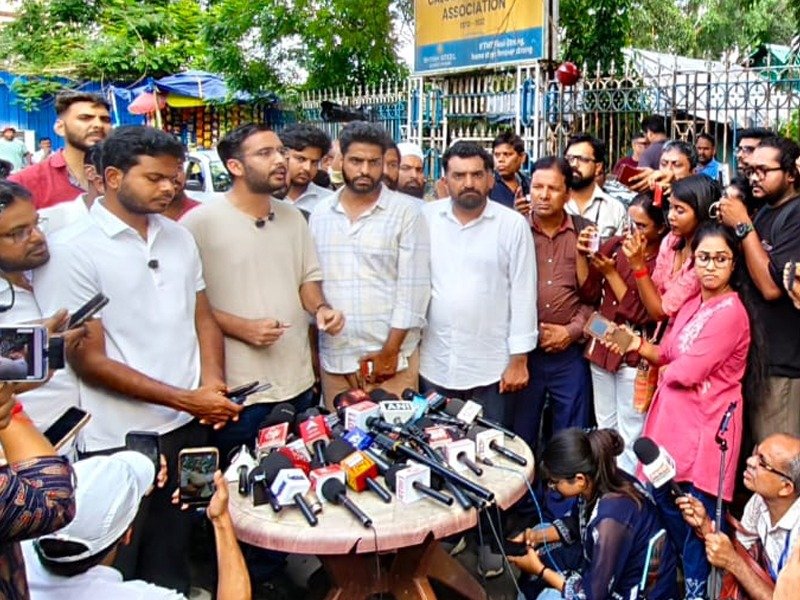
The principle of Freedom of Dissent becomes particularly important when allegations of political pressure are made. CJP co-convenor Ashutosh Ranka has alleged that at least seven venues refused or cancelled bookings for the organisation, including the historic Bharat Sabha hall and Press Club Kolkata. He has attributed the cancellations to political pressure and alleged intimidation by BJP-linked leaders. These are serious allegations, but they remain allegations and should be investigated rather than accepted as established fact without evidence.
There is, however, another side to the story that must also be acknowledged. An employee of the Indian Association reportedly said that the hall had to cancel the CJP booking because another organisation extended its existing booking. A senior police officer also denied political intimidation, while a BJP spokesperson said he was unaware of any pressure from BJP leaders. Press Club Kolkata, meanwhile, attributed the disruption at its premises to flooding and a power failure following heavy rain.
This conflicting account is precisely why responsible journalism must resist the temptation to convert an allegation into a verdict. The proper response is neither to dismiss the complaint because it comes from a politically critical group nor to declare political intimidation as fact before the evidence is established.
What matters most is the principle involved. If a venue cancels a booking for legitimate administrative, logistical or contractual reasons, that explanation should be documented clearly and communicated transparently. If a booking is withdrawn because of threats or political pressure, that is an entirely different matter and demands serious scrutiny by the authorities.
A democratic government should not be afraid of criticism. Nor should institutions that serve the public be afraid of hosting disagreement. Political organisations, civil-society groups, student activists and campaigners must have reasonable opportunities to hold peaceful meetings and address the media, subject of course to lawful and uniformly applied rules.
The Press Club episode deserves particular sensitivity because institutions associated with journalism carry a special responsibility toward public debate. The club has stated that heavy rain caused flooding and disrupted electricity, with repairs continuing until the afternoon. If that explanation is correct, it should be sufficient to settle that particular controversy. But if evidence emerges of deliberate interference, the matter should not be brushed aside.

The larger political context makes the issue even more significant. The CJP team came to Bengal in connection with the death of Janab Mafik in Bankura, whose son Sheikh Abdul Hafeez is associated with the organisation. CJP members alleged that Hafeez had also been assaulted after documenting the condition of his childhood school as part of the group’s “School Thik Karo” campaign. The allegations against political activists in that episode are also subject to investigation.
The police, for their part, have said that eight people were arrested following a written complaint from Mafik’s wife, Hasina Begum. Police also stated that further arrests could follow as the investigation progresses. The accused were produced before a court, where police sought custody.
This is where political accountability becomes essential. If people have been attacked because they documented the condition of a public school or because they expressed political views, the law must act. If the allegations are exaggerated or unsupported, that too must be established through a fair investigation. Justice cannot be shaped according to the political identity of either the accused or the complainant.
Ranka has demanded arrests, protection for the bereaved family and a court-monitored investigation into the conduct of police personnel at the Indas police station. He has also called for the construction of a school in memory of Hafeez’s father and announced a wider “School Thik Karo” campaign. These demands should be examined on their merits rather than being accepted or rejected merely because they come from a political campaign.

There is an important distinction between political protest and political intimidation. Protest is a legitimate democratic instrument. Threats, violence, coercion and interference with lawful activities are not. That distinction must apply equally to every political party and organisation.
The same standard should also apply to allegations against the police. If there has been negligence or deliberate inaction, an impartial inquiry should establish responsibility. But allegations alone cannot substitute for evidence. Institutions gain credibility not by protecting themselves from scrutiny, but by allowing scrutiny to produce verifiable answers.
Kolkata has historically been associated with argument, intellectual disagreement, journalism, literature and political activism. That tradition is valuable precisely because it allows competing ideas to occupy the same civic space. A democratic city cannot become inclusive only when the people speaking are politically convenient.
The controversy over venue bookings may ultimately prove to have resulted from ordinary administrative circumstances, as some of the institutions involved have maintained. Or further evidence may establish that political pressure played a role. At this stage, the responsible position is to keep both possibilities open and demand transparency.
The lesson is therefore broader than the fortunes of one organisation or one political party. Freedom of Dissent should not be a privilege granted by political favour. It should be a democratic principle protected by transparent rules, equal treatment and the rule of law.
Those in power must tolerate criticism. Those in opposition must respect evidence and lawful procedures. Public institutions must remain neutral. The police must investigate without fear or favour. And journalists must continue asking difficult questions without becoming instruments of any political camp.
Democracy becomes stronger when the answer to an uncomfortable voice is another argument—not a cancelled hall, a threat, intimidation or violence.
That is the standard Kolkata, Bengal and India should demand from every political force and every public institution.