



Sanctions: US unveils sweeping new economic measures against Iran, warning global banks, businesses and governments that financial ties with Tehran could trigger severe US penalties.
Qalam Times News Network
WASHINGTON, August 25, 2026
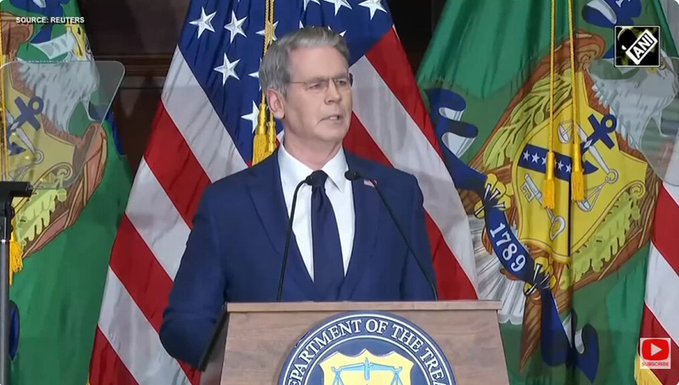
WASHINGTON: Sanctions have entered a new and potentially more aggressive phase in the US campaign against Iran, with Treasury Secretary Scott Bessent warning governments and businesses around the world that continuing significant economic dealings with Tehran could carry a heavy financial cost.
Bessent announced a broad new US pressure campaign on Monday aimed at cutting off Iran’s remaining sources of revenue and disrupting the financial networks that allow the Islamic Republic to continue international trade. He said President Donald Trump was personally contacting foreign leaders and asking them to end economic interactions with Tehran.
The sanctions campaign is designed to reach beyond Iranian companies and individuals. Bessent warned that foreign entities involved in helping Iran move money, process transactions or convert oil revenue into usable funds could eventually face US penalties. He also delivered a particularly strong warning to institutions involved in money laundering, saying those that facilitate such activity could lose access to the US dollar financial system.
Washington Gives Global Businesses a Choice to Avoid Sanctions
The new measures, described by the Trump administration as an economic offensive against Iran, cover a wide range of sectors. These include finance, oil, shipping, aviation, technology, gold and digital assets. The US has already been targeting Iranian shadow-banking and sanctions-evasion networks, including financial intermediaries used to move foreign currency and oil proceeds.
Bessent said Washington was giving governments and companies an opportunity to change course before the toughest secondary sanctions are imposed. That means the most severe measures are not necessarily being applied immediately, but the Treasury secretary made clear that the window for compliance could be short.
His warning carries particular significance for countries that maintain major commercial relationships with Iran. China, Turkey and the United Arab Emirates have traditionally been among Tehran’s important trading partners, meaning any expansion of secondary sanctions could have consequences far beyond Iran’s borders.
Bessent’s message was blunt: businesses and financial institutions that continue helping Tehran access international markets should not assume they can remain outside the reach of Washington.
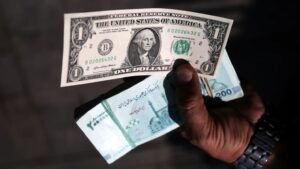
The latest US announcement came as Iran’s currency suffered another dramatic decline. The rial fell to around 2.02 million against the US dollar in market trading on Monday, reaching a new record low. The currency has been under severe pressure amid high inflation, economic contraction, sanctions and the continuing regional conflict.
The weakening currency is adding to the pressure on ordinary Iranians, who are facing sharply higher prices for essential goods. Reports indicate that rice prices have risen substantially since the conflict began, while beef prices have increased even more sharply. The International Monetary Fund is also forecasting a significant contraction in Iran’s economy this year.
President Trump, meanwhile, has portrayed Iran’s economic condition in increasingly severe terms, claiming that the country’s economy is collapsing and describing Tehran as being caught in an economic and military crisis.
Washington’s strategy is therefore becoming increasingly focused on financial pressure rather than relying solely on military measures. The objective is to restrict Tehran’s ability to earn, transfer and spend foreign currency while making it increasingly difficult for international businesses to maintain commercial links with Iran.
However, the effectiveness of the strategy remains uncertain. Iran has previously developed alternative financial channels and sanctions-evasion networks to continue international trade. US officials have repeatedly targeted these networks, including exchange houses, front companies, shipping operations and digital-asset platforms.
The latest announcement raises the stakes considerably because Washington is now warning that the consequences may extend to third-country entities that help Iran circumvent US restrictions.
For global businesses and governments, the message from Washington is clear: economic ties with Tehran could increasingly become a choice between maintaining access to the US-led financial system and continuing commercial engagement with Iran.