



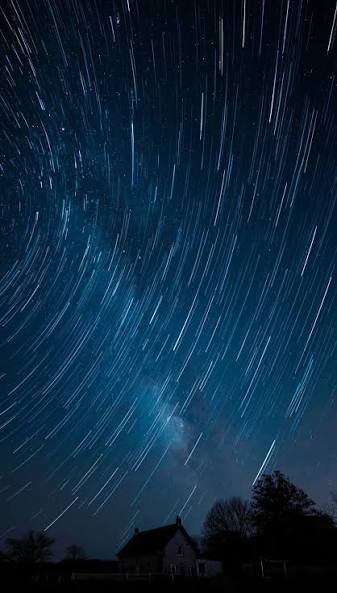
Perseid Meteor Shower peaks over Saudi Arabia as dark skies offer excellent viewing, while August 2026 brings solar and lunar eclipses and Venus.
Dark skies across northern Saudi Arabia offer excellent opportunities to witness one of the year’s most active meteor showers as August brings a series of major astronomical events.
Qalam Times News Network
Kolkata, August 13, 2026
The Perseid Meteor Shower reached its annual peak during the night of August 12–13, turning the skies over Saudi Arabia into a spectacular natural display. The meteor shower is among the most eagerly anticipated astronomical events of the year, and this year’s occurrence has been particularly favourable for skywatchers because the peak coincided with a New Moon, leaving the night sky relatively dark.
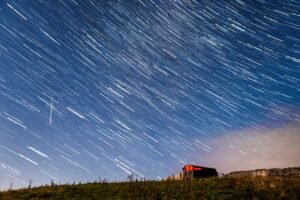
The Perseid Meteor Shower is considered one of the most active and visually impressive meteor showers of the year. Under clear skies and away from artificial lighting, observers can watch meteors streak rapidly across the darkness. Locations with little light pollution provide the best conditions for appreciating the event, making remote areas of Saudi Arabia particularly attractive to astronomy enthusiasts and night-sky photographers.
According to Zahi Al-Khalawi, Chairman of the Board of Directors of the Space and Astronomy Society in Saudi Arabia’s Northern Borders region, the area is regarded as one of the suitable destinations for observing meteor activity. Its relatively low levels of light pollution create favourable conditions for astronomical observation. The presence of dark-sky locations, including areas within Imam Turki bin Abdullah Royal Reserve, further enhances the region’s potential for stargazing.
Why the Perseids Are Special
The Perseids occur every year when Earth passes through debris left behind by Comet 109P/Swift-Tuttle. Tiny particles entering Earth’s atmosphere at very high speeds heat up and produce the bright streaks commonly known as shooting stars.
The shower is especially popular because of its relatively high activity and the possibility of seeing numerous meteors during favourable viewing conditions. The darkest hours, clear weather and locations far from city lights generally provide the best opportunity to observe the phenomenon.
This year, the timing of the Perseid peak was particularly favourable because the shower coincided with the August 12 New Moon. A darker sky means that fainter meteors are easier to detect with the naked eye.
August Offers a Busy Astronomical Calendar
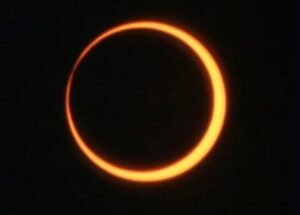
The meteor shower is only one part of an unusually eventful astronomical month. August 2026 features a series of notable celestial events, giving astronomy enthusiasts several opportunities to observe the night sky.
On August 12, a total solar eclipse occurred, with the path of totality crossing parts of Russia, Greenland, Iceland and Spain. Other parts of Europe experienced a partial eclipse.
Venus will reach its greatest eastern elongation on August 15, making it a prominent object in the western evening sky. The planet will appear at its greatest apparent separation from the Sun from Earth’s perspective, providing another opportunity for skywatchers to observe one of the brightest objects in the night sky.
The Moon will continue through its August phases, reaching first quarter on August 20 before becoming full on August 28. The full Moon will coincide with another major astronomical event: a deep partial lunar eclipse.
Partial Lunar Eclipse to Close the Month
The final major eclipse of August will take place on August 27–28, when the full Moon passes partly through Earth’s shadow. The event will be visible from the nighttime side of Earth across regions including parts of the Americas, Europe and Africa, weather permitting.
The concentration of astronomical events makes August one of the more interesting months of 2026 for people interested in astronomy. From meteors and planetary observations to solar and lunar eclipses, the month provides a wide variety of opportunities for both experienced observers and newcomers to explore the night sky.
Astronomy experts encourage enthusiasts to choose open areas with clear horizons and minimal artificial lighting when observing celestial events. Remote natural locations can offer significantly better viewing conditions than urban environments, where streetlights, buildings and other sources of illumination can obscure faint astronomical objects.
The succession of events during August also highlights the importance of astronomy in promoting scientific awareness and encouraging public interest in the natural world beyond Earth. For Saudi Arabia, particularly its northern regions with expansive landscapes and relatively dark skies, such events offer an opportunity to develop greater interest in stargazing, astrophotography and observational astronomy.
As the Perseid Meteor Shower fades from its peak, the astronomical calendar remains active, ensuring that skywatchers will have plenty more reasons to look upward throughout the rest of August.