




Christian Missionary Schools face controversy in Bengal as Christian organisations demand evidence from BJP chief Samik Bhattacharya over forced conversion allegations.
Qalam Times News Network
Kolkat, 17 November 2026
Christian Missionary Schools have become the centre of a growing political and religious controversy in West Bengal after two prominent Christian organisations challenged state BJP president Samik Bhattacharya to substantiate his allegations of forced religious conversions and alleged anti-India activities in educational institutions.
In a strongly worded letter dated 16 November, the Bangiya Christiya Pariseba and the West Bengal Association of Christian Schools demanded that Bhattacharya publicly identify the schools, their administrators and the individuals allegedly involved in religious conversion activities. The organisations also called for the disclosure of evidence supporting his claims, arguing that serious accusations against educational institutions should not be made without verifiable facts.
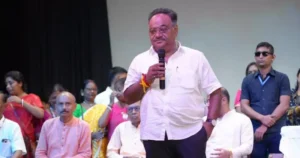
The controversy erupted after a video of Bhattacharya’s speech at a programme in Kolkata on 15 November began circulating widely. The event was organised to commemorate the birth anniversary of Birsa Munda, the renowned tribal freedom fighter. During his address, the BJP leader accused certain Christian missionary institutions of engaging in forced religious conversions and alleged that some schools were involved in activities contrary to India’s national interests.
Although he made several serious allegations, Bhattacharya did not publicly identify the institutions or individuals concerned.
Christian Organisations Demand Transparency, Independent Investigation
The letter addressed to Bhattacharya was jointly signed by Herod Mullick, founding state secretary and spokesperson of Bangiya Christiya Pariseba, and Father Moloy D’Costa, a priest of the Archdiocese of Calcutta and secretary of the West Bengal Association of Christian Schools.
The organisations said they could not independently authenticate the video footage but expressed deep concern over the statements attributed to the BJP state president.
They identified four particularly serious allegations in his remarks: claims of widespread religious conversions, accusations against the principal of a prominent Kolkata college, an alleged incident involving a BJP woman worker who was reportedly denied entry to a school because she wore a saffron saree, and remarks suggesting that Christian educational administrators continued to operate with a colonial-era British mentality.
The organisations said they had traditionally regarded Bhattacharya as a thoughtful and responsible political leader. Consequently, they were particularly disappointed by the nature of the allegations.
They also pointed to the atmosphere of insecurity reportedly experienced by Christian communities in different parts of the country, where groups have allegedly disrupted prayer meetings and targeted churches under the pretext of preventing forced conversions.
The two organisations stressed that they strongly oppose any unlawful religious conversion carried out through coercion, deception, financial inducements or other improper means. However, they argued that accusations against unidentified individuals should not become a reason to question the integrity of an entire religious community.
According to the organisations, Christians operate more than 800 educational institutions across West Bengal, serving students from different religious, linguistic and social backgrounds. They warned that broad allegations without supporting evidence could damage the reputation of these institutions and create unnecessary suspicion among communities.
BJP Leader’s Allegations and the Disputed School Incidents
Bhattacharya reportedly alleged that a school in Kolkata had prevented a woman BJP worker from entering its premises because she was wearing a saffron saree. He further claimed that she had been instructed not to mention the name of Lord Krishna in front of students.
He also referred to alleged religious conversion activities in Asansol, claiming that the principal of a prestigious Kolkata college was involved in such activities.
In another controversial allegation, the BJP leader claimed that an unidentified school official had displayed a Pakistani flag on a table inside an office.
Bhattacharya reportedly warned that educational institutions involved in what he described as anti-India activities would not be allowed to continue operating.
He also invoked historical references to the Mughal period and British colonial rule while addressing the gathering, suggesting that the state government would not tolerate institutions allegedly promoting activities against India’s cultural and national interests.
However, the Christian organisations have demanded specific details rather than general accusations. They have asked Bhattacharya to identify the schools, provide evidence and support an impartial investigation so that the allegations can be examined through established legal procedures.
Christian Bodies Cite Educational Contributions and Historical Data
In their communication, the organisations also invited Bhattacharya to consider the contributions made by Christian educational institutions over several generations.
They pointed out that many prominent personalities, including political leaders associated with the BJP itself, have studied in Christian-run schools and colleges.
They suggested that the experiences and testimonials of former students could provide a broader understanding of the role played by these institutions in education and social development.
The letter also referred to historical census figures, arguing that India’s Christian population remained approximately 2.3 per cent in both the 1911 and 1951 censuses.
According to the organisations, this historical data challenges the suggestion that Christian missionary activities resulted in large-scale religious conversions through institutional influence or state patronage.
They maintained that the Christian community has contributed to education, healthcare and social welfare without seeking to undermine the religious identity of other communities.
Opposition Parties Condemn Bhattacharya’s Remarks
The controversy has also drawn sharp reactions from opposition political leaders in West Bengal.
Sujan Chakraborty of the Communist Party of India (Marxist) criticised Bhattacharya’s statements, describing them as an attempt to provoke hostility through allegations that had not been substantiated with evidence.
Dola Sen of the Trinamool Congress also condemned the remarks, characterising the language as fascist rhetoric and expressing concern over the possible impact on religious harmony.
Meanwhile, the Bengal Christian Council, led by Bishop Paritosh Canning of the Church of North India’s Diocese of Calcutta, is preparing to approach Chief Minister Suvendu Adhikari.
The council intends to request a meeting with the Chief Minister and seek assurances regarding the safety and security of Christian communities during the forthcoming Christmas celebrations.
Reports of Attacks Raise Concerns Ahead of Christmas
The dispute comes at a time when Christian organisations have expressed growing concern over reports of attacks on churches, prayer gatherings and members of the community in different parts of West Bengal.
Christians account for less than one per cent of the state’s population, according to the figures cited in the report.
A report released by the Religious Liberty Commission of the Evangelical Fellowship of India documented 32 incidents across 13 districts between May and October.
The reported incidents have intensified concerns among Christian representatives about the safety of religious gatherings and the protection of minority rights.
On 5 November, approximately 12,000 Christians reportedly participated in a prayer and protest rally in Kolkata, drawing attention to concerns about religious freedom and community security.
Christian leaders have emphasised that allegations of unlawful conversion must be investigated wherever credible evidence exists. At the same time, they insist that no community should be collectively blamed for the alleged actions of particular individuals or institutions.
A Larger Debate Over Religious Freedom and Educational Institutions
The controversy has opened a wider debate about religious freedom, the responsibilities of political leaders and the role of minority-run educational institutions in West Bengal.
The central question raised by the Christian organisations is straightforward: if particular schools or individuals are involved in unlawful religious conversion or activities against the country, why have their identities and supporting evidence not been made public?
Their demand for an impartial inquiry reflects an insistence that allegations should be examined through evidence and established legal procedures rather than political statements.
The organisations have also made it clear that they are prepared to distance themselves from anyone found guilty of illegal conversion practices, provided that the allegations are established through a fair investigation.
As Christmas approaches, the issue has acquired additional significance for Christian communities across the state. Community representatives are seeking assurances that religious celebrations, educational institutions and places of worship will remain protected.
Whether the BJP leadership responds to the demand for specific evidence and an independent investigation remains to be seen. For now, the controversy has placed religious freedom, minority security and the political discourse surrounding Christian educational institutions firmly in the spotlight in West Bengal.