



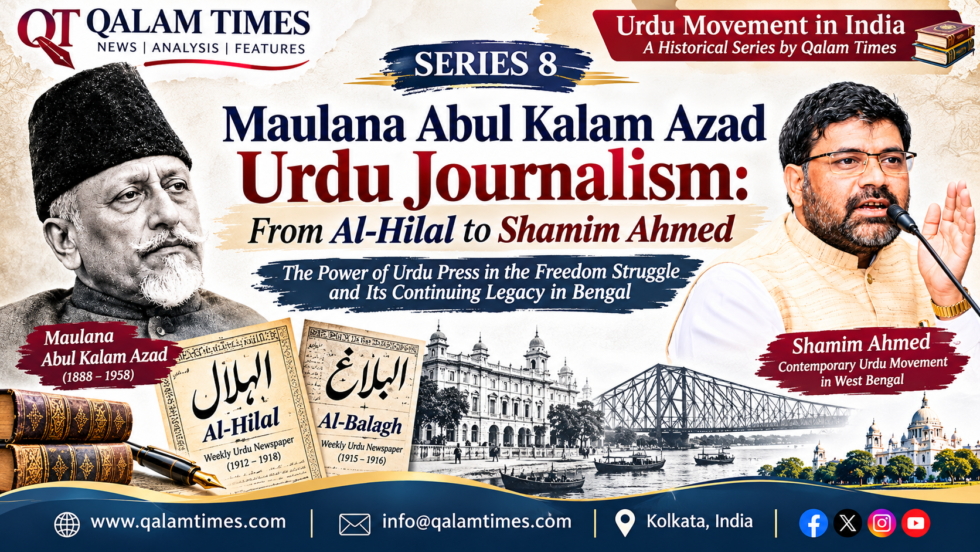
Explore Maulana Abul Kalam Azad Urdu Journalism, the historic role of Al-Hilal and Al-Balagh in India’s freedom movement, and its connection with Shamim Ahmed’s contemporary Urdu movement in Bengal.
From the Revolutionary Journalism of Al-Hilal and Al-Balagh to the Contemporary Movement for Urdu in Bengal
Qalam Times News Network
Kolkata | November 8, 2026
Maulana Abul Kalam Azad Urdu Journalism represents one of the most significant chapters in the history of India’s freedom struggle. At a time when the British colonial administration sought to control political expression and restrict the growth of nationalist consciousness, Maulana Abul Kalam Azad used the Urdu press as a powerful instrument of public awakening. Through his influential publications, particularly Al-Hilal and Al-Balagh, he demonstrated that journalism could do much more than report events. It could educate society, challenge injustice, encourage political awareness and bring people into a wider national conversation.
More than a century later, the importance of this history can be understood in the context of contemporary efforts to protect and promote Urdu in different parts of India. In West Bengal, Shamim Ahmed has emerged as a prominent voice in the campaign for Urdu’s recognition, rights and continued public presence. Although the historical circumstances of Azad’s journalism and Ahmed’s present-day movement are different, both reflect a common principle: a language remains meaningful in public life when people actively defend its educational, cultural and democratic place in society.
Maulana Abul Kalam Azad: A Scholar Who Chose the Power of the Press
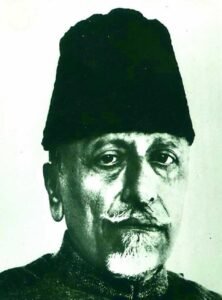
Maulana Abul Kalam Azad, born in 1888, became one of the most influential intellectual and political figures of modern India. His education in Islamic scholarship, Arabic, Persian and Urdu gave him a strong intellectual foundation. However, his interests extended beyond traditional scholarship. He was deeply concerned with the political condition of India, the educational development of society and the need to awaken people to the realities of colonial rule.
Azad understood that political freedom required an informed public. People needed access to ideas, arguments and discussions that could help them understand their circumstances and participate in shaping their future. Journalism therefore became one of the principal means through which he sought to influence society. His writing combined intellectual depth with political purpose, making his work particularly influential among readers interested in national affairs.
His contribution to Urdu journalism was not limited to the publication of newspapers. He helped establish a style of public writing in which language, political thought, education and social responsibility were closely connected. Urdu became the medium through which he communicated complex political arguments to a broad readership.
Al-Hilal: A Newspaper That Challenged Colonial Authority
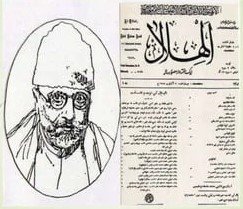
On 13 July 1912, Maulana Abul Kalam Azad launched the Urdu weekly Al-Hilal from Calcutta, now Kolkata. Its arrival marked an important moment in the history of the Urdu press. The publication brought a new energy to political journalism through its strong editorial voice, serious discussions and criticism of British colonial policies.
Al-Hilal addressed questions of political responsibility, national identity, social reform and the future of India. Azad sought to encourage readers, particularly young people, to think beyond narrow divisions and understand their place in the larger struggle against colonial rule. His journalism also advocated Hindu-Muslim cooperation and presented India’s future as a shared national responsibility.
The newspaper was distinguished by its literary quality and presentation. Its writing was intellectually demanding, while its political arguments were direct and forceful. It attracted considerable attention among Urdu readers and became an important platform for political discussion.
The British administration viewed its influence with growing concern. In 1914, colonial press restrictions brought the publication of Al-Hilal to an end. Its suppression demonstrated the extent to which the colonial government feared the power of an independent and politically conscious press.
Al-Balagh: The Continuation of an Unfinished Mission
The closure of Al-Hilal did not end Azad’s journalistic efforts. On 12 November 1915, he launched another Urdu weekly, Al-Balagh, from Calcutta. The new publication continued many of the intellectual and political concerns that had shaped its predecessor.
Through Al-Balagh, Azad continued to discuss political developments, religious thought, public responsibility and the need for national awakening. The publication maintained his commitment to using Urdu as a medium for serious intellectual and political engagement.
However, the colonial authorities continued to restrict his activities. Al-Balagh was also stopped in 1916, and Azad faced restrictions under wartime regulations. His confinement and subsequent release in January 1920 marked another chapter in the struggle between colonial censorship and political expression.
The history of these two newspapers illustrates an important point: the suppression of a publication does not necessarily destroy the ideas it has introduced into society. Al-Hilal and Al-Balagh had already contributed to a wider political conversation that extended beyond the lifetime of the newspapers themselves.
Urdu Journalism and the Making of Political Consciousness
The importance of Azad’s journalism must be understood within the broader history of India’s freedom movement. Newspapers and periodicals played a vital role in circulating political ideas, encouraging debate and connecting readers with developments taking place across the country.
Urdu journalism provided an important platform for discussions about colonial policies, education, social reform, political rights and national unity. It allowed writers and public figures to address readers in a language with a substantial literary and intellectual tradition.
Azad’s contribution was particularly significant because he treated journalism as a responsibility rather than simply a profession. His newspapers sought to develop an intellectually active readership capable of engaging with difficult political questions.
His work also demonstrated that the strength of a language depends partly on the institutions and public spaces through which it is used. Newspapers, schools, libraries, publishing houses and literary organisations all contribute to the continued vitality of a language.
From the Freedom Struggle to the Contemporary Urdu Movement in Bengal
The history of Urdu journalism during the freedom movement provides a valuable perspective for understanding the contemporary Urdu movement in West Bengal. The challenges facing Urdu today are not identical to those encountered by Azad during British rule. The present struggle concerns linguistic recognition, educational opportunities, institutional implementation, public participation and the protection of language rights within a democratic constitutional framework.
West Bengal has a long and diverse history of Urdu-speaking communities. Urdu has contributed to the state’s literature, journalism, education, culture and public life. Kolkata, in particular, has remained an important centre of Urdu publishing and intellectual activity.
However, the continued development of Urdu requires more than historical appreciation. It also depends on effective implementation of relevant language policies, access to education, institutional support and opportunities for younger generations to study and use the language.
The West Bengal Official Language Amendment Act, 2012, was an important development in this context. It provided for the use of Urdu as an official language in specified areas where the prescribed population condition was fulfilled. Its significance should be understood within the scope of the law rather than as an unrestricted declaration of Urdu as an official language throughout the entire state.
Shamim Ahmed: Carrying the Contemporary Campaign Forward
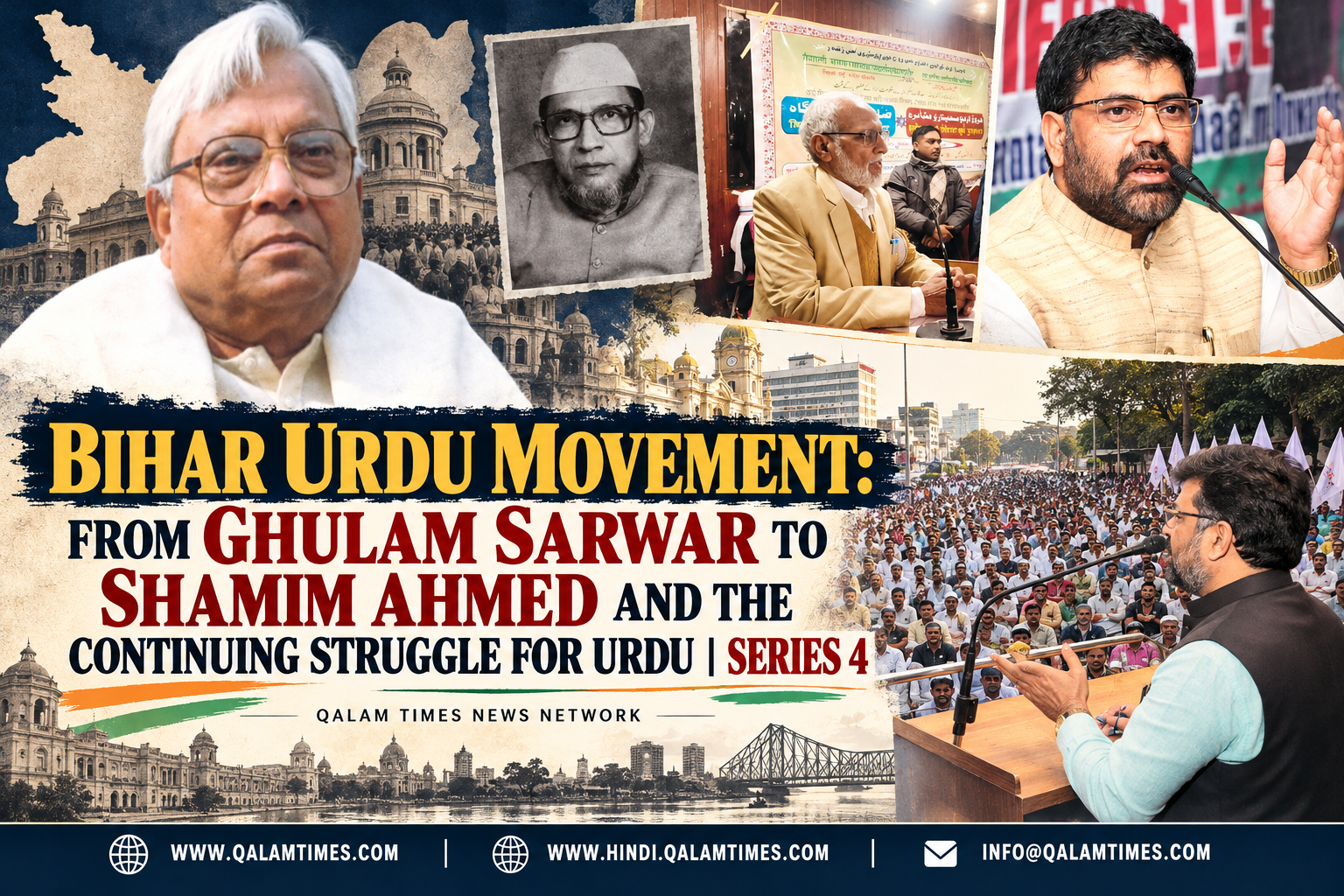
In this contemporary context, Shamim Ahmed has been associated with efforts to raise public awareness about Urdu’s position in West Bengal. His activism has focused on bringing linguistic concerns into public discussion and demanding attention to the rights and aspirations of Urdu-speaking communities.
One notable episode in this campaign was the 36-hour sit-in protest held near the Gandhi statue in Kolkata on 28 June 2008. The campaign, associated with the slogan “No Urdu, No Vote,” sought to draw attention to Urdu-related demands and encourage political representatives to take the concerns of Urdu-speaking citizens seriously.
The importance of such mobilisation lies not merely in a protest or a slogan. It lies in the effort to transform a community’s linguistic concerns into a matter of public debate and democratic accountability. It also highlights the role of civic participation in ensuring that language-related provisions are not confined to official documents but are reflected in the everyday experiences of citizens.
For Shamim Ahmed and other advocates of Urdu in Bengal, the challenge is to ensure that Urdu continues to have meaningful opportunities in education, administration, journalism and cultural life.
Maulana Azad and Shamim Ahmed: Two Different Periods, One Shared Concern
Maulana Abul Kalam Azad and Shamim Ahmed belong to different historical periods and operate in different political circumstances. Azad worked under colonial rule, when political journalism could bring direct confrontation with an imperial administration. Shamim Ahmed’s campaign operates within the democratic framework of independent India, where language rights can be pursued through public advocacy, constitutional provisions, institutional engagement and democratic participation.
It would be historically inaccurate to suggest that the contemporary campaign in Bengal is a direct organisational continuation of Azad’s newspapers. The connection is instead intellectual and thematic.
Azad demonstrated how Urdu could serve as a medium of political awareness and public mobilisation. The contemporary Urdu movement in Bengal raises related questions about the place of the language in public institutions and the responsibility of society to protect its linguistic heritage.
Both experiences remind us that a language cannot depend only on admiration for its past. It needs active readers, writers, teachers, journalists, institutions and citizens who are prepared to use it and defend its legitimate place in society.
The Responsibility of the New Generation
One of the most important lessons from Azad’s journalism is the value of intellectual participation. His work was directed towards readers who were expected to think, question and engage with the political and social issues of their time.
This lesson remains relevant for the younger generation in Bengal and across India. Urdu’s future cannot be secured through speeches and commemorative programmes alone. It requires stronger educational opportunities, accessible books, modern publishing, digital platforms, quality journalism and greater participation by young people.
Schools, colleges, universities, libraries and media organisations can play an important role in creating an environment in which Urdu is studied not merely as a symbol of cultural identity but also as a living language of knowledge, communication and creative expression.
The digital age has created new opportunities for Urdu journalism. Online newspapers, digital archives, social media platforms and electronic publications can connect younger readers with Urdu literature and contemporary public affairs. The challenge is to use these platforms responsibly and produce credible, informative and engaging content.
The Voice of Urdu Must Continue
The story of Maulana Abul Kalam Azad’s Urdu journalism is a reminder that words can influence public consciousness and that a newspaper can become an instrument of historical change. Through Al-Hilal and Al-Balagh, Azad demonstrated the power of Urdu to communicate political ideas, encourage national awareness and challenge colonial authority.
More than a century later, the contemporary movement for Urdu in Bengal reflects another stage in the language’s long journey. The circumstances have changed, but the need for public participation, institutional support and intellectual commitment remains.
The efforts associated with Shamim Ahmed highlight the continuing importance of raising Urdu-related issues through democratic advocacy and public engagement. The historical experience of Azad offers an important source of inspiration, not as a claim of direct organisational continuity, but as a reminder that language rights and cultural vitality require sustained effort.
From the pages of Al-Hilal in colonial Calcutta to the public campaigns for Urdu in contemporary Bengal, the larger message remains clear: a language survives not only because of its glorious history, but because each generation chooses to keep it alive.