




Uttarakhand Madrasa Holiday rules replace Friday breaks with Sunday for recognised madrasas, prompting debate over education, religious observance and minority rights.
Qalam Times News Network
Dehradoon, October 22, 2026
Uttarakhand Madrasa Holiday arrangements have changed under a new regulatory framework for minority educational institutions, with madrasas recognised as schools now required to observe Sunday as their weekly day off instead of Friday. The decision follows the abolition of the state’s Madrasa Board and the introduction of a new system bringing recognised minority institutions under the academic standards and regulations prescribed by the state Education Department and the Uttarakhand Minority Education Authority.
The Uttarakhand Madrasa Holiday change has generated debate over educational uniformity, religious practices and the autonomy of minority institutions. While the state government maintains that all recognised schools should follow a common set of rules, critics have questioned whether replacing Friday’s weekly break adequately accommodates the religious significance of Friday congregational prayers for Muslim students and staff.
Uttarakhand Government Says Common Education Rules Will Apply to Recognised Madrasas

Friday, known in Islamic tradition as Yawm al-Jumu’ah, holds particular religious importance for Muslims. The weekly congregational prayer, commonly called Jumu’ah, takes place around midday or in the early afternoon, depending on the local mosque and season. For many Muslim communities, Friday is therefore an important day for collective worship and religious observance.
The Uttarakhand government has defended the revised holiday arrangement as part of its effort to establish consistent academic and administrative standards across recognised educational institutions. Chief Minister Pushkar Singh Dhami has said that the state is working towards a uniform system, referring to the introduction of the Uniform Civil Code (UCC) in Uttarakhand.
The government’s position is that institutions recognised as schools must comply with the applicable rules, including the official academic calendar and weekly holiday schedule. Critics, however, argue that uniform regulations should also take account of the distinctive circumstances and constitutional rights of minority educational institutions.
According to figures provided by state officials, 452 madrasas had previously been recognised by the Uttarakhand Madrasa Board. Under the new arrangement, institutions have been required to seek recognition through the revised regulatory system.
Dr Surjeet Singh Gandhi, chairperson of the Uttarakhand Minority Education Authority, said that 76 institutions had received school recognition, while 114 applications were being processed by the Education Department. Gandhi stated that the 76 recognised institutions were located across four districts:
- Haridwar: 44 institutions
- Udham Singh Nagar: 24 institutions
- Dehradun: 6 institutions
- Nainital: 2 institutions
He said recognised institutions must comply with the regulations prescribed by the Education Department and the authority. Institutions cannot operate as recognised schools without the necessary approvals and permissions.
The new system therefore affects more than the weekly holiday. It also changes the process through which institutions obtain recognition, follow academic requirements and remain eligible to operate within the state’s formal education framework.
Uttarakhand Authorities Say Friday Prayers Can Continue
The change in the weekly holiday has raised concerns about whether students and staff will have sufficient time to attend Friday congregational prayers. Gandhi said the authority had consulted members of the community regarding prayer timings. According to him, the afternoon prayer generally takes place between 1 p.m. and 2:30 p.m., although the exact time varies between mosques.
He maintained that the new arrangement would not prevent the prayer from taking place, while making clear that Friday would no longer be the weekly holiday for recognised institutions. The official position is that educational institutions can operate according to the prescribed timetable while arrangements are made for religious observance. However, the practical effect on attendance, school schedules and students’ access to congregational prayer will depend on how individual institutions implement the rules.
The distinction is important: changing a weekly holiday does not itself establish that religious practice has been prohibited. At the same time, whether the timetable provides a reasonable opportunity for students and staff to attend Friday prayers remains a matter of concern for affected communities.
State Reports Action Against Unrecognised Madrasas
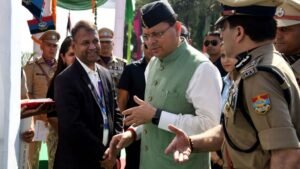
Dr Parag Madhukar Dhakate, secretary of the Minority Welfare Department, said the state had sealed 250 unauthorised madrasas during the first phase of its action. According to Dhakate, the institutions were not registered with the former Madrasa Board. He also referred to an inquiry that reportedly found children from other states had been brought to some of the institutions to study.The information provided in the account does not establish the current status of all the institutions concerned or specify the subsequent action taken in each case. The department’s claims should therefore be distinguished from independently established findings about individual institutions.
Chief Minister Dhami has said the government is committed to providing quality education and equal opportunities to children. Under the revised framework, institutions that fail to meet the required recognition and regulatory conditions may not be permitted to function as recognised schools.
The government’s stated objective is to bring institutions within a common education system. The effectiveness and fairness of the approach will depend on the implementation of the rules, the transparency of recognition procedures and the availability of appropriate remedies for institutions that challenge administrative decisions.
The revised holiday arrangement has also drawn criticism from the opposition Congress party. Uttarakhand Congress spokesperson Dr Pratima Singh questioned the government’s priorities following the abolition of the Madrasa Board. She argued that the government should give greater attention to wider problems in the education system rather than focusing on madrasas, mosques and religious sites. Her criticism reflects a broader political disagreement over whether the changes are primarily intended to improve educational standards or whether they place a disproportionate regulatory burden on minority institutions.
The government, for its part, maintains that recognised schools must follow common academic and administrative requirements. Assessing these competing positions requires examining the actual regulations, their implementation and their effects on different categories of educational institutions.
Uttarakhand is not the first Indian state to consider changing the weekly holiday observed by madrasas. In December 2016, the Assam government directed government-run and provincialised madrasas to remain open on Fridays and observe Sunday as their weekly holiday. The decision replaced a longstanding Friday break in the institutions covered by the order.A similar proposal was discussed in Uttar Pradesh in December 2022, when the state Madrasa Education Board considered shifting the weekly holiday from Friday to Sunday. Representatives of madrasa teachers’ associations opposed the proposal, citing the religious significance of Friday congregational prayers. The proposed change was not implemented at that time, and the state’s 2023 holiday calendar retained Friday as the weekly day off for the madrasas concerned.
These earlier debates demonstrate that the issue involves questions of education administration as well as religious practice. Different states have adopted different approaches, and the details of the applicable rules matter when comparing their policies.
Abolition of the Uttarakhand Madrasa Board and Minority Education Reform
The holiday change follows the dismantling of Uttarakhand’s Madrasa Education Board, which had regulated 452 registered madrasas, and the introduction of a new framework for minority educational institutions. According to the supplied account, the legislation was passed by the state Assembly in August 2025 amid opposition protests. The framework extends to institutions serving Muslim, Sikh, Jain, Buddhist and Parsi communities.
Under the new system, institutions must obtain formal recognition and the required school-board affiliation. The authority is empowered to inspect institutions and withdraw recognition when prescribed conditions are not met. Supporters of regulatory reform argue that common academic standards can improve educational quality, strengthen oversight and ensure that students receive recognised qualifications. They maintain that institutions operating as schools should meet the requirements applicable to the formal education system.
However, Muslim organisations have expressed concerns about the autonomy of minority educational institutions and the possible implications for constitutionally protected rights. Article 30 of the Indian Constitution protects the rights of religious and linguistic minorities to establish and administer educational institutions of their choice, subject to the constitutional and legal framework. Article 25 protects freedom of conscience and the right freely to profess, practise and propagate religion, subject to constitutional limitations. The precise application of these protections depends on the facts, the nature of the regulations and relevant judicial interpretation. The existence of a regulatory framework does not, by itself, establish a constitutional violation; equally, educational regulations can be scrutinised where affected institutions raise credible concerns about minority rights.
The Central Question: Uniform Education Rules and Religious Accommodation
At the heart of the controversy is the relationship between common educational standards and the practical accommodation of religious observance. The government argues that recognised educational institutions should operate under a consistent system. From this perspective, a common weekly holiday can simplify administration and bring madrasas into line with other recognised schools. Critics argue that uniformity should not be pursued without considering the needs of the communities affected. For Muslim students and staff, Friday congregational prayer is an important religious observance, and changing the weekly holiday may require adjustments to school hours or attendance arrangements. Both educational quality and freedom of religion are significant public concerns. A workable policy needs clear rules, transparent implementation and meaningful consultation with affected communities. The practical questions include whether school timetables allow students and staff to attend Friday prayers, whether reasonable arrangements can be made without undermining teaching requirements, and whether institutions have a clear process for obtaining recognition or appealing administrative decisions. These issues will help determine how the new framework operates in practice.
The Uttarakhand Madrasa Holiday change marks a significant shift in the administration of recognised minority educational institutions. By replacing the Friday weekly break with Sunday under the new framework, the state government is seeking to bring these institutions within a common set of educational regulations.
The decision has also renewed debate about religious observance, minority educational autonomy and the meaning of uniformity in public policy. The government maintains that recognised schools must follow the prescribed rules, while critics question whether the new arrangement sufficiently considers the religious significance of Friday.
The broader test will be whether the framework delivers recognised educational standards while respecting constitutional protections and addressing the practical needs of students, teachers and communities.
Clear implementation, transparent recognition procedures and constructive engagement with affected institutions will be important in determining whether the changes achieve their stated educational objectives without creating avoidable difficulties for minority communities.