



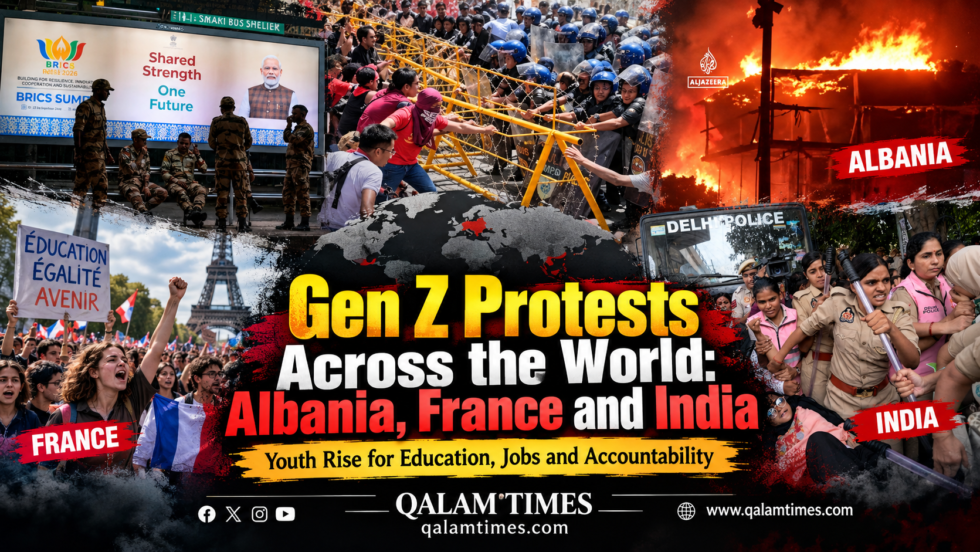
Gen Z Protests Across the World in Albania, France and India highlight youth concerns over education, corruption, jobs, electoral transparency and democracy.
— Dr. Mohammad Farooque
Qalam Times News Network
Gen Z Protests Across the World have brought young people’s concerns about education, corruption, employment opportunities and political accountability into the international spotlight. From Albania to France and India, demonstrations involving students and young citizens reflect frustration with institutions that many believe are failing to meet their expectations. Although these protests have emerged in different political and social environments, they raise a common question: are governments listening to the generation that will shape their countries’ futures?
The Gen Z Protests Across the World should not be treated as one coordinated international movement, nor should they be taken as evidence that every young person shares the same political views. Instead, they represent distinct national struggles connected by recurring concerns about fairness, opportunity, transparency and the right to be heard.
Generation Z generally refers to people born between 1997 and 2012, although the precise dates vary across definitions. Growing up alongside the internet, smartphones and social media has given many members of this generation new ways to share information, discuss public issues and organise collective action. However, digital connectivity alone does not explain why young people protest. Their motivations are shaped by local conditions, political institutions, economic pressures and personal experiences.
The demonstrations in Albania, France and India offer an opportunity to examine these issues without assuming that the same solutions will work in every country.
Albania: Youth Anger Over Corruption, Education and Political Accountability
In Albania, protests have drawn attention to concerns about corruption, government accountability, educational opportunities and the availability of secure employment. Some demonstrators have demanded the resignation of Prime Minister Edi Rama, reflecting wider dissatisfaction among sections of the population with the country’s political direction.

For many young people, these concerns are closely connected to their future. Access to quality education, opportunities to find meaningful work and confidence in public institutions can influence whether they believe they can build a stable life in their own country.
When students and young citizens feel that personal connections matter more than merit, or that public decisions lack transparency, trust in institutions can weaken. Such perceptions may contribute to demonstrations, although individual allegations of corruption or misconduct must be assessed using reliable evidence.
The protests have also raised questions about the relationship between public order and freedom of expression. Some demonstrations have reportedly involved clashes and damage to buildings. These incidents require attention, but the actions of a limited number of individuals should not automatically be attributed to every protester.
Prime Minister Edi Rama has resisted calls to resign and has raised concerns about the possible impact of unrest on Albania’s ambitions to join the European Union. European officials have expressed concern about violence while emphasising the importance of protecting peaceful protest and freedom of expression.
The situation illustrates a difficult responsibility for governments: they must protect people and public property while also allowing citizens to challenge decisions, demand accountability and express dissatisfaction peacefully.
For young Albanians, the central question extends beyond a particular political leader. It concerns whether public institutions can provide fair opportunities, respond transparently to complaints and offer a credible future to the next generation.
France: Students Demand Better Education and Fairer Opportunities
In France, student demonstrations have highlighted concerns about educational conditions, teacher shortages, unequal opportunities and the pressure associated with academic achievement.
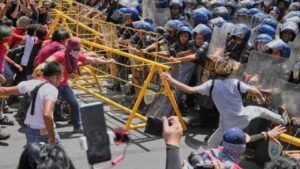
Education is closely linked to young people’s expectations about employment, financial independence and social mobility. When schools lack sufficient staff or students struggle to access the support they need, concerns about the future can become more intense.
For students preparing for university and professional careers, educational inequality can feel particularly serious. They may believe that their future depends not only on their effort but also on the resources available at their schools and the support they receive from public institutions.
These concerns raise a broader question about the purpose of education. A functioning education system must do more than prepare students to pass examinations. It should also provide qualified teachers, adequate facilities, effective guidance and fair opportunities for students from different social and economic backgrounds.
French authorities have acknowledged that difficulties in schools require attention, while maintaining that violence and damage to public property cannot be accepted. Government responses to staffing shortages and educational needs must be assessed against the specific measures announced and implemented.
Student demonstrations do not necessarily mean that young people reject the entire political system. Often, they seek practical improvements in services that directly affect their lives.
The French experience demonstrates how education can become a major public issue when students believe that the institutions responsible for preparing them for adulthood are not meeting their needs.
It also highlights the importance of dialogue. Governments, school administrators, teachers and students need credible channels through which concerns can be discussed and practical solutions developed.
India: Gen Z Protests Over Examinations, Education and Electoral Transparency
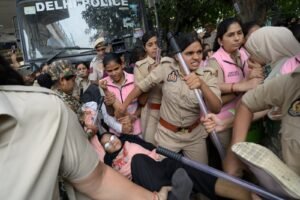
In India, youth-led demonstrations have reportedly focused on examination fairness, educational reform and questions about the accountability of public institutions. Allegations involving examination-paper leaks and irregularities have contributed to anxiety among students, although individual claims must be verified before they can be presented as established facts.
Competitive examinations play an enormous role in the lives of many Indian students. Thousands, and sometimes millions, of candidates compete for a limited number of university places, government jobs and professional opportunities. Many spend years preparing for examinations that may determine their educational and economic futures.
In such circumstances, allegations of leaked papers, unfair selection or administrative failures can seriously undermine public confidence. Students want assurance that examinations are conducted transparently, rules are applied consistently and success depends on merit rather than unfair advantages.
The issue is not limited to the outcome of an individual examination. It concerns the credibility of the institutions responsible for administering the process. When students lose confidence in those institutions, frustration can spread beyond the original incident.
Transparent investigations, timely communication and effective procedures for resolving complaints are essential. Authorities must establish the facts, identify any wrongdoing and take appropriate action where evidence supports it.
Electoral Rolls and Questions About Democratic Accountability
The reported youth protests in India have also become associated with concerns about changes to electoral rolls. Such concerns can be politically significant because voter registration is directly connected to citizens’ ability to participate in elections.
When eligible voters fear that their names may have been omitted or that changes have not been handled fairly, they may demand explanations from electoral authorities. These concerns deserve a transparent response, but allegations of deliberate manipulation should not be accepted without supporting evidence.
Electoral authorities have a responsibility to explain registration procedures, provide accessible ways for citizens to check their status and investigate credible complaints. Citizens, in turn, need reliable information to distinguish administrative errors from claims of intentional wrongdoing.
The government’s response to these concerns is part of a wider debate about public trust. A democracy depends not only on conducting elections but also on maintaining confidence in the institutions and procedures through which citizens exercise their voting rights.
Narendra Modi’s Government and the Challenge of Youth Dissent
The response of Prime Minister Narendra Modi’s government to the reported protests has attracted attention because of the political implications of a movement involving young citizens.
Accounts of the demonstrations have described security restrictions, detentions and the use of police measures to control gatherings. Such actions raise questions about the balance between maintaining public order and protecting the right to peaceful assembly.
The political challenge for the government is not simply to prevent demonstrations from disrupting daily life. It is also to address the grievances that may have contributed to them. Restrictions may limit a gathering in the short term, but they do not necessarily resolve concerns about education, employment, examinations or electoral transparency.
The presence of established opposition parties in demonstrations can complicate the political picture. Government supporters may view opposition participation as an attempt to gain political advantage, while opposition leaders may argue that they are supporting legitimate public concerns.
Neither interpretation should be assumed to explain every participant’s motivation. Young protesters may have independent reasons for demonstrating, and their concerns should be examined on their own merits.
Likewise, the participation of opposition parties does not automatically establish that a movement represents the views of all young people. India is a large and politically diverse country, and members of Generation Z hold differing opinions about political parties, public policy and the appropriate forms of protest.
The essential question is whether credible complaints receive a fair hearing and whether the authorities respond lawfully and transparently.
Why Are Young People Taking to the Streets?
Although the circumstances in Albania, France and India differ, several recurring factors help explain why young people become involved in public demonstrations.
1. Education and Employment Shape Their Future
Education is often seen as a route to economic security and personal independence. When students believe that educational opportunities are unequal, examinations are unfair or jobs are difficult to obtain, frustration can grow.
Young people may feel that they are being asked to invest time, money and effort without receiving a fair chance to succeed. This can create pressure not only for individual students but also for families who make considerable sacrifices to support their education.
Governments can address these concerns by improving educational resources, strengthening examination oversight, expanding opportunities and communicating clearly about the measures being taken.
2. Corruption and Lack of Transparency Weaken Trust
In Albania and elsewhere, concerns about corruption can contribute to demands for political accountability. When citizens suspect that decisions are being made for private interests rather than the public good, confidence in institutions may decline.
The same underlying concern can appear in different forms: allegations of unfair recruitment, opaque administrative decisions or a lack of clear explanations from public officials.
However, allegations must be distinguished from proven misconduct. Credible investigations, independent oversight and access to reliable information are essential to determining whether wrongdoing has occurred.
3. Social Media Makes Communication Faster
Digital platforms allow young people to share experiences, discuss grievances and learn about demonstrations in other places. A problem that begins in one school, university or city can quickly become a subject of wider public discussion.
Social media can also help organisers communicate meeting points, explain demands and document events. At the same time, misleading videos, unverified claims and manipulated content can spread rapidly.
Digital visibility should therefore not be confused with universal public support. A widely shared post may reflect intense interest without accurately representing the views of an entire population.
4. Young People Want Their Concerns to Be Taken Seriously
Decisions about education, employment, public spending and political participation can have long-term effects on younger generations. When young people believe their experiences are being ignored, they may seek other ways to attract attention.
Peaceful demonstrations can provide a platform for citizens who feel that conventional channels have not delivered satisfactory answers. They can also encourage public debate about issues that might otherwise receive limited attention.
But effective participation requires more than expressing dissatisfaction. Clear demands, credible evidence and constructive engagement can help transform public pressure into practical reforms.
Are Gen Z Protests a Rebellion or a New Political Awakening?
The word “rebellion” often suggests a challenge to established authority. Yet questioning government policy, demanding better public services or seeking investigations into alleged wrongdoing does not automatically amount to rejecting the political system.
Many protesters may be asking for improvements within existing institutions rather than calling for their complete replacement. Their demands may concern fair examinations, better schools, employment opportunities, transparent government decisions or equal access to democratic rights.
It is therefore important to distinguish between criticism of a government and rejection of democracy itself.
At the same time, not every protest demand is necessarily justified, and participation in a demonstration does not make every allegation accurate. Claims should be examined against available evidence, while governments should provide reasoned responses rather than dismissing criticism simply because it comes from young people.
A political awakening, if one is taking place, would be better understood as an increase in public engagement and willingness to question institutions than as evidence that an entire generation has adopted one ideology.
Generation Z is not politically uniform. Some young people support their governments, others oppose them, and many hold mixed views that change according to the issue. Their participation should be understood through the diversity of their experiences rather than broad assumptions about age.
When Does a Peaceful Protest Become Public Unrest?
Peaceful demonstrations may take the form of marches, speeches, public meetings and the display of placards. These activities allow citizens to communicate their concerns and call for changes in policy.
Public unrest can develop when gatherings involve violent clashes, attacks or damage to property. In such circumstances, authorities have a responsibility to protect public safety and investigate offences.
However, the conduct of a few individuals should not automatically be attributed to every person participating in a demonstration. Police responses should distinguish peaceful participants from individuals reasonably suspected of committing offences.
Governments must also ensure that restrictions on assembly are lawful, proportionate and based on the circumstances. Maintaining public order is important, but it should not become a reason to prevent peaceful criticism or avoid answering legitimate questions.
Protest organisers and participants have responsibilities as well. They should communicate their demands clearly, avoid violence and respect the safety and rights of others.
Reliable information is essential for everyone involved. Unverified allegations can intensify tensions, while a lack of transparency can deepen suspicion. Independent reporting, credible investigations and clear public communication can help establish the facts.
What Can Governments Learn From Youth Protests?
The demonstrations in Albania, France and India offer several lessons for public institutions.
First, governments should address grievances before they escalate. Complaints about examination irregularities, educational shortages or administrative errors should have clear channels for investigation and resolution.
Second, transparency builds confidence. When public authorities explain decisions, publish relevant information and respond to credible allegations, they give citizens a stronger basis for evaluating their actions.
Third, peaceful dissent should be treated as part of democratic participation. Governments can enforce the law and protect public safety while respecting the rights of citizens to express their views.
Fourth, young people need meaningful opportunities to participate in decisions that affect them. Consultation with students, teachers, youth organisations and local communities can help policymakers identify problems and develop practical responses.
Finally, accountability must be based on evidence. Protesters should support their claims with reliable information, while public authorities should investigate complaints impartially and correct mistakes when they are established.
These principles do not guarantee that every dispute will be resolved quickly. They can, however, help prevent disagreements from developing into deeper crises of confidence.
Gen Z Protests Across the World: Is the World Witnessing a Youth Awakening?
The demonstrations in Albania, France and India are not identical. Each country has its own political institutions, educational challenges, economic pressures and public debates. Nevertheless, the Gen Z Protests Across the World bring a recurring question into focus: are governments responding adequately to the concerns of younger citizens?
For many young people, these demonstrations are about more than gathering in public places. They concern the quality of education, access to employment, fair treatment, transparent institutions and the prospect of building a secure future.
These are practical concerns with consequences for individuals, families and societies. They should not be reduced to slogans or treated as evidence of a single global political agenda.
It would also be unrealistic to expect every demonstration to produce immediate change or to assume that every demand is automatically correct. Some protests may lead to reforms, others may have limited effects, and some may expose disagreements that require prolonged public debate.
What matters is whether the issues raised are examined fairly and whether governments are willing to correct failures when credible evidence establishes that change is necessary.
A strong democracy is not one in which everyone agrees with those in power. It is one in which citizens can ask questions, criticise public decisions, organise peacefully and expect institutions to respond within the law.
For young people, understanding their rights also means recognising their responsibilities. Peaceful action, accurate information, respect for others and clearly stated demands can strengthen public debate and help keep attention on the issues at stake.
For governments, the responsibility is equally clear: maintaining order is only part of the task. Listening to citizens, explaining decisions and ensuring fair access to public institutions are essential to building lasting trust.
The Gen Z Protests Across the World in Albania, France and India illustrate different national struggles linked by questions of opportunity, fairness and public accountability. They do not establish that all young people share the same political goals, but they demonstrate why governments need to take credible public concerns seriously.
In Albania, debates about corruption and political accountability intersect with expectations about education and employment. In France, student concerns highlight the importance of adequate educational resources and equal opportunities. In India, questions about examination fairness, educational reform and electoral transparency have drawn attention to the need for credible institutions and clear procedures.
The long-term consequences of these demonstrations will depend on several factors: the strength of the evidence behind their demands, the conduct of participants, the responses of governments and the ability of institutions to deliver meaningful improvements.
Young citizens have a responsibility to act peacefully and distinguish facts from rumours. Governments have a responsibility to investigate credible complaints, protect lawful dissent and demonstrate that public institutions are accountable.
Ultimately, the significance of these protests will not be measured only by the number of people on the streets. It will also depend on whether the concerns they raise lead to more transparent decisions, fairer opportunities and stronger public confidence.
The central message is straightforward: a generation that asks questions should not automatically be treated as a threat. Its concerns should be examined on their merits, its rights should be respected, and its responsibilities should be taken seriously.