



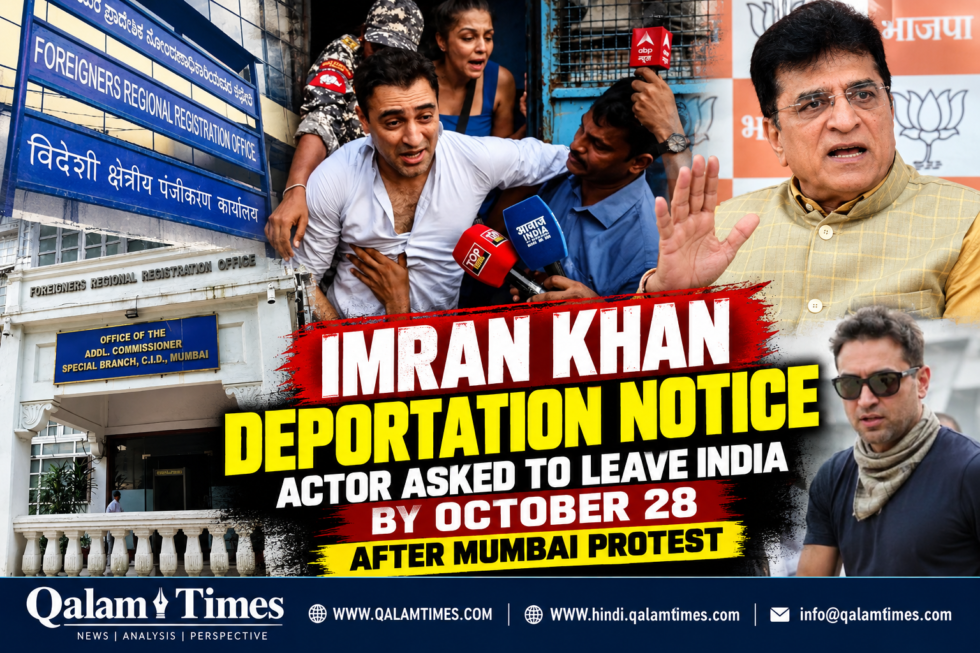
Imran Khan deportation notice: The actor has reportedly been asked to leave India by October 28 following his participation in a Mumbai protest.
Qalam Times News Network
Mumbai | October 15, 2026
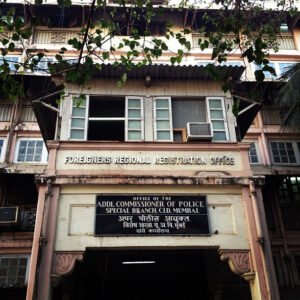
MUMBAI: The Imran Khan deportation notice has brought the Bollywood actor under fresh scrutiny after the Foreigners Regional Registration Office (FRRO) reportedly directed him to leave India by October 28. The action follows his participation in a protest demanding the resignation of Chief Election Commissioner Gyanesh Kumar at Mumbai’s August Kranti Maidan on October 10. Authorities are examining allegations that the actor violated provisions of Indian immigration law by taking part in the demonstration.
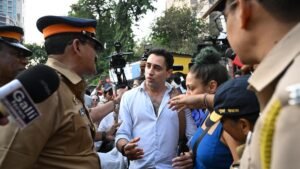
Imran Khan, nephew of Bollywood superstar Aamir Khan, was reportedly served the notice after a complaint was lodged at Gamdevi police station. According to police officials cited in media reports, the complaint was subsequently forwarded to the FRRO for examination. The notice reportedly alleges that the actor, who holds United States citizenship and an Overseas Citizen of India (OCI) card, breached the Foreigners Act by participating in the political protest. The actor has reportedly received a copy of the notice.
BJP Leader Kirit Somaiya’s Complaint Triggers Immigration Action against Imran Khan

The Imran Khan deportation notice controversy follows a complaint by Bharatiya Janata Party (BJP) leader Kirit Somaiya, who had questioned the actor’s participation in a domestic political demonstration despite his reported American citizenship and OCI status.
Somaiya had reportedly written to immigration authorities and the Union Home Ministry, seeking a Look Out Circular (LOC) against the actor. He also called for an investigation into whether Imran Khan’s participation in the demonstration violated applicable legal provisions. His complaint placed the actor’s immigration status and the rules governing the political activities of foreign nationals and OCI cardholders at the centre of the controversy.
A police official reportedly confirmed that a complaint alleging a violation of the Foreigners Act had been registered at Gamdevi police station and forwarded to the FRRO. A subsequent notice reportedly instructed the actor to leave India by October 28.
However, the precise legal grounds for the notice, the specific statutory provisions invoked and any response from Imran Khan or his representatives would need to be established from the official documents and statements of the parties concerned.
Actor Imran Khan Detained During Protest at August Kranti Maidan
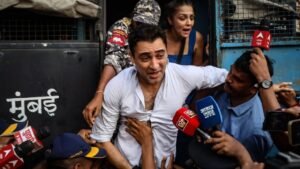
The controversy stems from a demonstration held on October 10 at Mumbai’s historic August Kranti Maidan, where participants demanded the resignation of Chief Election Commissioner Gyanesh Kumar. Imran Khan attended the protest alongside his partner, Lekha Washington, and his first cousin, Zayn Marie Khan.
The actor was reportedly detained by police during the demonstration, and footage showing him in a police vehicle subsequently circulated online. His presence at the protest attracted political attention, with Somaiya questioning whether his citizenship status permitted him to participate in such an event.
The incident has since developed into a wider debate over the distinction between Indian citizenship and OCI status, as well as the legal restrictions that may apply to foreign nationals participating in political activities in India.
Imran Khan’s Citizenship and OCI Status Under Scrutiny
Imran Khan was born in Madison, Wisconsin, in the United States, and is reported to hold American citizenship and an Indian OCI card rather than Indian citizenship. The distinction is important because an OCI card does not confer Indian citizenship or the same political rights enjoyed by Indian citizens.
OCI cardholders are subject to conditions prescribed under Indian law and applicable government notifications. Whether an individual’s participation in a particular demonstration constitutes a violation, however, depends on the relevant legal provisions, the circumstances of the event and the findings of the competent authorities.
The reported notice has therefore raised questions about the legal basis for the action and the procedure that will follow. The notice should not, by itself, be treated as a final judicial determination that the actor has committed an offence.
The October 28 deadline reportedly specified in the FRRO notice places the immediate focus on the actor’s response and any further action by immigration authorities. The matter could involve a review of his immigration status, the allegations made in the complaint and the legal provisions cited by the authorities.
A Look Out Circular, which Somaiya had sought, is a separate measure from a notice directing someone to leave the country. Its issuance and consequences would depend on the decision of the competent authorities; the complaint alone does not establish that such a circular has been issued.
For now, the case highlights the legal questions surrounding the participation of foreign nationals and OCI cardholders in political demonstrations in India. The final position will depend on the official notice, the applicable law and any subsequent proceedings or clarification from the authorities and the actor’s representatives.