



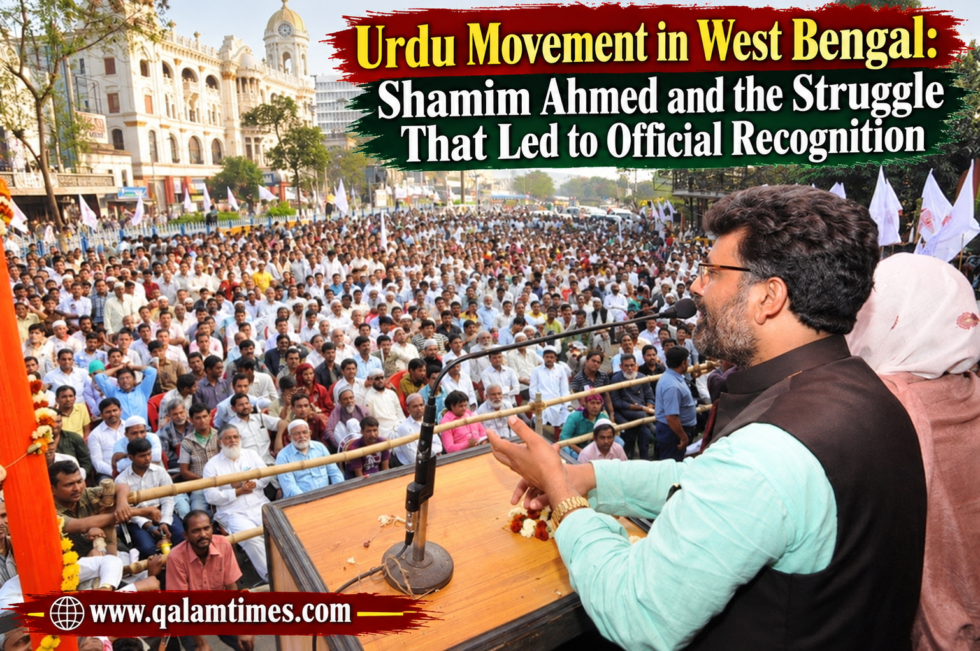
Urdu Movement in West Bengal, led by Shamim Ahmed, grew from grassroots protests into a historic campaign that helped secure official recognition for Urdu in 2012.
Qalam Times News Network
Kolkata, September 14, 2026
From Decades of Neglect to the West Bengal Official Language (Amendment) Act, 2012
The Urdu Movement in West Bengal emerged from a long history of linguistic marginalisation, administrative neglect and growing cultural insecurity among Urdu-speaking communities. Although Urdu had a deep historical and cultural presence in Bengal, particularly in Kolkata, the language faced years of inadequate institutional support in education, administration and public life. The movement gained renewed momentum in the early twenty-first century, particularly from 2005 onward under the leadership of Shamim Ahmed, whose efforts transformed a largely symbolic campaign into a more organised, grassroots and sustained struggle for linguistic rights, dignity and constitutional recognition.
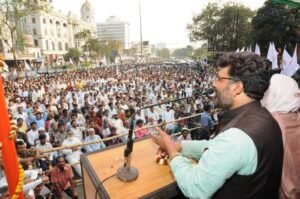
The Urdu Movement was rooted in a much older history. Urdu developed in the Indian subcontinent as a shared cultural language shaped by centuries of interaction among diverse communities, including Hindus, Muslims, Sikhs and others. Influenced by Persian, Arabic, Turkish and various Indian languages, Urdu became an important medium of communication, literature and cultural expression. It frequently served as a bridge across social and religious divisions. However, during the nineteenth and twentieth centuries, changing political circumstances increasingly transformed Urdu from a symbol of cultural interaction into a subject of political and linguistic debate.
During the British colonial period, Urdu occupied an important administrative and cultural position. Following the replacement of Persian in 1837, Urdu was widely used in courts, education and public life. Over time, however, colonial policies contributed to increasing linguistic divisions, particularly through the promotion of Hindi in the Devanagari script. What had initially been a difference of script increasingly developed into a wider cultural and political divide.
After the Partition of India in 1947, Urdu was recognised in the Constitution as a scheduled language, but its practical status and use depended substantially on individual state policies. In West Bengal, despite the language’s strong historical presence, Urdu-speaking communities increasingly experienced neglect in education, administration and public services.
Kolkata had long been an important centre of Urdu journalism and literature. Yet even in areas where substantial Urdu-speaking populations lived, institutional support remained limited. Constitutional provisions, particularly Articles 345 and 347, provided a legal basis for the recognition of languages and subsequently became an important foundation for the Urdu movement in Bengal.
The Early Phase of the Urdu Movement
The demand for Urdu to be granted the status of a second official language in Bengal began around 1980, when Anjuman Taraqqi Urdu approached the government with the demand. In 1981, the government partially recognised Urdu in certain areas. However, the decision remained largely symbolic and was not effectively implemented.
As a result, Urdu continued to face neglect in administration and public life. Frustration gradually increased among Urdu-speaking communities. For nearly three decades, the movement remained largely confined to memorandums and symbolic protests and failed to generate the level of sustained public pressure required to bring about substantial change.
2005: Shamim Ahmed Emerges as a Decisive Voice
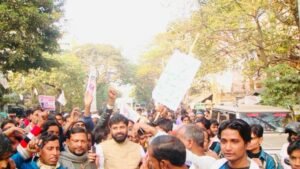
The year 2005 marked a decisive turning point in the Urdu Movement in Bengal. It was during this period that Shamim Ahmed emerged as a determined and distinctive voice in the struggle.
Unlike many earlier leaders associated with the traditional Urdu establishment, Shamim Ahmed did not depend on Urdu for his livelihood and was not tied to institutional interests. His involvement was driven by what he regarded as a deep sense of cultural responsibility.
His approach differed fundamentally from many previous efforts. Rather than relying primarily on established institutions, he concentrated on building the movement from the grassroots. He travelled extensively across Kolkata and other parts of Bengal, organising small meetings, discussions and awareness programmes.
These gatherings were neither grand nor glamorous, but they played an important role in creating awareness and rebuilding public confidence.
Building Confidence, Dignity and Constitutional Awareness
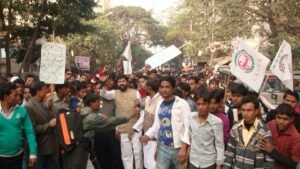
One of Shamim Ahmed’s central objectives was to restore confidence among Urdu speakers. Many members of the community had become disillusioned with earlier campaigns because they had produced few tangible results.
Shamim Ahmed emphasised that the struggle for Urdu was not merely a linguistic demand. In his approach, it was equally a question of identity, dignity and constitutional rights.
He also insisted that the movement remain strictly peaceful and democratic. He believed that aggression, disorder or confrontation would weaken the moral strength of the cause. This disciplined and principled approach helped the movement gain credibility and respect among sections of the public as well as the authorities.
An Inclusive Movement Beyond Religious and Linguistic Boundaries
Under Shamim Ahmed’s leadership, the Urdu Movement developed an inclusive and unifying character. The campaign brought together people from different linguistic and social backgrounds and encouraged them to support the cause collectively.
Individuals from various communities—including Hindus, Muslims, Sikhs, Christians and others—participated in or supported the movement. This demonstrated that the campaign was not presented merely as a demand belonging to one religious or linguistic group.
Shamim Ahmed consistently maintained that Urdu was not a “foreign” language but an integral part of India’s cultural and historical heritage. He sought to challenge misconceptions surrounding Urdu and highlighted the language’s deep roots in the shared traditions of the Indian subcontinent.
Through dialogue and awareness campaigns, he was able to persuade many people, including those who were not Urdu speakers, to express solidarity with the movement. The campaign consequently developed into a broader social effort in which people from diverse backgrounds came together around the principles of linguistic rights and cultural diversity.
Major Milestones: From Public Programmes to Mass Mobilisation
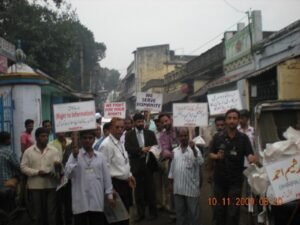
The first significant public programme associated with the movement was held in central Kolkata in 2006. Although participation was modest, the programme represented the beginning of a new and more organised phase of the struggle.
During the following two years, the movement expanded steadily. Shamim Ahmed continued working to build awareness and support, reaching out not only to Urdu-speaking communities but also to non-Urdu speakers and explaining the cultural, historical and social significance of the language.
One of the important initiatives launched during this period was the Akhbar Faroshi campaign, involving the distribution and selling of newspapers. The campaign was conducted across different cities of West Bengal and even beyond the state.
Through the circulation of Urdu newspapers, members of the public were informed about linguistic rights, the condition of Urdu and the objectives of the movement. The campaign helped connect different communities and created a stronger sense of grassroots participation.
The 36-Hour Sit-In and the “No Urdu, No Vote” Slogan
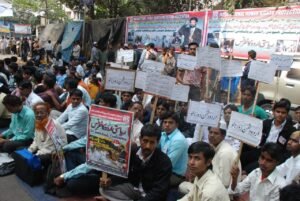
The movement’s inclusive character remained one of its defining features. Hindus, Muslims, Sikhs, Christians, Jains and Bengali-speaking communities came together in support of the cause. This unity reflected a wider commitment to cultural diversity and linguistic rights rather than a narrowly community-based demand.
A major milestone came on June 28, 2008, when a 36-hour sit-in protest was organised near the Gandhi statue in Kolkata.
The protest represented a decisive turning point. For the first time, the Urdu Movement in Bengal took the form of a highly visible, organised and disciplined public demonstration, attracting wider attention from both society and the authorities.
The momentum continued to build. By 2010, the powerful slogan “No Urdu, No Vote” had emerged. The slogan highlighted the political significance of the issue and became an important instrument for mobilising public opinion and putting pressure on policymakers.
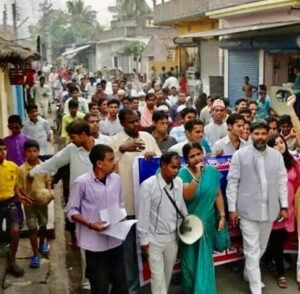
The protest was notable for its peaceful and disciplined character. There were no aggressive slogans or confrontational actions. Instead, participants used placards to express their demands in a calm and dignified manner.
The demonstration received extensive coverage in Urdu, Bengali and English media, helping bring the issue into mainstream public discourse while increasing the movement’s visibility and legitimacy.
The Unique “Juta Polish” Campaign
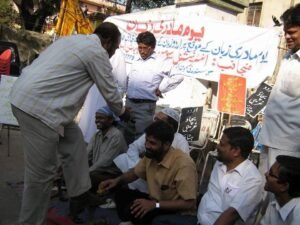
Alongside other awareness initiatives, the movement introduced a distinctive and symbolic campaign known as the “Juta Polish” or shoe-polishing movement.
The initiative was intended to convey a powerful message through a simple but striking form of peaceful protest. Volunteers, including educated young people and activists, publicly polished shoes in marketplaces, streets and other busy public places.
The purpose was not simply to attract attention. The campaign sought to demonstrate the depth of the neglect experienced by Urdu-speaking communities. By undertaking such humble work, participants showed their willingness to set aside personal pride and social status for the protection of their language and cultural identity.
The campaign became a form of peaceful resistance that emphasised dignity through struggle rather than confrontation.
It also challenged existing social hierarchies and stereotypes. The public sight of educated individuals polishing shoes drew curiosity and encouraged conversations about the Urdu issue. It conveyed the message that the demand for Urdu was not an elite or purely political agenda but a grassroots campaign supported by ordinary people.
Like the Akhbar Faroshi campaign, the Juta Polish movement was conducted in different parts of West Bengal and even beyond the state. It contributed to mobilisation, awareness and a stronger emotional connection between people and the cause.
Above all, the initiative reinforced the movement’s central principles of peaceful, democratic and creative resistance.
Political Challenges and Resistance
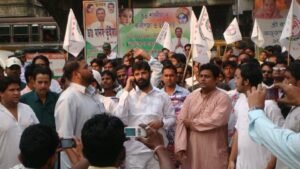
The Urdu Movement faced significant challenges. The political environment in Bengal at the time was dominated by the Left Front government, which enjoyed considerable political support. Many people were hesitant to participate in protests because of concerns about possible political repercussions.
Resistance also emerged from within sections of the Urdu-speaking community itself. Some members of the Urdu elite remained sceptical about Shamim Ahmed’s approach, while others were reluctant to support a movement that did not necessarily align with their institutional or personal interests.
Despite these difficulties, the movement continued to expand. Shamim Ahmed remained steadfast in the face of criticism and personal attacks. His persistence gradually helped him win greater trust within the community.
Taking the Issue to the National Level
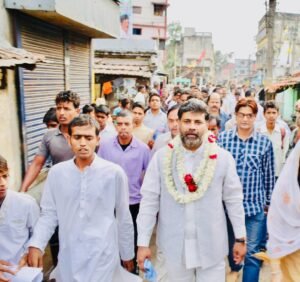
Recognising the importance of wider support, Shamim Ahmed reached out to national leaders and political figures. He met several prominent personalities and briefed them about the situation surrounding Urdu in West Bengal.
These efforts helped bring greater national attention to the issue and ensured that the movement could not be easily ignored.
At the same time, he continued strengthening the grassroots base through regular meetings, awareness campaigns and peaceful protests, keeping the momentum of the campaign alive.
The Final Breakthrough and the 2012 Legislative Achievement
After years of sustained effort, dedication and continuous public engagement, the movement eventually achieved a historic breakthrough.
The pressure generated by organised protests, awareness campaigns and widespread public support compelled the Government of West Bengal to take concrete action. The demand for Urdu was finally addressed through legislative measures rather than remaining confined to symbolic assurances.
The slogan “No Urdu, No Vote” played an important political role during this period. According to the account of the movement, it significantly influenced public opinion and contributed to the end of the 35-year rule of the Left Front government.
A new government led by Mamata Banerjee under the All India Trinamool Congress (AITMC) subsequently came to power. However, the change in government did not result in an immediate resolution of the Urdu issue. For nearly one and a half years, the new administration remained largely silent on the matter.
As a result, Shamim Ahmed and his supporters continued the movement with the same intensity during the tenure of the new government.
The major legislative milestone eventually came in 2012 with the passage of the West Bengal Official Language (Amendment) Act, 2012 (Act VIII of 2012).
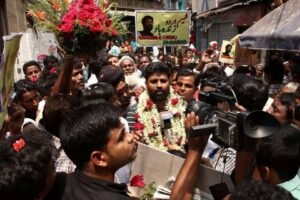
The amendment formally granted Urdu the status of a second official language in areas where Urdu-speaking populations were significant.
Importantly, the amendment also recognised several other languages—including Hindi, Santhali, Oriya and Punjabi—alongside Urdu. This expanded linguistic inclusivity within the state beyond Bengali and Nepali.
In this context, the success of the Urdu Movement is presented as an important catalyst for wider recognition of linguistic diversity in West Bengal.
The amendment received official sanction and was published in the Kolkata Gazette on May 17, 2012, giving the recognition full legal and administrative authority.
This represented a decisive change because the recognition of Urdu was no longer merely declaratory. It was backed by legal provisions and administrative authority.
The achievement also carried practical implications. Urdu could now be used in administration, educational institutions and public communication in designated areas. Government offices were expected to provide services in Urdu where applicable, giving the language a legitimate place within the state’s official framework.
Most importantly, the achievement affirmed the constitutional rights of Urdu-speaking citizens and represented the culmination of a prolonged struggle for linguistic dignity, recognition and equal participation in public life.
The Significance of the Urdu Movement
The significance of the Urdu Movement in Bengal extends beyond the immediate question of official language status.
The movement demonstrated that a determined, disciplined and peaceful campaign could make progress even under challenging political and social circumstances. It highlighted the importance of grassroots participation and leadership rooted in sustained public engagement.
The movement also reaffirmed that language is more than a means of communication. For communities, language can represent cultural identity, historical memory and social dignity. By securing recognition for Urdu, the movement contributed to the preservation of an important part of India’s rich linguistic and cultural heritage.
The Urdu Movement in Bengal, particularly under the leadership of Shamim Ahmed, therefore stands as an example of democratic struggle. It transformed a stagnant and largely symbolic campaign into a more vibrant and organised movement.
Through patience, persistence and principled action, the campaign achieved what had long appeared difficult to accomplish.
The journey from neglect to recognition was neither short nor easy. It demonstrated that when people unite around a clear purpose and remain committed to sustained peaceful action, even deeply entrenched challenges can be confronted.
The story of the movement ultimately offers a broader reminder: rights are not always granted automatically; they often have to be pursued through awareness, unity, democratic participation and sustained effort.