



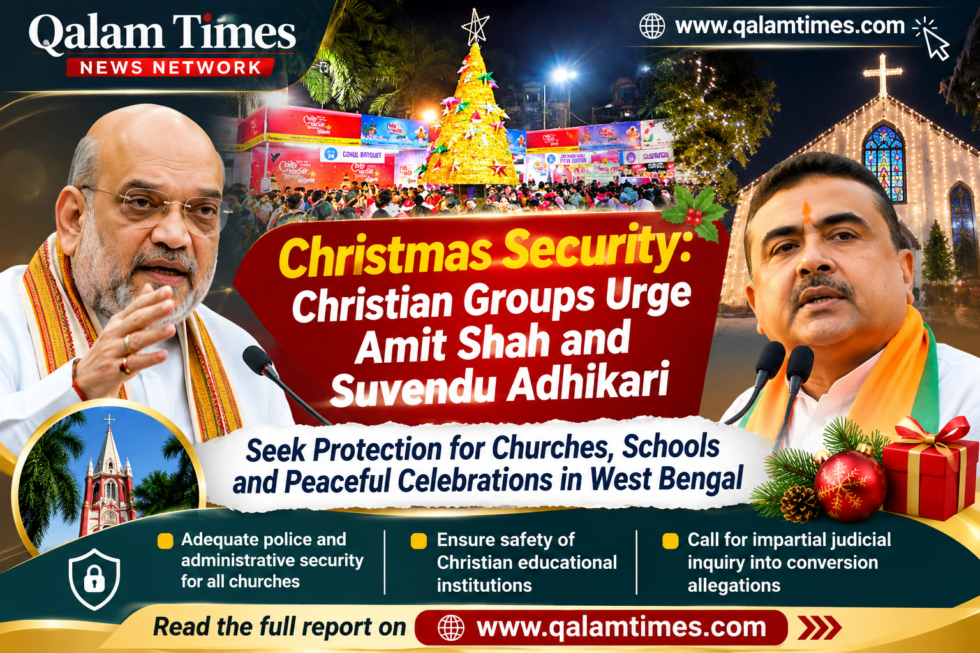
Christmas Security has become a concern for Christian organisations in West Bengal, which have written to Union Home Minister Amit Shah, Chief Minister Suvendu Adhikari and Governor R.N. Ravi, seeking protection for churches, Christian schools and peaceful Christmas celebrations.
Qalam Times News Network
Kolkata, November 22, 2026
Christian Leaders Seek Police Protection and an Impartial Inquiry into Conversion Allegations
Christmas Security has emerged as a matter of concern for Christian organisations in West Bengal ahead of the festive season. A Christian forum and an association representing Christian educational institutions have approached the Centre and the state government, seeking adequate administrative and police protection for churches, schools and peaceful Christmas celebrations across the state.
The organisations have called for effective Christmas Security arrangements, emphasising that members of the Christian community should be able to observe religious services and celebrate the festival without fear, intimidation or unnecessary interference. Their appeal has been communicated through three separate letters addressed to Union Home Minister Amit Shah, West Bengal Chief Minister Suvendu Adhikari and Governor R.N. Ravi.
The letters were jointly written by Herod Mullick, founder and general secretary of Bangiya Christiya Pariseba; Father Moloy D’Costa, secretary of the West Bengal Association of Christian Schools; and Subir Sircar, state working president of Bangiya Christiya Pariseba.
Their central request was clearly stated: the authorities should ensure adequate administrative and police protection for all churches, Christian educational institutions and peaceful religious celebrations throughout West Bengal.
Senior Church Representatives and Christian Organisations Endorse Appeal
The appeal has received support from several prominent Christian religious leaders and organisations. Those endorsing the letters include the Archbishop of Calcutta, Most Reverend Elias Frank; the Catholic Association of Bengal; Reverend Subodh Mondal, Bishop of the Methodist Churches of India; and Reverend Pradip Goswami, President of the Bengal Baptist Union, among others. Through their collective appeal, the signatories have sought to draw the attention of the authorities to concerns surrounding religious gatherings, Christian worship and allegations of unlawful religious conversion. They have particularly emphasised the importance of distinguishing established Christian religious practices from activities that may be misunderstood by people unfamiliar with the faith.
Christian Organisations Explain the Meaning and Process of Baptism
An important section of the letters addresses misconceptions about Christian baptism. The signatories have argued that baptism is not an immediate or casual ritual that can be performed simply by gathering a group of people and sprinkling water on them. According to the Christian representatives, baptism represents the culmination of a prolonged spiritual process involving religious instruction, personal understanding and a voluntary decision to embrace the faith. The letters state: “Water is never sprinkled casually on an unprepared crowd. Sprinkling of water is not baptism; it is a blessing. Baptism is the culmination — not the beginning — of a long spiritual journey.” The signatories explained that in established churches, individuals seeking baptism are generally required to undergo an extended period of religious education. This preparation may continue for several months and, in certain cases, a year or longer. During this period, candidates are expected to develop an understanding of Christian beliefs and demonstrate that their decision is voluntary and free from coercion. Formal baptism is conducted only after this process and at the individual’s own request, the letters explained. The organisations believe that a proper understanding of these established practices is essential to prevent routine religious activities from being wrongly interpreted.
Prayer Meetings Should Not Be Mistaken for Mass Conversion Activities
The Christian representatives have also expressed concern that ordinary worship services, prayer meetings, healing services and gospel preaching are sometimes viewed with suspicion by people unfamiliar with Christian religious traditions. They have argued that such gatherings should not automatically be treated as organised attempts at mass conversion. The letters state: “Observers unfamiliar with Christian worship frequently mistake routine prayer meetings, healing services or gospel preaching for ‘mass conversion ceremonies’.”
The signatories further challenged what they described as a widespread misunderstanding that a preacher can assemble a crowd, offer prayers, sing hymns, burn incense or sprinkle water and immediately convert people. They maintained that such an interpretation does not reflect the theological principles or established ecclesiastical practices of Christianity. According to the representatives, religious worship and conversion are distinct matters, and authorities should carefully examine the circumstances before reaching conclusions about any gathering or religious activity.
Demand for Independent Judicial Inquiry Before Punitive Action
Another significant demand in the letters concerns allegations of unlawful religious conversion involving churches and house churches. The signatories have urged the authorities to ensure that no church or religious institution faces police action or punitive measures solely on the basis of unverified allegations. They have called for an impartial judicial inquiry before any such action is initiated, arguing that allegations must be examined through a fair and transparent process. Specifically, the Christian organisations have proposed an independent investigation led by a sitting or retired High Court judge. The proposed inquiry, they say, should examine allegations of illegal conversion, establish whether any particular group or organisation has engaged in unlawful activities and identify those responsible wherever wrongdoing is established. The letters state that such an investigation would help distinguish between genuine violations of the law and legitimate religious activities. The signatories believe that an impartial process would also protect innocent members of mainstream churches and credible independent Christian congregations from unnecessary suspicion or harassment.
Appeal for Religious Freedom and Peaceful Christmas Celebrations
The appeal to the Centre and the West Bengal authorities comes ahead of Christmas, a major religious occasion for Christian communities across the state. By seeking protection for churches, educational institutions and public celebrations, the organisations have highlighted the importance of ensuring that people can practise their faith peacefully and without fear. Their demands combine two central concerns: adequate security arrangements for the Christian community and fair treatment of religious institutions facing allegations of unlawful conversion. The signatories have called upon the authorities to approach such matters with sensitivity, impartiality and respect for constitutional protections. They have also stressed that genuine violations of the law should be investigated through established legal procedures rather than through assumptions or collective suspicion. As Christmas approaches, the response of the authorities will be closely watched by the organisations and members of the Christian community. Their appeal ultimately seeks to ensure that the festival is observed peacefully, churches and educational institutions remain protected, and legitimate religious practices are not confused with unlawful activities.