



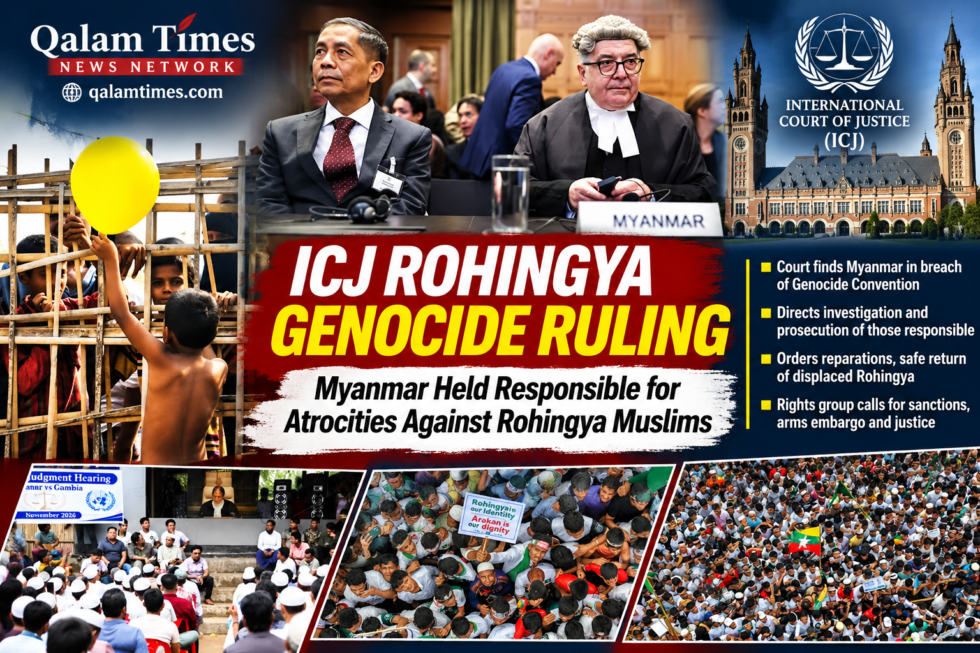
ICJ Rohingya Genocide Ruling holds Myanmar responsible for atrocities against Rohingya Muslims as rights groups demand sanctions, reparations, refugee protection and justice.
Qalam Times News Network
Kolkata, November 21, 2026
The ICJ Rohingya Genocide Ruling has been welcomed by Rohingya human rights advocates as a historic development in their decades-long struggle for recognition, justice and protection. The International Court of Justice (ICJ) has held Myanmar responsible for genocide against the Rohingya Muslim minority, bringing renewed international attention to the mass killings, sexual violence, destruction of settlements and systematic persecution suffered by the community.
The judgment has been described as a major legal milestone for a population that has endured years of discrimination, displacement and denial of citizenship. The ICJ Rohingya Genocide Ruling has also strengthened calls for international intervention, compensation for survivors, legal proceedings against those responsible and guarantees that similar atrocities will not happen again.
The Rohingya Human Rights Initiative (ROHRIngya) welcomed the decision in the case of The Gambia v. Myanmar, describing it as an important recognition of the suffering experienced by the Rohingya people. The organisation said the judgment provides an official international record of the violence inflicted upon the community and represents a significant step towards securing justice for survivors and future generations.
According to the reported judgment delivered on November 19, the ICJ ruled by a 9–6 majority that Myanmar had committed genocide against the Rohingya in northern Rakhine State during the military’s 2017 clearance operations. The court found violations of Myanmar’s obligations under the 1948 Convention on the Prevention and Punishment of the Crime of Genocide.
ICJ Rohingya Genocide : Seven-Year Legal Battle Ends in Landmark International Judgment
The proceedings began after The Gambia instituted legal action against Myanmar on November 11, 2019, accusing the country of violating the Genocide Convention through its treatment of the Rohingya population. The case was brought with the support of the Organisation of Islamic Cooperation (OIC), which backed efforts to establish Myanmar’s responsibility under international law for the atrocities committed against the Muslim minority. The legal proceedings followed the military crackdown launched in August 2017 in Rakhine State. The operation forced more than 700,000 Rohingya to flee across the border into neighbouring Bangladesh. Survivors and human rights organisations have documented allegations of mass killings, rape, other forms of sexual violence, the burning of homes and the destruction of entire villages. Many displaced families remain in refugee camps, while those who stayed in Myanmar continue to face serious humanitarian and security challenges. The Rohingya, a predominantly Muslim ethnic community, have faced decades of institutionalised discrimination and restrictions on citizenship and basic rights in Myanmar.
Court Highlights Myanmar’s Failure to Prevent Genocide
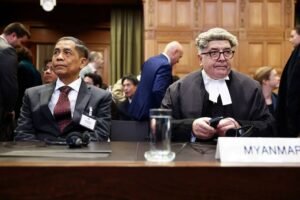
The latest judgment follows an earlier interim order issued by the ICJ in January 2020. At that time, the court directed Myanmar to take all measures within its power to prevent acts prohibited under the Genocide Convention against the Rohingya and to preserve evidence connected with the allegations. In its latest decision, the court also found that Myanmar had failed to fulfil important obligations relating to the prevention of genocide and the preservation of evidence. The judgment addressed several legal responsibilities arising from the Genocide Convention, including the obligation to prevent genocide, investigate and punish those responsible, and establish domestic legislation giving effect to the international treaty. The court directed Myanmar to take immediate and effective steps to investigate individuals reasonably suspected of committing prohibited acts during the 2017 military operations. Where sufficient grounds exist, those responsible must face prosecution and punishment in accordance with the law. It also called for assurances and guarantees that such violations would not be repeated.
Reparations and Safe Return of Displaced Rohingya
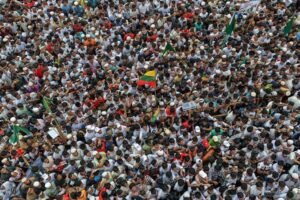
One of the most significant aspects of the judgment concerns the future of Rohingya survivors and displaced families. The ICJ directed Myanmar to adopt restitution measures in the interests of the Rohingya community. These include facilitating the safe, voluntary and dignified return of displaced people to their places of residence and helping reunite families separated by the violence. The measures are intended to cover Rohingya who remain displaced within Myanmar as well as those living outside the country. The court also held that Myanmar must provide compensation to the Rohingya community and individual victims for the damage caused by its violations of the Genocide Convention. The precise amount and arrangements for compensation and other forms of reparation will be determined in a subsequent phase of the proceedings. Myanmar has also been directed to submit a report within two years explaining the restitution measures adopted and outlining its proposed compensation arrangements. For Rohingya survivors, these directions are particularly significant because justice cannot be limited to a legal declaration. They also require practical steps to restore dignity, protect basic rights and address the consequences of years of displacement.
Rohingya Rights Group Calls Judgement: A Historical Testament
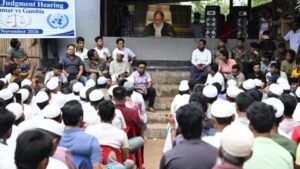
Welcoming the ruling, the Rohingya Human Rights Initiative said the decision represented international recognition of the community’s suffering and the systematic nature of the persecution. The organisation specifically referred to the role of Myanmar’s military leadership, including Senior General Min Aung Hlaing, and raised concerns about the involvement of the Arakan Army in the wider pattern of violence against Rohingya communities.In its statement, ROHRIngya described the judgment as a historical record of the destruction of the community’s citizenship rights, repeated military operations, mass killings, sexual violence and the devastation of villages. The organisation said: “The ICJ’s ruling not only grants our experience international acknowledgement but also serves as a historical testament to the stripping of our citizenship, the multiple clearance operations against us since 2017, our mass killings, rapes, and destruction of villages and our very existence.”
The group urged Myanmar’s authorities to comply fully and immediately with the court’s directions.
Demand for International Sanctions and Arms Embargo
While welcoming the judicial decision, ROHRIngya stressed that international recognition must be followed by concrete action. The organisation appealed to governments and international institutions to uphold the Genocide Convention and use their available legal and diplomatic powers to prevent further atrocities against the Rohingya. Its demands include:
- An arms embargo against Myanmar’s military.
- Targeted sanctions against individuals and institutions supporting military operations.
- Restrictions on revenue sources, weapons supplies and military equipment reaching the Myanmar military.
- Sanctions against the Arakan Army and its leadership over alleged violations against Rohingya communities.
- Stronger international monitoring of human rights conditions in Rakhine State.
The organisation also called for cross-border humanitarian assistance to address the worsening food crisis in Rakhine State. It urged the international community to establish an independent human rights monitoring mechanism capable of documenting violations and protecting vulnerable communities on the ground.
Humanitarian Assistance and Refugee Repatriation Remain Critical
Beyond legal proceedings, the future of Rohingya refugees remains a major concern. ROHRIngya called for a concrete international plan to facilitate the safe and voluntary repatriation of Rohingya refugees. It emphasised that any return process must protect the security, dignity and fundamental rights of the displaced population. The organisation also demanded an immediate halt to deportation plans and arbitrary detention affecting Rohingya refugees. It argued that repatriation cannot be considered meaningful unless refugees are guaranteed safety, legal recognition, freedom from discrimination and the opportunity to rebuild their lives. The humanitarian situation in Rakhine State also requires urgent attention, particularly as conflict and insecurity continue to threaten access to food, healthcare and other essential services.
Indian Advocate Raises Concerns Over Treatment of Rohingya Refugees
Reacting to the judgment, senior advocate Colin Gonsalves of the Supreme Court of India raised serious allegations concerning India’s treatment of Rohingya refugees. He alleged that Indian authorities had participated in what he described as a “shameful act of genocide” by detaining Rohingya refugees, transporting them by ship towards the Myanmar border and leaving them in shallow waters in a conflict-affected area. These allegations come amid continuing concerns raised by human rights advocates over the detention and proposed deportation of Rohingya refugees in India. The issue has generated debate over the legal protection available to refugees, the principle of non-refoulement and the responsibility of governments towards people fleeing persecution. The allegations made by Gonsalves underline the need for transparent procedures and safeguards to ensure that vulnerable refugees are not exposed to further danger.
The Gambia’s Role Recognised by Rohingya Community
ROHRIngya also expressed gratitude to The Gambia for taking the initiative to bring the case before the International Court of Justice. The organisation said The Gambia’s intervention ensured that the experiences of Rohingya survivors received international judicial attention and that the history of persecution was formally documented for future generations. The case has also demonstrated the importance of international legal mechanisms in addressing alleged violations of human rights and humanitarian law, particularly when affected communities have limited access to justice within their own countries. Kyaw Min Sabber, Executive Director of the Rohingya Human Rights Initiative, emphasised that the judgment should be iewed as the beginning of a longer struggle rather than the conclusion of the community’s campaign. “This is not the end but the beginning of our demand for justice and accountability,” he said.
ICJ Rohingya Genocide : A Landmark Moment, but the Struggle Continues
For the Rohingya community, the ICJ decision represents an important moment in a long struggle for recognition, citizenship, security and dignity. However, the real impact of the judgment will depend on Myanmar’s compliance, the implementation of reparations, legal proceedings against those responsible and sustained international pressure. The challenge ahead is to translate the court’s findings into meaningful protection for survivors and displaced families. For hundreds of thousands of Rohingya refugees living away from their homeland, justice will ultimately mean more than a legal victory. It will mean the right to return safely, live without fear, enjoy equal citizenship and rebuild a future in which their identity and existence are respected.