



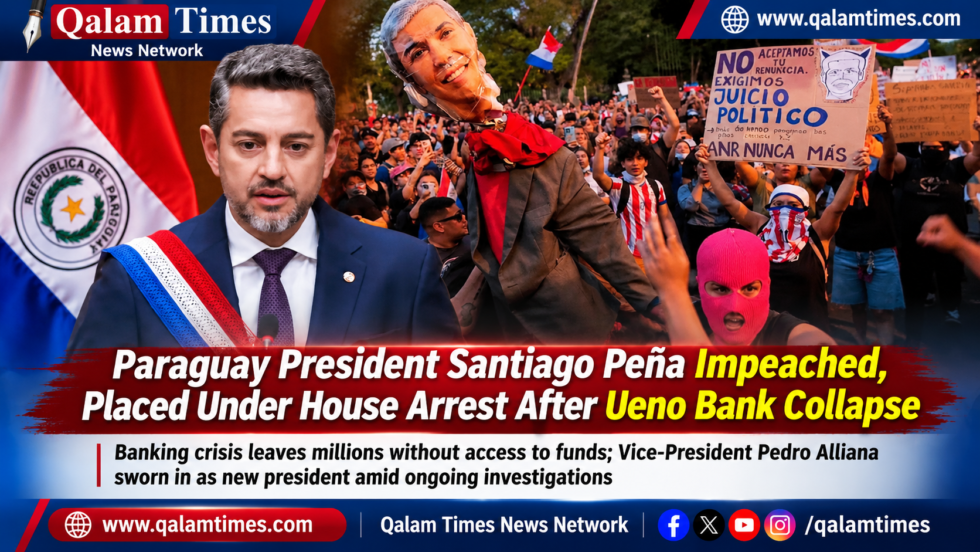
Ueno Bank Collapse sparks a political crisis in Paraguay as President Santiago Peña is impeached and placed under house arrest, with Pedro Alliana taking power.
Qalam Times News Network
Asunción, Paraguay, November 7, 2026
The Ueno Bank Collapse has triggered a major financial and political crisis in Paraguay, leaving millions of customers struggling to access their savings and resulting in the impeachment of President Santiago Peña. The former economist and IMF official has been placed under house arrest following allegations of financial misconduct and political influence involving the troubled banking institution. The Ueno Bank Collapse affected approximately three million customers in a country with a population of around 6.5 million. The crisis also raised concerns over hundreds of millions of dollars in public funds deposited or invested in the bank.
Ueno Bank : Banking Scandal Brings Political Leadership Change
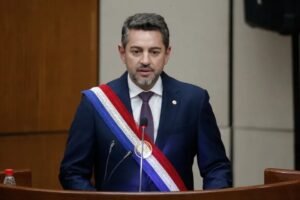
Paraguay’s central bank intervened in Ueno Bank on November 3 after identifying serious financial weaknesses, including concerns about risky lending, inadequate documentation and loans to companies connected with its owners, Grupo Vazquez. Peña had previously held shares in the conglomerate but maintained that he sold his stake in March 2025. He has denied wrongdoing. As public protests intensified, opposition lawmakers initiated impeachment proceedings. Although Peña announced his intention to resign on November 5, Congress proceeded with his removal. The Chamber of Deputies voted 78-0 to advance impeachment, while 44 senators subsequently supported his removal, with one abstention. Following Peña’s removal, Vice-President Pedro Alliana was sworn in as Paraguay’s new president. He will serve the remainder of the presidential term, which runs until August 2028.
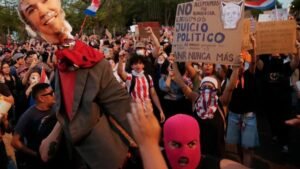
Prosecutors subsequently ordered Peña placed under house arrest pending questioning over alleged breach of trust, influence peddling and possible misuse of public office. Former central bank chief Carlos Carvallo was also reportedly ordered arrested. Meanwhile, 27 bank officials and associates are facing criminal charges connected with the scandal. Investigations include allegations of attempted fraud, misappropriation of funds and financial misconduct. The government has also introduced measures to protect affected depositors, with initial payments to customers with smaller accounts reportedly beginning on November 5.
The crisis has raised serious questions about financial regulation, public accountability and political connections in Paraguay. The investigation continues, while the new president faces the challenge of restoring confidence in the country’s banking system.