



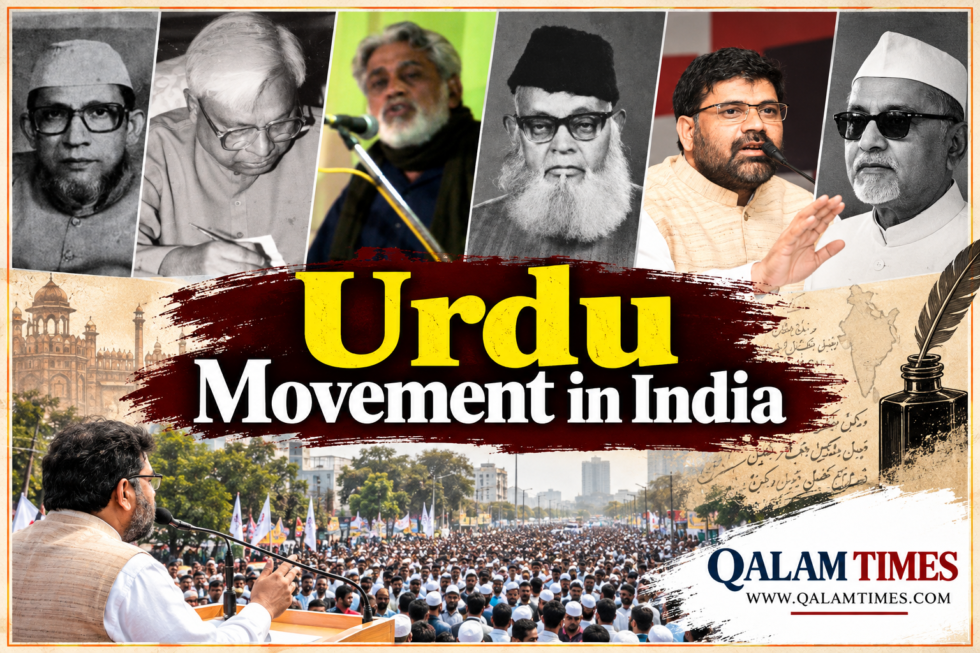
Explore the Urdu Movement in India, its post-independence struggle, key leaders, educational campaigns, West Bengal activism and the continuing effort to protect Urdu’s cultural and constitutional place.
Qalam Times News Network
Kolkata | September 20, 2026
The Urdu Movement in India is not merely the history of a language. It is also the history of the country’s shared civilisation, social interaction, literary traditions, journalism, political awakening and linguistic diversity. Over centuries, Urdu developed its identity through its relationship with India’s different languages, dialects and cultural traditions, eventually becoming an important medium of expression in literature, journalism, education, politics and public life. However, after independence and the Partition of India, Urdu entered a new and difficult phase. While the country adopted a democratic Constitution based on linguistic diversity and equal citizenship, attempts were also made in some political and social debates to associate Urdu with a particular religious identity. In such an environment, protecting Urdu was no longer merely a literary issue; it became a question of education, culture, identity and constitutional rights.
It is against this background that the Urdu Movement in post-independence India needs to be understood. The movement was not confined to a single individual, organisation or state. At different times, different people raised their voices for Urdu in different ways. Some fought for Urdu in educational institutions, others demanded its rights at the government level, some used Urdu journalism to create public awareness, while others took to the streets to draw the attention of governments towards the problems facing the language. Although their methods varied, they shared a common objective: protecting Urdu’s legitimate place within India’s linguistic pluralism.
From Maulvi Abdul Haq to the Urdu Activists of West Bengal
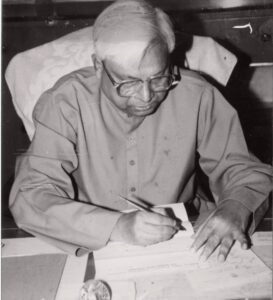
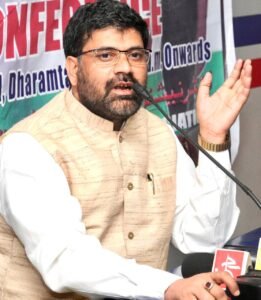
To understand this struggle, it is important to begin with Maulvi Abdul Haq, widely recognised as the “Father of Urdu”. A major part of his life was devoted to the intellectual, literary and institutional development of Urdu. He played a central role in strengthening the Anjuman Taraqqi-e-Urdu and turning it into a strong institution and movement. Although much of his work took place before independence, the institutional and intellectual foundations he created remained important to the post-independence effort to protect Urdu.
Maulvi Abdul Haq’s contribution was particularly important because he sought to establish Urdu not merely as a language of poetry and storytelling but also as a language of scholarship, research and modern intellectual activity. His efforts provided a foundation for many of the Urdu movements that followed.
After independence, Maulana Abul Kalam Azad occupied a distinct place in the history of Urdu. As independent India’s first Education Minister, Azad advocated the preservation of Indian languages and the country’s composite cultural heritage. His vision of India was based on cultural coexistence and diversity rather than religious or linguistic uniformity.
His name also holds significance in discussions concerning Urdu’s constitutional and educational position. Historical material associated with the Anjuman Taraqqi-e-Urdu identifies Maulana Azad among the important national leaders associated with the organisation’s activities and the wider struggle for Urdu rights.
Another important figure in this wider struggle was Maulana Hafizur Rahman Seoharvi. He was not only a religious leader but was also associated with the freedom movement, national politics and the political and social concerns of Indian Muslims.
After Partition, questions concerning the cultural identity of Muslims in India were closely connected with broader debates over Urdu. The political work of leaders such as Hafizur Rahman Seoharvi formed part of a larger historical context in which Indian Muslims sought to preserve their religious and cultural rights while maintaining their place within India’s democratic and multicultural framework.
Urdu Was Never the Property of One Community
An important historical point cannot be ignored: viewing the post-independence Urdu movement solely as a movement of Muslim leaders would present an incomplete picture.
Non-Muslim writers, intellectuals and national leaders also played important roles in the development and preservation of Urdu. They regarded the language as part of India’s shared cultural heritage.
Mahatma Gandhi’s ideas concerning Indian languages, Jawaharlal Nehru’s vision of India’s cultural diversity, and the contributions of literary figures such as Premchand, Firaq Gorakhpuri, Krishan Chander, Rajinder Singh Bedi and Jagan Nath Azad demonstrate that the world of Urdu was never confined to a single religious community.
Urdu needs to be understood within the context of India’s composite, or Ganga-Jamuni, cultural tradition. Much of the language’s historical strength has emerged from precisely this cultural interaction.
Dr Zakir Hussain was another important figure in the institutional struggle for Urdu after independence. According to the historical account of the Anjuman Taraqqi-e-Urdu, efforts to strengthen Urdu teaching, establish Urdu departments in universities and develop institutional structures for the language received considerable support during his leadership.
The struggle to preserve Urdu was therefore not simply an emotional appeal. It had a clear educational and institutional objective. If Urdu was to survive, it had to reach schools, colleges and universities. If it was to remain a language of scholarship, research and modern academic material had to be produced in Urdu. And if it was to be passed on to future generations, a proper system of Urdu education had to be established.
After independence, one of the major phases of the Urdu movement involved efforts to secure recognition for Urdu not only as a literary language but also as a language of education and public life.
Campaigns were launched in different states to obtain official or additional official-language status for Urdu. Urdu academies were established, Urdu departments were opened in universities, Urdu newspapers raised issues concerning the language, and writers and intellectuals reminded governments of the constitutional importance of respecting India’s linguistic diversity.
The West Bengal Chapter of the Urdu Movement
One of the significant chapters in this wider struggle was written in West Bengal.
Bengal has a long and distinguished association with Urdu. Kolkata has historically been an important centre of Urdu journalism, literature and fiction. From Mir Amman Dehlavi’s Bagh-o-Bahar to modern Urdu journalism and literature, Bengal has maintained a deep connection with the history of Urdu.
After independence, however, the question of Urdu’s educational and official status in West Bengal also became the subject of sustained movements.
In this context, the name of Professor Syed Haider Hasan Kazmi holds particular significance. According to the source material, he launched a movement for Urdu-language rights in West Bengal in 1985 and continued the struggle for a long period.
His movement contributed to the expansion of Urdu education, and opportunities were created in several colleges for Urdu to be taught as a subject, at Honours level and, in some places, at higher levels.
The importance of Professor Haider Hasan Kazmi’s struggle lies not only in the fact that he raised his voice for Urdu, but also in the period during which he did so. At a time when concerns over the educational future of Urdu were increasing, his movement raised a fundamental question: if Urdu was to be transmitted to the younger generation, literary gatherings and mushairas alone would not be enough. Urdu needed a recognised and permanent place within educational institutions.
His prolonged campaign consequently became an important chapter in the history of Urdu’s educational rights in West Bengal.
Shamim Ahmed and the Expansion of Public Mobilisation
The next prominent phase of West Bengal’s Urdu movement is associated with Shamim Ahmed.
After 2005, a more public and organised movement for Urdu rights emerged under his leadership. According to the Human Rights Protection Association, Shamim Ahmed sought to take the Urdu issue beyond literary circles and bring it to the wider public.
He worked to create awareness in different areas and presented Urdu not simply as a language but also as an issue involving identity, dignity and constitutional rights.
An important feature of Shamim Ahmed’s campaign was his effort to present the Urdu movement as a movement for linguistic and democratic rights rather than as an activity limited to a particular community.
According to the available record, various public programmes were organised under his leadership, awareness was created in support of Urdu, and a prolonged sit-in was held in Kolkata in 2008.
In subsequent years, slogans such as “No Urdu, No Vote” were used as part of efforts to raise political awareness and bring the Urdu question into public and political debate.
An important development came in 2012, when the West Bengal Official Language (Amendment) Act, 2012 expanded the legal framework concerning the official use of Urdu and certain other languages. Records associated with the movement led by Shamim Ahmed present this development as an important stage in the long public demand for Urdu rights.
The broader point is also supported by a West Bengal government publication, which states that the 2012 amendment came into force in December 2012 and that Urdu was granted official-language status in areas where more than 10 per cent of the population speaks Urdu.
The struggles of Haider Hasan Kazmi and Shamim Ahmed should not, however, be viewed through exactly the same lens. They belonged to different periods, worked under different circumstances and adopted different methods.
Their common feature was their effort to connect the future of Urdu with educational and public rights. Kazmi’s campaign highlighted Urdu’s educational presence, while Shamim Ahmed sought to connect the language issue with public awareness, political pressure and constitutional rights.
The West Bengal experience demonstrates that the history of the Urdu movement is not limited to Delhi, Lucknow, Aligarh or Hyderabad.
Urdu has its own regional histories, activists, challenges, achievements and setbacks. A complete history of the post-independence Urdu movement therefore requires attention to state-level campaigns and the individuals who worked within their own regional circumstances.
If we look at the broader history of the movement after independence, a long chain of efforts becomes visible.
Maulvi Abdul Haq provided an important institutional foundation for Urdu. Maulana Abul Kalam Azad represented Urdu within the wider framework of India’s composite cultural and linguistic heritage. National leaders such as Maulana Hafizur Rahman Seoharvi addressed broader questions concerning the cultural and political rights of Indian Muslims. Dr Zakir Hussain contributed to the educational and institutional development of Urdu.
At the same time, numerous non-Muslim writers and national leaders recognised Urdu’s Indian and composite cultural character. In later periods, local activists emerged in different states and raised specific issues concerning Urdu. In West Bengal, Haider Hasan Kazmi and Shamim Ahmed represent important links in this continuing history.
Why Qalam Times Is Revisiting the Urdu Movement
This is the history that Qalam Times wants to bring before its readers.
Qalam Times is an English-language web portal. At first glance, one might ask why an English news platform should launch a detailed series on the Urdu movement.
The answer is both simple and important. If Indian journalism genuinely seeks to represent India, it must also understand the country’s languages and cultures.
The history of Urdu is not merely the history of people who read Urdu. It is part of a much larger Indian cultural experience. Writing about the Urdu movement in English is therefore not an attempt to place Urdu against another language. Instead, it is an effort to bring this history to a wider readership.
The purpose of this series is also not to place one language against another.
Hindi, Bengali, Urdu, Punjabi, Marathi, Tamil, Telugu, Malayalam, Kannada, Assamese and India’s other languages are not rivals; they are part of the country’s shared linguistic wealth.
Demanding legitimate rights for one language does not necessarily mean denying the rights of another. On the contrary, respecting the legitimate rights of one language can strengthen the broader principle of respecting the rights of all languages.
Language, Culture and the Future of Urdu
The history of the Urdu movement teaches us that language is more than a means of communication.
Language preserves the memories of generations, culture, literature, experiences and identity. Therefore, when schools offering a language decline, when attention is not given to teaching positions, when its use in government offices becomes restricted, or when younger generations increasingly move away from its script, the issue is not simply the weakening of a language.
A part of cultural memory can also become weaker.
Urdu certainly faces challenges today, but the opportunities are also considerable.
Digital journalism, social media, online education, e-books, YouTube, podcasts and artificial intelligence have opened new avenues for the language.
The real question is not simply how glorious Urdu’s past was. The real question is how strong its future can become.
To understand that future, it is necessary to understand the movements of the past that created a path for Urdu under difficult circumstances.
Qalam Times is launching this series with precisely that purpose.
We want to remember the people who raised their voices for Urdu, examine the movements that succeeded in some periods and failed to achieve their objectives in others, and revisit the questions that continue to confront the language today.
The series will not advocate for any particular political party, ideology or social group. Instead, it will attempt to examine the contributions of individuals alongside the circumstances of their respective periods, the methods adopted by different movements, their achievements and failures, and their historical impact.
Where possible, government records, historical documents, credible books and material from relevant institutions will be used so that the history of the Urdu movement does not remain merely an emotional narrative but develops into a journalistic record that can be examined and referenced.
Ultimately, the question is not simply who led movements for Urdu in the past.
The real question is who will lead the next movement for Urdu at a time when the world of languages is rapidly becoming digital, when younger generations are developing their relationship with languages through new technologies, and when educational and employment priorities are changing.
Perhaps the answer does not lie with a single individual.
Perhaps the next Urdu movement will not emerge from the office of one organisation. It may emerge from schools, universities, newspapers, websites, mobile phones, digital platforms and the hands of a new generation.
The movements of the past helped keep Urdu alive.
The question now is how strongly the present generation can keep its future alive.
That is the question Qalam Times seeks to explore through this series.