



Delhi Sultanate paper dropped from Delhi University’s new PG History syllabus as several ancient, medieval and modern history courses face further review.
Qalam Times News Network
New Delhi, August 14, 2026
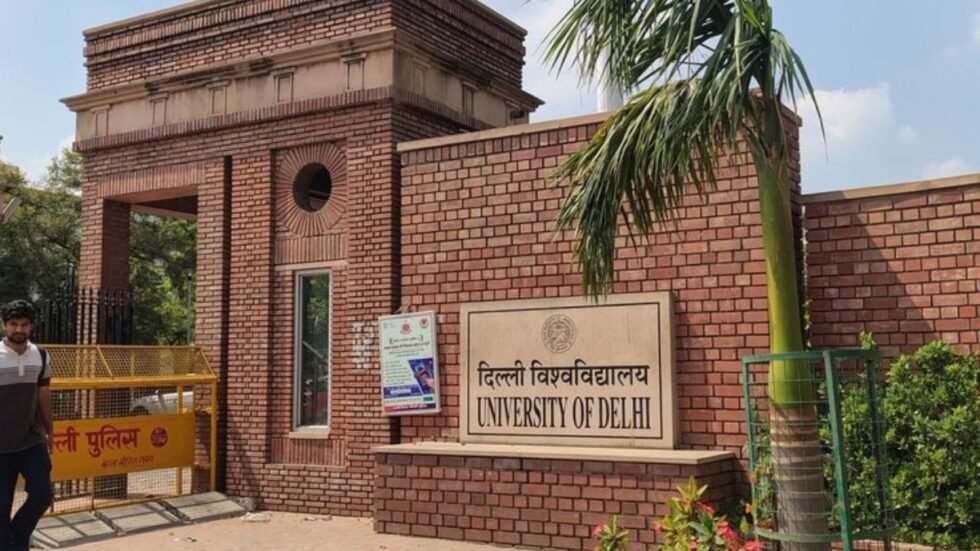
Delhi Sultanate studies have been removed from the newly notified Semester III postgraduate History syllabus of Delhi University (DU), along with a number of other papers dealing with ancient, medieval and modern Indian history. The decision has raised questions over how the university is revising its postgraduate History curriculum and why several papers that had passed different stages of the syllabus approval process were not included in the final notification.
University of Delhi
The Delhi Sultanate paper, titled “The Delhi Sultanate: Structures of Authority in Medieval North India (13th-14th Centuries),” was a long-running postgraduate course focusing on one of the most significant phases of medieval Indian history. The course examined the emergence and consolidation of the Sultanate, changing forms of political authority, political and cultural developments, and the religious and spiritual traditions of the 13th and 14th centuries.
According to a report by The Indian Express, only 16 of the 38 Discipline Specific Elective (DSE) papers proposed by the History Department were included in the Semester III syllabus notified by the university on August 7. Several other papers continue to appear in university records under categories such as “under discussion” or “undiscussed.”
The omitted courses include “History of North India, c. 1400-1550,” “Gender and Women in Early India: 1500 BCE to 1000 CE,” “Political Processes and Structure of Polities in Ancient India,” and “Religion and Society in Ancient Indian Literature.”
The courses dealt with a broad range of historical subjects. The North India paper, for example, explored the political and cultural developments between the weakening of the Delhi Sultanate and the emergence of the Mughal Empire. It included discussions on Afghan political traditions, evolving structures of power and patronage, literary cultures, Sufism and Bhakti traditions, and scholarly debates surrounding state formation, Islamisation, social change and intellectual production.
The other courses addressed subjects ranging from the position and experiences of women in Brahmanical, Buddhist, Jain and Tantric traditions to political institutions in early India. Themes such as the Mauryan and Gupta periods, taxation, warfare, local administration and different religious traditions—including Buddhism, Jainism, Shaivism, Vaishnavism and Shaktism—were also part of the proposed curriculum.
The Delhi Sultanate and History of North India, c. 1400-1550 papers had been included in the university’s 2019-20 syllabus and had been taught for several years. Their removal therefore represents a significant change in the postgraduate study of medieval Indian history at DU.
Delhi University Dean of Academic Affairs K Ratnabali has rejected the suggestion that the university deliberately withheld the courses. She said the Academic Council had authorised Vice-Chancellor Yogesh Singh to constitute an Expert Committee to examine papers that required additional scrutiny before notification.
Ratnabali said the History Department had made changes to certain syllabi even after they had been cleared by the Standing Committee. These changes reportedly included adding or removing papers, altering individual units and modifying, deleting or replacing prescribed readings.
According to the Dean, these alterations resulted in what she described as a “trust deficit” and prompted another review of the proposed syllabi.
The review committee consisted of three external experts, the Head of the History Department and two members of the Academic Council. Ratnabali said the committee examined the papers and cleared those it considered appropriate for inclusion in the final notification.
The controversy comes after a delay in formally notifying the Semester III syllabus. In a resolution dated August 4 and addressed to Vice-Chancellor Yogesh Singh, the History Department reportedly pointed out that the new academic session had already started on July 28 while the Semester III syllabus had not yet been officially notified.
The department also noted that, apart from papers already cleared through the Academic Council agenda, some courses remained under discussion because additional time was required to cross-check revisions made to the proposed curriculum.
The latest changes at the postgraduate level come against the backdrop of wider curricular revisions at Delhi University following the restructuring of its undergraduate programmes under the National Education Policy (NEP).
DU had made substantial changes to its undergraduate History curriculum in 2023. Among the changes was the removal of references to “Brahmanisation” and the dropping of a paper titled “Inequality and Difference.”
The latest decision involving the Delhi Sultanate has consequently attracted attention from historians, academics and critics who have been debating the changing representation of medieval Indian history in educational institutions.
Critics have described the removal or revision of courses dealing with the Delhi Sultanate, the Mughals and other medieval subjects as part of a broader process of what they call the “saffronisation” of education. Supporters of curriculum revision, however, have argued that academic syllabi need to be periodically reassessed and updated.
The controversy also follows recent changes in school-level history and social science material. Earlier in June, an NCERT revised Class 8 Social Science textbook reportedly used strongly critical descriptions while discussing the Delhi Sultanate and Mughal period. The textbook referred to the period in terms of “religious intolerance” and used differing descriptions of rulers including Babur, Akbar and Aurangzeb.
Previous NCERT syllabus rationalisation had also removed or reduced references to the Mughals and Delhi Sultanate from Class 7 history textbooks. Those changes triggered political and academic criticism, with Opposition parties accusing the government of altering historical content to fit an ideological narrative.
For Delhi University, the immediate issue remains the status of the postgraduate papers that were left out of the August 7 notification. Whether the omitted courses will return to the curriculum after further review, or whether they will remain outside the Semester III programme, is yet to be clarified.
The development has nevertheless renewed a wider debate over curriculum design, academic autonomy and the place of ancient, medieval and modern Indian history in higher education. The fate of the Delhi Sultanate paper is likely to remain closely watched as DU continues its review of the postgraduate History syllabus.