



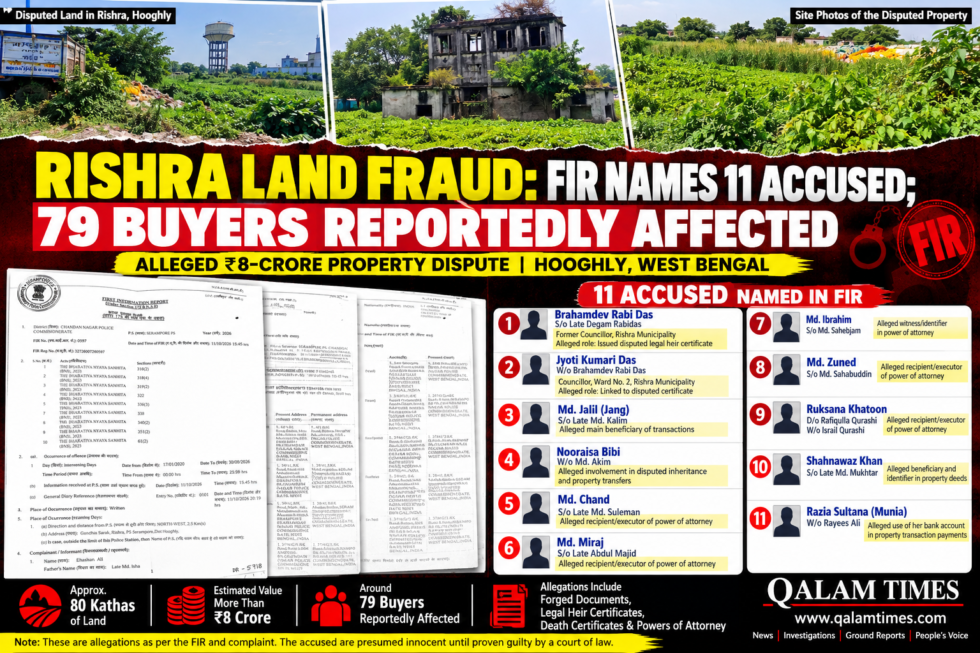
Rishra Land Fraud: An FIR names 11 people over alleged illegal land transactions involving 80 kathas, a reported ₹8-crore valuation and around 79 affected buyers in Hooghly, West Bengal.
Qalam Times News Network
Rishra (Hooghly), October 25, 2026
Rishra Land Fraud allegations have prompted an investigation in Hooghly district of West Bengal, with an FIR naming 11 individuals in connection with disputed transactions involving approximately 80 kathas of land. According to the complaint, the property is valued at more than ₹8 crore, and around 79 purchasers may have been affected by the alleged dealings. The complaint raises allegations of suspected document forgery, cheating, disputed inheritance claims and the use of powers of attorney in transactions concerning land associated with United Vegetable Ltd. in the Rishra area.
The complaint alleges that documents, including legal heir certificates and death certificates, were used to support claims over the disputed property and facilitate its transfer. It also questions the authenticity of certain registered deeds and the authority of the persons involved in executing them. The allegations remain subject to investigation, and the naming of an individual in an FIR does not establish guilt.
Eleven Individuals Named in the FIR: Names and Alleged Roles in Rishra Land Fraud
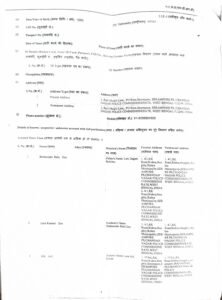
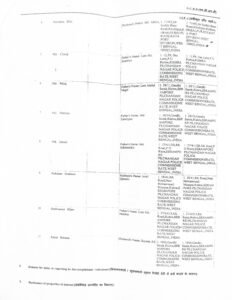
The complaint submitted to Serampore Police Station identifies 11 individuals and describes their alleged connections with the disputed property transactions. The following details are drawn from the complainant’s allegations and the supplied FIR-related documents. They should not be interpreted as findings of guilt or independent confirmation of each person’s role.
- Brahamdev Rabi Das :The complaint identifies Brahamdev Rabi Das as a former councillor associated with Ward No. 2 of the Rishra Municipality. It alleges that he issued a legal heir certificate dated January 17, 2020, which the complainant disputes. The complaint questions the basis on which the certificate was issued and alleges that it was used to support claims over the land. The complainant further challenges the information recorded in the certificate and its relationship with the relevant ownership and inheritance records. These allegations require verification through the original municipal documents and the records of the competent authorities.
- Jyoti Kumari Das : Jyoti Kumari Das is identified in the complaint as the wife of Brahamdev Rabi Das and as a councillor associated with Ward No. 2. The complaint alleges that a legal heir certificate issued in connection with the disputed property was false or improperly issued. The precise basis of the allegation against her should be assessed against the original certificate and the records cited in the complaint. Her inclusion among the named individuals does not establish that she knowingly participated in any unlawful transaction.
- Md. Jalil, Also Known as Jang : The complaint identifies Md. Jalil, also referred to as Jang, as the son of late Md. Kalim. The complainant describes him as a central figure and alleged principal beneficiary of the disputed transactions. According to the complaint, he was involved in dealings concerning the property and transactions allegedly supported by disputed documents. The complainant also raises questions about payments received from purchasers and the movement of funds through bank accounts. These claims require examination of the relevant deeds, banking records and other financial evidence.
- Nooraisa Bibi : Nooraisa Bibi is named in the complaint in connection with the disputed inheritance and property-transfer arrangements. The complaint alleges that she was represented as having rights in the property through documents whose authenticity or legal basis is challenged. It also refers to a power of attorney executed in connection with the land. The complainant questions the legitimacy of the documentation and the authority under which the transaction was carried out. The original documents and the relevant succession records will be necessary to establish the facts.
- Md. Chand : Md. Chand is identified as the son of late Md. Suleman. The complaint alleges that a power of attorney connected with the disputed property was executed in his favour or in circumstances involving his participation. The complainant questions the validity of the instrument and alleges that it formed part of the wider series of transactions involving the disputed land. The exact legal effect of the document and the circumstances in which it was executed remain matters for investigation.
- Md. Miraj : Md. Miraj is identified in the complaint as the son of late Abdul Majid. The complainant alleges that a power of attorney concerning the property was executed in his favour and disputes the legitimacy of the underlying documentation. The complaint places this document within the broader set of alleged property transactions. Verification will require examination of the original instrument, its registration details, the identity of the executing parties and the authority on which the transaction was based.
- Md. Ibrahim :Md. Ibrahim is identified in the complaint as the son of Md. Sahabjan. The complainant describes him as a witness and identifier in connection with a disputed power of attorney. The allegation raises questions about the execution and identification process associated with the document. Whether he had knowledge of any alleged irregularity, and whether his participation was lawful or otherwise, must be determined from the evidence rather than assumed from the complaint.
- Md. Zuned :Md. Zuned is identified as the son of Md. Sahabuddin. The complaint alleges that a power of attorney connected with the disputed land was executed in his favour. The complainant questions the authenticity or legal basis of the document and its role in the transactions under investigation. The original power of attorney, registration records and associated property deeds will be important in determining the facts.
- Ruksana Khatoon : Ruksana Khatoon is identified in the complaint as the daughter of Rafiqulla Qurashi and the wife of Israil Qurashi. The complainant alleges that a power of attorney associated with the property transactions was executed in her favour. The complaint questions the legitimacy of the instrument and the circumstances in which it was used. The validity of the document, the authority of the person who executed it and its relationship with the registered land records require verification.
- Shahnawaz Khan : Shahnawaz Khan is identified as the son of late Md. Mukhtar. The complainant alleges that he was a beneficiary of the disputed transactions and an identifier associated with certain deeds. The complaint also raises questions about the execution of multiple property documents and the movement of money connected with the alleged transactions. The nature and extent of his involvement, if any, will need to be established through the relevant deeds, payment records and other evidence.
- Razia Sultana, Also Known as Munia : Razia Sultana, also referred to as Munia, is identified in the complaint as the wife of Rayees Ali. The complainant alleges that a bank account associated with her was used in connection with payments arising from the disputed property dealings. The complaint raises questions about the receipt and transfer of funds and the possible financial benefit arising from the transactions. These claims require examination of bank statements, transaction records and evidence establishing the source and destination of the money. The mention of a person’s account in a complaint does not, by itself, prove that the account holder knowingly participated in an offence.
Disputed Land Associated with United Vegetable Ltd.



The complaint concerns land associated with United Vegetable Ltd. in the Rishra area. It refers to land-record particulars, including L.R. Dag Nos. 12686, 12693 and 12695, and questions the relationship between the underlying revenue records and the descriptions appearing in various property deeds.
According to the complainant, the disputed transactions involved the use of documents to support claims over land whose ownership and legal status require further examination. The complaint alleges that the documents were used to facilitate transactions despite questions concerning the rights of the persons involved.
A comparison of the original land records, municipal certificates, registered deeds and powers of attorney will be essential. Investigators will also need to establish the chain of ownership, the classification and extent of the land, and whether the persons executing the deeds possessed the necessary legal authority.
Approximately 79 Buyers Allegedly Affected in Rishra Land Fraud
The complaint puts the number of potentially affected purchasers at around 79. It alleges that buyers entered into transactions believing that the sellers or other persons involved had the legal authority to transfer the property.
The reported valuation of more than ₹8 crore refers to the land dealings described in the complaint. It should not automatically be treated as the amount lost by purchasers or as a sum conclusively received by any individual. The actual financial exposure, the number of affected buyers and the amounts paid will require verification through sale deeds, receipts, bank records and statements from the purchasers.
The legal position of each buyer may differ depending on the plot involved, the transaction documents, the payment made and the status of the property’s title. Buyers who believe they have been affected should preserve their documents and seek independent legal advice.
Questions Over Legal Heir Certificates and Death Certificates
A central issue raised by the complainant concerns the issuance and use of legal heir certificates and death certificates. The complaint disputes the accuracy of certain information and questions whether the certificates were supported by authentic records.
The complainant also refers to municipal records and records associated with death registration and burial documentation. These allegations will require the relevant authorities to examine the original registers, supporting applications and records used to issue the certificates.
The investigation will need to determine whether any document was forged, incorrectly issued or used in a manner that violated the law. It must also establish whether any named individual knowingly participated in such conduct.
Police Investigation and Financial Trail in Rishra Land Fraud
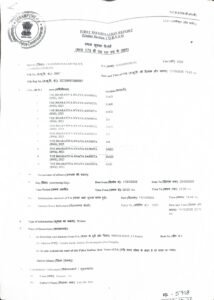
The FIR was registered at Serampore Police Station, and the supplied documents indicate that the allegations have been referred for investigation. The complaint calls for scrutiny of suspected cheating, forgery, disputed property transfers and the alleged use of documents to facilitate the transactions. The investigating authorities will need to establish the sequence of transactions, examine the original deeds and supporting documents, record statements from relevant persons and verify the financial trail. Bank records may help clarify the payments made by purchasers, the accounts through which funds passed and the identity of the ultimate beneficiaries.
The individual roles of the 11 named persons must be assessed separately. Being named in the same complaint does not mean that every individual is alleged to have performed the same act or bears the same degree of responsibility.
Why the Case Matters for Property Buyers in Rishra Land Fraud
The allegations highlight the importance of checking ownership and title before purchasing land. Buyers should independently verify the chain of title, certified deeds, revenue records, land classification, encumbrances and the authority of anyone acting through a power of attorney.
Where inheritance is relied upon as the basis of ownership, the supporting succession and family records should also be checked. A registered document does not necessarily resolve every dispute about ownership if the underlying title or supporting documents are challenged.
Purchasers who believe they have been affected should retain sale agreements, registered deeds, payment receipts, bank records and correspondence with the seller. Such records may help establish the transaction history and support any legal remedy available to them.
The Rishra case involves serious allegations concerning approximately 80 kathas of land, a reported valuation exceeding ₹8 crore and around 79 potentially affected purchasers. The central questions are whether the disputed documents were authentic, whether the transactions were legally valid and whether the evidence establishes criminal conduct by any of the named individuals.
The FIR marks the beginning of the investigative process, not a final determination of guilt. The allegations must be tested against documentary evidence and the findings of the investigating authorities, with due process and the legal rights of all concerned respected.