



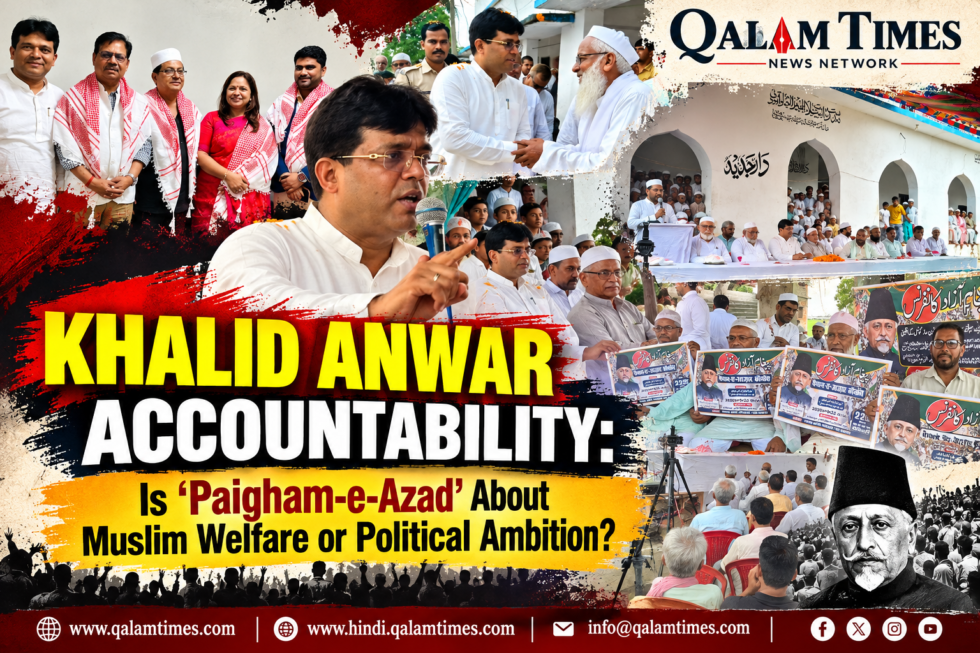
Khalid Anwar Accountability: Questions over Muslim representation, JD(U), and the proposed Paigham-e-Azad Conference in Motihari.
Qalam Times News Network
Patna, Bihar | October 9, 2026
PATNA: Khalid Anwar Accountability has become an important question for those demanding greater political representation, transparency and a clear commitment to the interests of Bihar’s Muslim community. With preparations underway for the proposed ‘Paigham-e-Azad Conference’ in Motihari on November 22, 2026, serious questions deserve answers about the political objectives behind the event, the use of Maulana Abul Kalam Azad’s legacy, and the extent to which such gatherings translate into meaningful improvements in the lives of ordinary Muslims.
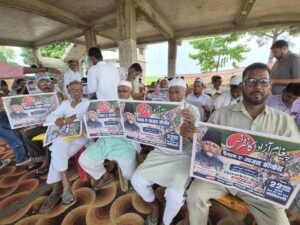
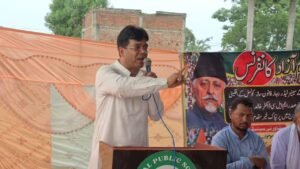
Khalid Anwar, a leader associated with Janata Dal (United), has an obligation to explain how his political activities benefit the community he frequently addresses. Is the Motihari conference intended to promote education, social reform and political awareness, or could it also serve a broader political purpose? Why should Muslim citizens accept political slogans without asking for measurable results? And when a leader invokes a respected national figure, should the public not demand a clear account of what that legacy is expected to achieve?
These are legitimate questions in a democracy. They should not be dismissed as hostility towards an individual or a political party.
From the ‘Deen Bachao, Desh Bachao’ Rally to the Search for Political Influence
Khalid Anwar’s political journey, as described in the material provided to Qalam Times, began in journalism before he entered active politics. His association with the ‘Deen Bachao, Desh Bachao’ mobilisation in Patna’s Gandhi Maidan has been presented by his critics as a crucial turning point in his rise.
The gathering was associated with the late Maulana Wali Rahmani, a prominent Islamic scholar whose standing commanded considerable respect among sections of Bihar’s Muslim population. The allegation raised by critics is that the mobilisation of religious and community sentiment helped Anwar build the political standing that ultimately contributed to his becoming a Member of the Bihar Legislative Council (MLC).
But the crucial question is this: What evidence establishes the precise relationship between that rally and his political appointment? Did the mobilisation result in a demonstrable political commitment to the community, or did it primarily strengthen the position of particular individuals? What promises, if any, were made to organisers, religious scholars and ordinary participants? Were those promises fulfilled?
A large public gathering is not, by itself, proof of political manipulation. Equally, the presence of respected religious figures does not place any politician beyond public scrutiny. If Anwar benefited politically from the mobilisation, he should be prepared to explain what responsibilities he subsequently accepted and what tangible outcomes followed.
The late Maulana Wali Rahmani’s name and reputation should not become instruments in a political argument without documentary evidence. The appropriate way to assess these questions is through public records, contemporary statements and verifiable accounts from those who participated.
The MLC Question: Representation or Responsibility?
Becoming a legislator is not the end of a political journey; it is the beginning of a public responsibility. The question facing Khalid Anwar is whether his political position has been accompanied by sustained efforts to improve educational opportunities, employment prospects, institutional representation and the social conditions of Bihar’s Muslim population.
What initiatives has he advanced for students from economically disadvantaged families? What has he done to improve the position of teachers and administrators working in madrasas? What concrete steps has he taken to address concerns about minority representation within party organisations and government-linked bodies? How frequently has he reported his achievements to the people whose support he seeks?
These questions become especially relevant in light of a concern expressed in the material supplied to Qalam Times: why do Muslim supporters of JD(U) continue to question their limited representation in important party committees and minority-related bodies?
That concern deserves a direct answer from the party leadership, including Khalid Anwar. If Muslim citizens are encouraged to participate in party programmes, why should they not expect meaningful participation in decision-making as well? If their support is politically valuable, why should their demands for representation be treated as secondary?
The issue is not whether a Muslim politician should automatically receive a particular position. It is whether political parties apply fair, transparent and consistent standards when distributing organisational responsibilities and opportunities for leadership.
Paigham-e-Azad Conference: What Will Motihari Deliver?
According to the statements included in the supplied material, preparations are underway for the ‘Paigham-e-Azad Conference’, scheduled for November 22 in Motihari. Khalid Anwar has described attending preparatory meetings in different parts of East Champaran, including Sangrampur, Turkaulia and Kesaria. His public messages call upon local participants and organisers to contribute enthusiastically to the event’s success.
The programme invokes Maulana Abul Kalam Azad, the freedom fighter, educationist and independent India’s first education minister. His contribution to the country’s freedom struggle and the development of its educational institutions gives his name immense historical significance.
That significance, however, raises the standard of accountability for anyone organising an event in his honour.
What precisely will the conference achieve? Will it announce practical educational initiatives, scholarship programmes, teacher-support measures or a detailed plan for improving access to higher education? Will participants receive a written account of the issues to be addressed and the commitments made? Will the organisers publish the programme’s objectives, funding arrangements and follow-up mechanisms?
Most importantly, what will happen after the speeches end and the gathering disperses?
A conference can provide a valuable platform for discussing educational and social problems. It can also become little more than a symbolic political event if its organisers fail to translate discussion into action. The difference lies in the objectives, the quality of deliberation and the results delivered afterwards.
Khalid Anwar should therefore be asked to explain the intended outcomes of the Motihari gathering. If the conference is primarily educational and commemorative, its organisers should have no difficulty explaining how it will advance those aims. If it is expected to influence public opinion or strengthen political relationships, that dimension should be acknowledged honestly rather than obscured by historical symbolism.
Why Invoke Maulana Azad? The Burden of Historical Responsibility
Maulana Abul Kalam Azad was not merely a name associated with public ceremonies. His legacy is closely linked to education, intellectual independence, national unity and the responsibilities of public leadership.
What does it mean to invoke Azad’s name in Bihar today? Does it mean addressing the difficulties faced by students who cannot afford quality education? Does it mean improving educational infrastructure and expanding access to opportunities? Does it mean defending the ability of citizens to participate in public life without having their concerns reduced to electoral calculations?
These are the questions that should define a conference bearing his name.
The public should also ask whether the organisers have developed a concrete agenda inspired by Azad’s educational and national contributions. Will the conference produce a publicly available resolution? Will that resolution identify specific problems, assign responsibilities and establish a mechanism for reviewing progress?
There is nothing inherently wrong with organising a conference in honour of a historical leader. The concern arises when the symbolic value of that leader’s name is allowed to overshadow the practical objectives that should accompany it.
Khalid Anwar and the other organisers have an opportunity to dispel such concerns through transparency. A clear agenda, documented commitments and a credible follow-up plan would provide a stronger answer than political speeches alone.
JD(U), Muslim Representation and the Politics of Alliance
Another central issue is Khalid Anwar’s position within JD(U), a party that has governed Bihar in alliance with the Bharatiya Janata Party (BJP) during significant periods of the state’s recent political history.
For many Muslim voters, political alliances raise difficult questions about representation, policy priorities and the extent to which minority concerns influence government decisions. Those concerns should be examined through policies, public records and the conduct of elected representatives rather than through blanket accusations against any party or community.
What has Anwar publicly demanded from his party on matters affecting Muslim citizens? Has he pressed for greater representation in organisational committees and minority-related institutions? What positions has he taken on education, employment, social security and the protection of constitutional rights? Where disagreements have arisen, has he explained his position clearly to the people he represents?
If he believes that his party’s policies serve the interests of Bihar’s Muslims, he should make that case with evidence. If there are areas where the community’s concerns remain unresolved, he should identify them and explain what action he intends to pursue.
Political loyalty is not a substitute for accountability. Nor should a politician’s relationship with a party be treated as proof of disloyalty to the community. The relevant question is whether his decisions, public statements and legislative work can withstand scrutiny.
Muslim voters are entitled to judge politicians by their record rather than by the emotional force of their speeches or the prominence of the personalities standing beside them.
The Rajya Sabha Question: Is There a Political Calculation?
The supplied material alleges that Khalid Anwar’s recent political activity may be connected to an ambition to secure a Rajya Sabha nomination. That allegation has not been established by documentary evidence in the material available for this report and should not be treated as a confirmed fact.
Nevertheless, it raises a broader question about political incentives: how should the public distinguish a genuine community initiative from a campaign that might also enhance a leader’s personal standing?
Has Anwar publicly stated whether he is seeking a Rajya Sabha nomination? Has JD(U) announced any such decision? Is there evidence that the Motihari conference is connected to a parliamentary nomination, or is this merely speculation among political observers?
These distinctions matter. Seeking a parliamentary position is not inherently improper; the concern would arise if public mobilisation or community institutions were knowingly used to advance a personal objective at the expense of the stated purpose of an event.
If no such connection exists, a clear statement from the concerned parties could help remove unnecessary speculation. If the conference has a defined political dimension, the public deserves an honest explanation of that dimension.
The responsibility of journalism is to investigate such possibilities without converting suspicion into an established allegation.
What Should Muslim Organisations and Madrasa Representatives Demand?
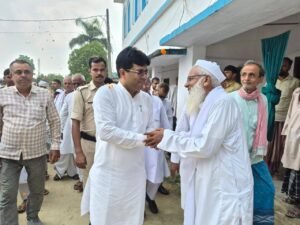
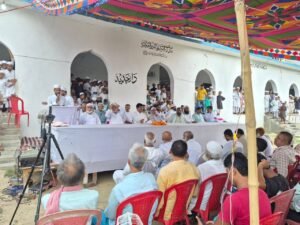
The reported participation of madrasa administrators, teachers and community representatives in preparatory meetings makes the question of accountability particularly important.
Religious and educational institutions often depend on public trust. Their representatives should be free to participate in discussions about education, social reform and community welfare without being unfairly portrayed as political instruments. At the same time, they should retain the freedom to ask difficult questions of every politician who seeks their support.
Did the organisers provide participating institutions with a written statement of the conference’s objectives? Are the invited representatives being encouraged to contribute their own proposals? Will teachers and educational administrators have a meaningful role in shaping the agenda, or will their participation be limited to mobilising attendees?
Will the conference address the everyday concerns of madrasa teachers and students, including educational resources, professional development and access to wider academic opportunities? Will the organisers record the recommendations made during the discussions and publish an account of the action taken afterwards?
These are not unreasonable demands. They are basic standards of transparency for any programme that claims to represent a community’s interests.
Madrasa administrators and teachers should be regarded as stakeholders with their own professional judgement, not simply as people expected to fill an audience. Their participation should strengthen the quality of discussion, not replace it.
The Questions Khalid Anwar Must Answer
The debate surrounding the Motihari conference should ultimately be resolved through verifiable answers rather than personal attacks. Khalid Anwar should be given a fair opportunity to respond to the following questions:
- What specific educational, social or political objectives will the November 22 ‘Paigham-e-Azad Conference’ pursue?
- Will the organisers publish a written agenda and a post-conference report setting out the decisions taken and the commitments made?
- What measurable achievements can Anwar identify from his tenure as an MLC in areas directly affecting Bihar’s Muslim population?
- What steps has he taken within JD(U) to address concerns about Muslim representation in important party committees and minority-related bodies?
- Has he formally requested or expressed an interest in a Rajya Sabha nomination? If so, what is his public explanation of that ambition? If not, will he clarify the matter?
- What evidence supports the allegation that the earlier ‘Deen Bachao, Desh Bachao’ mobilisation was used primarily to advance individual political interests? Can contemporary records or credible witnesses establish the sequence of events?
- What safeguards will ensure that the legacy of Maulana Abul Kalam Azad is used to promote education and public awareness rather than merely to generate political visibility?
- Will the conference organisers disclose its funding sources, principal sponsors and organisational responsibilities, where applicable, so that the public can assess its purpose transparently?
- What mechanism will allow participating teachers, educational institutions and community representatives to hold the organisers accountable after the event?
- What specific commitments will Anwar make to address the concerns of Muslim citizens who believe that political participation has not translated into adequate representation or tangible improvements?
These questions do not presume guilt. They establish a reasonable standard by which a public figure’s claims and activities can be evaluated.
The controversy surrounding Khalid Anwar and the proposed Motihari conference points to a wider challenge in Bihar’s politics: the distance that can emerge between community mobilisation and measurable public benefit.
Public meetings, historical commemorations and political alliances are all legitimate features of democratic life. Their value, however, depends on what they accomplish and whether their organisers remain answerable to the people whose participation gives them significance.
Khalid Anwar should not be judged guilty of political manipulation merely because his activities attract criticism. Equally, his political standing should not exempt him from questions about representation, policy, institutional transparency and the outcomes of public programmes.
The ‘Paigham-e-Azad Conference’ presents an opportunity to demonstrate that its stated purpose goes beyond ceremony. A clear agenda, meaningful participation by educators, documented resolutions and a credible plan for follow-up would help establish its public value.
If the conference is genuinely intended to honour Maulana Abul Kalam Azad, its success should be measured by the seriousness of its educational discussions and the practical commitments that emerge—not simply by the size of the crowd.
Ultimately, Bihar’s Muslim citizens deserve political representation that can be assessed through evidence, policies and results. They deserve answers rather than slogans, participation rather than tokenism, and commitments that can be reviewed after the public meetings are over.
The central question is therefore straightforward: what concrete benefit will the people of Bihar receive from this mobilisation, and how will its organisers demonstrate that benefit?
That is the question Khalid Anwar, JD(U) and the organisers of the Motihari conference should be prepared to answer publicly.
Editorial note: This report is based on the material supplied to Qalam Times. Allegations concerning political motives, the use of community mobilisation and possible parliamentary ambitions have not been independently established here. Khalid Anwar and the conference organisers should be invited to respond before any disputed allegation is presented as fact.