





Corn demand for ethanol is adding pressure to poultry-feed costs, raising questions over rising egg prices and India’s maize supply balance.
Qalam Times News Network
KOLKATA , August 31, 2026
Corn has emerged as a key factor in the latest debate over rising egg prices in India, as stronger demand from the ethanol industry adds pressure to a crop that is also a major ingredient in poultry feed. Egg prices have climbed sharply over the past year, with reports indicating an increase of around 40 per cent, raising concerns among consumers as well as poultry traders.
For millions of Indian households, the egg remains one of the most affordable sources of protein. From breakfast and lunch to a simple meal during illness, eggs have long been a dependable part of the middle-class kitchen. Boiled eggs, omelettes and egg curries are relatively inexpensive and easy to prepare. But the continuing rise in corn and other poultry-feed costs is now making this everyday source of nutrition increasingly expensive.
The difference between farm-gate and retail prices also illustrates the pressure on consumers. An egg that may be sold at around Rs 7 at a poultry farm can reportedly reach Rs 14 on some online food-delivery platforms. Market participants believe prices could remain under pressure in the coming months if production costs and demand continue to rise.
Ethanol, Corn and the Poultry Feed Equation
At the heart of the debate is India’s expanding ethanol-blending programme. The Centre has been encouraging greater use of ethanol-blended fuel, increasing demand for feedstocks such as maize, or corn. Since maize is also one of the principal raw materials used in poultry feed, the growing competition between the two industries has raised questions about whether the ethanol sector is indirectly contributing to higher egg prices.
A significant portion of the maize that would traditionally have moved towards poultry-feed manufacturers is now being diverted towards ethanol production, according to industry concerns. As a result, feed manufacturers are facing higher costs for maize, which can eventually be reflected in the price of poultry products.
Industry estimates underline how rapidly maize consumption for ethanol has expanded. In just two years, the quantity of maize used for ethanol production reportedly increased from about 8.3 lakh tonnes to 125.75 lakh tonnes—an increase of more than 15 times. The shift has also changed the raw-material structure of India’s ethanol industry, with maize becoming the single largest feedstock for grain-based ethanol production under the Ethanol Blended Petrol, or E20, programme.
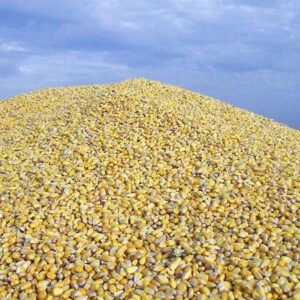
At the same time, India’s maize production has also risen substantially. Government data show that maize output increased from approximately 316 lakh tonnes in 2020-21 to 434 lakh tonnes in 2024-25.
However, higher production has not necessarily removed price pressure. The reason is straightforward: demand for maize has expanded across several sectors at the same time. Apart from ethanol and poultry feed, the crop is also required by the starch and other industrial sectors.
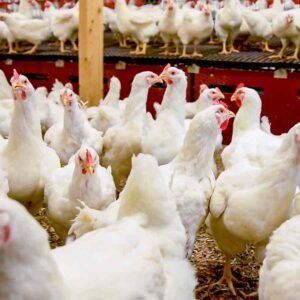
The poultry industry is particularly dependent on maize. Around 60 per cent of India’s total maize production is estimated to be consumed by the poultry sector. This means poultry-feed manufacturers are increasingly competing with ethanol producers for the same agricultural commodity.
The cost structure of egg production makes this competition particularly important. Industry estimates suggest that poultry feed accounts for roughly 65 to 70 per cent of the total cost of producing eggs. Since maize and soybean are the two major components of poultry feed, any substantial movement in their prices can quickly increase the cost of maintaining laying birds and, ultimately, the cost of eggs.
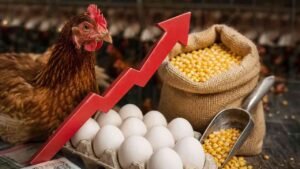
Divyakumar Gulati, chairman of the Compound Livestock Feed Manufacturers Association, has said maize accounts for approximately 50 to 55 per cent of poultry-feed ingredients, while soybean is another major component. Any increase in the prices of these raw materials therefore has a direct bearing on poultry-feed costs and the wider poultry market.
But attributing the entire rise in egg prices to ethanol would be too simplistic, according to several experts and people associated with the poultry industry.
Poultry producers are also dealing with bird illnesses, mortality, weather-related disruptions and fluctuations in the prices of imported feed ingredients. These factors can increase production costs independently of maize prices. When several such pressures occur at the same time, the cumulative impact can become visible in retail egg prices.
The changing balance between domestic maize production and consumption is also reflected in India’s trade pattern. The country, which once exported maize to markets such as Bangladesh and Vietnam, has increasingly turned towards imports to meet domestic requirements. Maize imports reportedly reached around 10 lakh tonnes in the 2024-25 financial year, while industry representatives estimate that current imports are around 5 lakh tonnes.
The government, however, maintains that India has sufficient maize availability for ethanol production, poultry feed and other industrial requirements. Officials have also pointed to the significant increase in domestic maize production as evidence that supplies are expanding.
Experts who take a more cautious view argue that the rapid rise in maize consumption by the ethanol industry is real, but it should be considered alongside the broader growth in demand. They caution against suggesting that ethanol alone is consuming India’s maize supply. Poultry, starch and other industries are competing for the same crop, making the situation more complicated than a single-cause explanation.
The controversy also echoes the debate over sugar prices. The use of sugarcane and related feedstocks for ethanol production has previously been cited as one of the factors behind pressure on sugar availability and prices. The current discussion over maize is therefore part of a wider question surrounding the competing use of agricultural commodities for food, animal feed and fuel.
The fundamental issue is one of supply and demand. India is producing more maize than it did a few years ago, but the number of industries seeking the crop has increased at the same time. If production fails to keep pace with this expanding demand, competition between ethanol manufacturers and poultry-feed producers could intensify.
For consumers, the outcome could eventually be visible in something as ordinary as the price of an egg. For farmers and policymakers, however, the issue is considerably larger: how to balance the country’s growing demand for fuel ethanol with the equally important requirements of food, animal nutrition and affordable protein.
The question now is not simply whether ethanol is responsible for higher egg prices, but how much pressure the rapidly expanding ethanol demand is adding to an already competitive maize market—and how that pressure will affect poultry costs in the months ahead.