

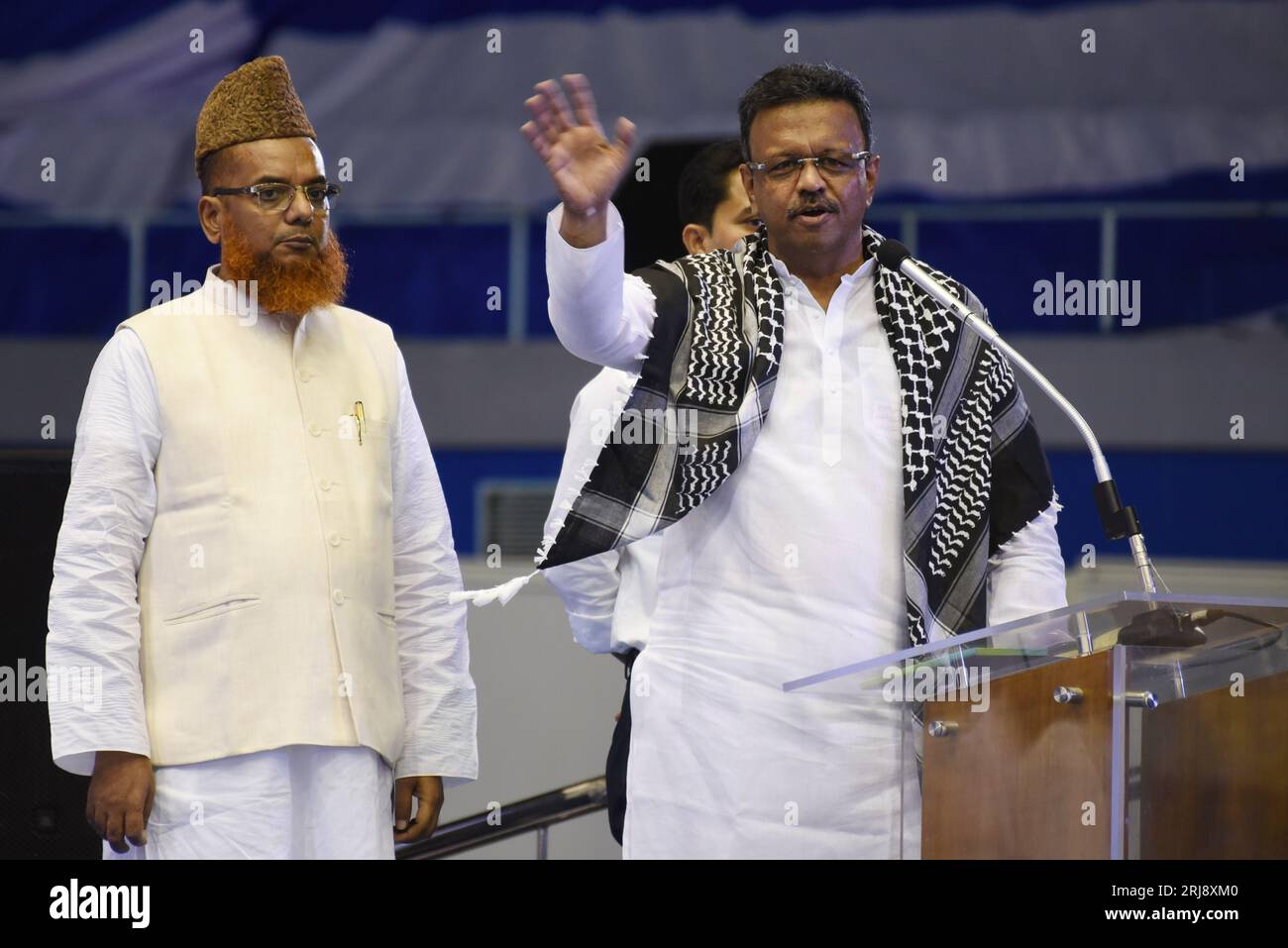
Massive political outrage explodes in Kolkata! West Bengal’s historic Masjid Nakhoda has been turned into a TMC political hub by Naib Imam Qari Shafique Qasmi. Critics savagely expose 15 years of Muslims being used like a bar of soap for vote-bank politics while being left in poverty. Public fury intensifies with a fierce, uncompromising demand: Qari Shafique Qasmi must be dismissed immediately!
Qalam Times News Network
Kolkata, May 18, 2026
The Policies of the Trinamool Government and the Beginning of Communal Polarization
A terrifying and poisonous era began in the politics of Bengal after 2011, which was initially presented under the guise of attractive slogans of secularism, protection of minorities, and communal harmony. However, with the passage of time, social and political circles began to raise the bitter question as to what those policies were that deepened the chasm of hatred between Hindus and Muslims in the peaceful society of Bengal to such an extent, making it insurmountable. Critics hold a clear and categorical stance that Mamata Banerjee’s government, for temporary political gains and lust for power, prepared such a dangerous cocktail of religion and politics, the poisonous and destructive consequences of which were later suffered by the entire society.
The Honorarium of Imams: Appeasement Politics and the Rise of the BJP
In this context, the issue of the salary of Imams (Imam Allowance) was particularly a severe step that gave a new and worrisome direction to the politics of Bengal. In a secular country, for any government to give salaries or stipends to a specific religious community from the government treasury was an extremely dangerous, unconstitutional, and cheap political game. This did not bring any major economic, educational, or social development to Muslims; instead, merely a few people received some money for a few months, and many deserving individuals could not even get its full benefit. Yet, this childish move sent a negative message across the entire country that Mamata Banerjee was solely practicing the politics of appeasement toward Muslims.
This was precisely the point that the BJP later utilized as a powerful weapon for its political rise, angering the Hindu society by repeatedly raising the question: “If Imams can receive salaries from the government treasury, why not the priests of temples?” According to critics, this was the darkest moment where the seeds of religious polarization and communalism strengthened on the soil of Bengal, creating severe resentment within the Hindu community, which the BJP later converted into political strength and seats.
The Politicization of Masjid Nakhoda and Grave Allegations against the Naib Imam
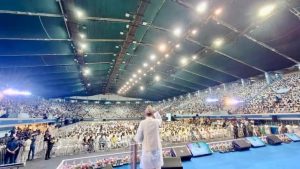
In this same toxic and conspiratorial environment, the historical Masjid Nakhoda of Kolkata and the role of its Naib Imam (Deputy Imam), Qari Shafique Qasmi, also came under severe criticism and the wrath of public anger. This is because Masjid Nakhoda is not just a mosque in Kolkata, but is considered a historical, symbolic, and glorious identity of the Muslims of the subcontinent, the voice emerging from whose Mimbar (pulpit) carries a deep impact on the Muslims of the entire country. Therefore, when the dirty and filthy shadow of politics began to loom over this sacred pulpit, the questions within the community intensified.
Critics leveled grave allegations that the sanctity of the mosque was ruthlessly exploited for the political interests of the Trinamool Congress (TMC). Leaders of the Trinamool Congress were openly given space on the platform of the mosque, political support was linked with religious influence in the electoral atmosphere, and the Mimbar-o-Mehrab (pulpit and niche) of the house of Allah was turned into a cheap vehicle for the promotion of the Trinamool Congress. In such a situation, when parties start operating from within the mosque and it becomes the center of political manipulation, who can save the Qaum (community) from destruction and ruin? The situation deteriorated to the extent that Shafique Qasmi gradually turned this religious institution into a center of political power and brokers.
Election Campaigning from Religious Platforms and the Severe Violation of Moral Values
During this grave political trade, Qari Shafique Qasmi, violating all moral and religious boundaries, actively participated in election campaigns alongside film actresses and controversial political faces. Specifically naming personalities like Nusrat Jahan, the public raised the sharp question of whether the position and job of an Imam is to beg for votes from street to street and decorate stages for political candidates?
Critics argue that when a scholar (religious expert) or an Imam becomes the face and agent of a specific political party, he loses the representation of the entire community and his own moral respect. After this, every word he speaks is perceived as pure politics and based on personal interest rather than religious guidance. This is the reason why a very large and serious section of Bengal developed a strong realization that their religious leadership, instead of resolving public issues, poverty, and helplessness, is more interested in political proximity, roaming around the corridors of power, and gaining personal benefits.
The NRC and CAA Movement: Political Exploitation of Muslim Sentiments
This hypocrisy and exploitation did not stop here; the name of Masjid Nakhoda was repeatedly brought into discussion in a shameful manner during the NRC (National Register of Citizens) and CAA (Citizenship Amendment Act) movements as well. In public statements, allegations openly emerged that the true and sincere sentiments of common Muslims were ruthlessly used for the political benefit of the Trinamool Congress. The mosque was presented as the center of protest politics, and a sensitive national issue was linked to the benefits of specific political circles.
On this, a legitimate question was raised: if the NRC was an issue regarding the survival and citizenship of Muslims across the entire country, why was this protest restricted only around a specific mosque and a few specific political faces? According to critics, in this entire terrifying environment, the religious sentiments of common Muslims and their fear of losing citizenship were made into a shield, while its actual political benefit was reaped by the leaders of Trinamool. It was even observed that some people, through these movements, were making malicious attempts to please their political masters, advance their cronies, and serve their commercial and personal interests in local politics.
“Used Like Soap for 15 Years”: Muslim Society Reduced Only to a Vote Bank
The reality is that for fifteen years, the Muslims of Bengal were used merely like a bar of soap. That is to say, the more Muslims were used, the more they kept eroding and vanishing educationally and economically. This bitter truth has fueled restlessness, despair, and anger among the crores of Muslims of Bengal. Today, Muslims feel that their votes were taken regularly, and their religious sentiments and the fear of the BJP were exploited, but when it came to education, employment, business, health, and real social development, they were pushed into the darkness.
Muslims were kept merely as a backward vote bank in the name of development; they were entangled in emotional and hollow slogans, and their actual and fundamental issues were permanently pushed into the background. This is the reason why even today, in many Muslim-majority areas of Bengal, Muslims remain trapped in the quagmire of educational backwardness, unemployment, destitution, and economic weakness. Yet, in political rallies, they were continuously mobilized in favor of Trinamool by merely showing them religious fear and through emotional blackmailing.
The Decline of Religious Leadership: Closeness to Power and Distance from the Public
This entire controversy, anger, and public awakening ultimately stop at a fundamental and principled question: should an Imam or a religious leader become the spokesperson and broker for political parties? Because conscious people know very well that when the Ulema (religious leaders) get too close to power, they distance themselves by miles from the poor public and the real problems of the community. Then, their priority is no longer the supremacy of religion and the welfare of the community, but political relations, commercial profits, and personal luxuries.
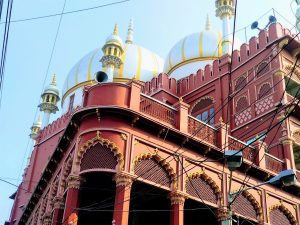
That is why a very strong, aggressive, and revolutionary voice is now rising from the whole of Bengal demanding that mosques be immediately separated from the dirty arena of politics, this self-proclaimed religious leadership be held strictly accountable, and Muslims be taken out of the labyrinth of merely emotional slogans and led toward education, economy, independent leadership, and real social development. Because when a mosque becomes a political hub and a maidservant, not only is the credibility of religion dragged into the mud, but the trust of the entire community is also shattered forever.
The Conspiracy to Suppress Independent Muslim Leadership and Impose Party Slavery
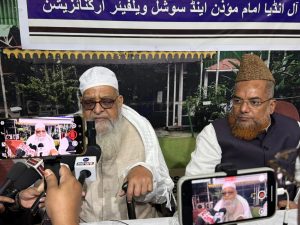
Qari Shafique Qasmi, the Naib Imam of Masjid Nakhoda Kolkata, gradually transformed a sacred and neutral institution like a mosque into a regular political center and headquarters of the Trinamool Congress. He faces the grave allegation that he made relentless efforts to turn Muslims into blind and deaf supporters of a specific political party and its leadership, as a result of which independent Muslim leadership within Bengal grew weaker and weaker. The public clearly states that Qari Shafique Qasmi played a criminal role in preventing any sovereign Muslim leadership from emerging in Bengal and in restricting Muslims merely to being the footstools and bonded vote bank of the Trinamool Congress.
Using the platform of the mosque for political purposes, he invited TMC leaders into the mosque, read eulogies in their praise, and organized regular speeches and gatherings in their support, which was completely against the sanctity, neutral religious status, and dignity of the mosque, and was a heinous act. Furthermore, there is a severe objection against him that during election campaigns, he shared the stage with such controversial personalities and film actresses whose lifestyle and views are considered contrary to Islamic values and morality by religious circles, which created intense resentment and hatred among a very large and self-respecting section of the public.
Political Trade Under the Guise of Religion and Betrayal of the Community
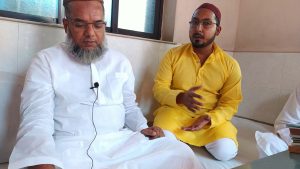
According to critics, by gradually converting a sacred religious center into a political hub, Qari Shafique Qasmi popularized the impression of servility and support for the Trinamool Congress instead of providing true guidance to the community from the Mimbar-o-Mehrab. Trading the religious sentiments and religious trust of Muslims, he played a foundational role in strengthening the Trinamool Congress government and pushed the Muslims of Bengal into the depths of personality worship, sloganeering, and party loyalty instead of granting them independent political thought and awareness. He did not allow independent Muslim leadership to emerge in Bengal and conspired to weaken every sincere voice that spoke for the independent and dignified representation of Muslims, even though using a sacred place like a mosque for political rallies, party support, and electoral activities is not a religious responsibility, but pure political trade and brokerage of religion.
This allegation also surfaced repeatedly that leaders of the Trinamool Congress were continuously given space on the platform of the mosque, organized groups and meetings were systematized in their support, and religious influence was used for political and financial gain, which was an open crime against the sanctity, neutrality, and religious dignity of the mosque. By sharing the stage with film personalities and controversial faces in election campaigns, opponents strongly protested, declaring it contrary to the dignity of a religious office. The self-respecting Muslims of Bengal state that for fifteen years, their emotions, fear of the BJP, and religious affiliation were squeezed solely for the political benefit of Trinamool, while the issues of education, employment, economy, and genuine Muslim leadership were thrown into the garbage dump.
The Final Mandate: Liberation of Mosques and Immediate Dismissal of Qari Shafique Qasmi
This is the reason why today a strong and decisive voice is rising from every street of Bengal demanding that mosques be immediately freed from the influence and control of political parties, this selfish religious leadership be made to stand in the court of the public, and to restore the sanctity, dignity, and trust of Muslims in Masjid Nakhoda, Naib Imam Qari Shafique Qasmi must be immediately dismissed and expelled from his post, so that religion and the community can be saved from further destruction.
()()()