

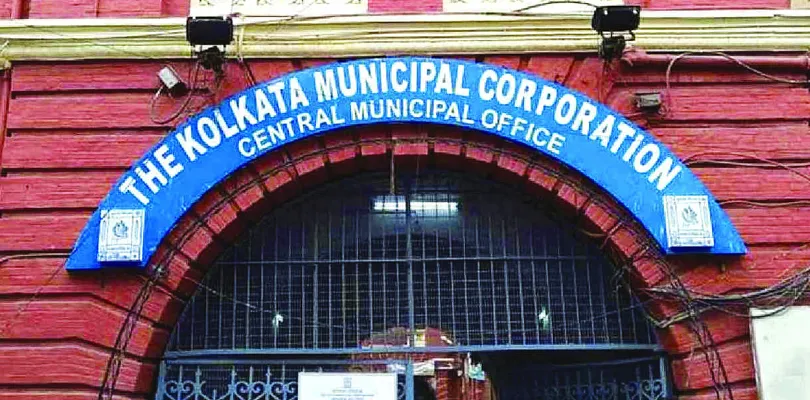
Kolkata Ward Delimitation begins as Kolkata Municipal Corporation prepares to increase wards from 144 to nearly 200. The restructuring aims to balance voter distribution, improve civic services, create new boroughs, and pave the way for future municipal elections.
Chief Minister’s directive triggers an extensive delimitation exercise aimed at balancing voter distribution, improving civic services, and reshaping the Kolkata Municipal Corporation before the next civic elections.
Qalam Times News Network
Kolkata | July 11, 2026
Kolkata Ward Delimitation begins as KMC prepares for its biggest restructuring in years
The Kolkata Ward Delimitation process has officially entered the preparation stage after the West Bengal government instructed the Kolkata Municipal Corporation (KMC) to redraw ward boundaries ahead of the next civic elections. The proposed exercise is expected to significantly increase the number of municipal wards from the existing 144 to nearly 200, with the primary objective of creating a more balanced distribution of voters and ensuring equitable delivery of civic services across the city.
The initiative follows Chief Minister Suvendu Adhikari’s observation that several wards in Kolkata have developed major disparities in voter strength over the years. According to government officials, such imbalances have made it increasingly difficult for the civic administration to provide uniform public services. The proposal has also fueled speculation that municipal elections will only be conducted after the delimitation process is completed, similar to the model adopted earlier in the neighbouring Howrah Municipal Corporation.
Detailed Survey Work Begins Across the City
As part of the exercise, the Urban Development and Municipal Affairs Department has formally communicated its instructions to the Kolkata Municipal Corporation. Teams consisting primarily of municipal surveyors and officials from the legal department have already begun collecting detailed information from every ward.
During the Kolkata Ward Delimitation exercise, officials are examining multiple factors, including the total number of polling booths, geographical area, road network, number and nature of residential buildings, civic infrastructure, and public service facilities available within each ward. Sources indicate that administrative teams have been asked to carry out the survey while keeping an estimated target of around 200 wards in mind.
At present, Kolkata has a voter population of more than 3.225 million. The state government intends to bring the average number of voters per ward to approximately 15,000 to 16,000. However, officials point out that delimitation cannot be based solely on electoral rolls. Overall population, public service requirements, and civic infrastructure must also be considered to ensure that no locality is deprived of essential municipal facilities.
One senior municipal official explained that reducing voter numbers by altering ward boundaries should not result in fewer roads, reduced civic infrastructure, or diminished access to municipal services. Every resident, regardless of voter status, remains entitled to equal civic amenities.
Expansion Will Require New Civic Infrastructure
The proposed increase of more than 50 additional wards will also create fresh administrative responsibilities for the civic body. Officials estimate that each new ward will require its own ward office, municipal health centre, administrative staff, and supporting infrastructure.
In addition, Kolkata’s existing borough structure is likely to undergo substantial revision. More boroughs may have to be created to accommodate the expanded municipal map and ensure efficient governance. Civic planners believe that such restructuring will help distribute municipal resources more evenly and improve service delivery across rapidly growing neighbourhoods.
Wide Differences in Voter Population Prompt the Move
The decision to redraw ward boundaries is largely driven by significant variations in voter populations across Kolkata.
Ward No. 66, covering parts of Tiljala and Topsia, reportedly has more than 85,000 registered voters, making it one of the most heavily populated electoral wards in the city. Ward No. 58, which includes Dhapa and Mathpukur near the Eastern Metropolitan Bypass, has approximately 56,000 voters and is also the geographically largest ward in Kolkata.
Ward No. 109, comprising Mukundapur and Nayabad, has around 45,000 voters. In contrast, Ward No. 70 in the Bhawanipur area has only about 14,000 voters. Similarly, while Ward No. 58 and Ward No. 108 cover vast geographical areas, Ward No. 7 in North Kolkata is comparatively much smaller. Ward No. 22 in the Burrabazar area is considered among the city’s smallest both in terms of area and voter population.
Officials believe these large disparities make equitable civic administration increasingly difficult and reinforce the need for a comprehensive delimitation exercise.
Assembly Hall Capacity Also Under Review
The proposed expansion has also raised practical administrative questions. If the number of councillors rises to around 200, the Kolkata Municipal Corporation’s existing council chamber may no longer have adequate seating capacity.
Municipal authorities have already begun exploring possible solutions to accommodate the larger council. According to officials, Kolkata’s municipal limits have expanded several times over the years, resulting in a gradual increase in ward numbers. The last such expansion occurred in 2012, when the Joka area was incorporated into the corporation limits, leading to the creation of three new wards.
However, officials note that a citywide delimitation based comprehensively on voter population has not been undertaken in recent years, making the current exercise one of the most significant administrative reorganisations in the history of the Kolkata Municipal Corporation.