

Explore the history of the Urdu Movement in Bengal and the leadership of Shamim Ahmed in securing Urdu’s recognition as a second official language through peaceful democratic struggle and constitutional rights.
Qalam Times News Network
Kolkata | May 15, 2026
Urdu in the Indian subcontinent developed as a shared cultural language shaped by centuries of interaction among diverse communities, including Hindus, Muslims, Sikhs, and others. Influenced by Persian, Arabic, Turkish, and local Indian languages, it became a powerful medium of communication, literature, and cultural expression, often serving as a bridge across social and religious divides. However, during the nineteenth and twentieth centuries, changing political conditions transformed Urdu from a symbol of unity into a subject of debate and conflict.
In Bengal, the Urdu movement emerged within this historical context of gradual marginalization, administrative neglect, and growing cultural insecurity among Urdu-speaking communities. It was not a sudden development but the result of long-standing grievances. The movement gained its most significant momentum in the early twenty-first century under the leadership of Shamim Ahmed, whose efforts revitalized the struggle, giving it clearer direction, broader participation, and renewed energy.
Historical Context and the Need for the Urdu Movement
During the British colonial period, Urdu held a significant administrative and cultural role, replacing Persian in 1837 and being widely used in courts, education, and public life. However, colonial policies gradually deepened linguistic divisions, especially through the promotion of Hindi in the Devanagari script, turning a script difference into a broader cultural and political divide. After the partition of India in 1947, Urdu was recognized in the Constitution as a scheduled language, but its actual status depended on individual state policies.
In West Bengal, despite a strong historical presence—particularly in Kolkata as a center of Urdu journalism and literature—Urdu-speaking communities faced neglect in education, administration, and public services. Even in areas with a substantial Urdu-speaking population, institutional support remained limited. The Indian Constitution, especially Articles 345 and 347, provided a legal basis for language recognition, which later became the foundation for the Urdu movement in Bengal.
Early Phase of the Movement
The demand to grant Urdu the status of a second official language in Bengal began around 1980, when Anjuman Taraqqi Urdu approached the government. Although the government partially recognized Urdu in certain areas in 1981, the decision remained largely symbolic and was not effectively implemented. As a result, Urdu continued to be neglected in administration and public life. Over time, frustration grew among Urdu-speaking communities. For nearly three decades, the movement remained limited to memorandums and symbolic protests, failing to build strong public pressure or momentum.
The Emergence of Shamim Ahmed: A Decisive Turning Point
The year 2005 marked a decisive turning point in the Urdu movement in Bengal. This was the moment when Shamim Ahmed emerged as a new and determined voice. Unlike earlier leaders, he was not part of the traditional Urdu establishment. He did not depend on Urdu for his livelihood, nor was he tied to institutional interests. His involvement was driven by a deep sense of cultural responsibility.
Strategy and Mobilization
Shamim Ahmed’s approach was fundamentally different from earlier efforts. He focused on building a movement from the ground up. He traveled extensively across Kolkata and other parts of Bengal, organizing small meetings and discussions. These gatherings were not grand or glamorous, but they played a crucial role in raising awareness.
One of his key objectives was to restore confidence among Urdu speakers. Many people had become disillusioned with previous movements, which had failed to deliver tangible results. Shamim Ahmed emphasized that the struggle for Urdu was not just about language; it was about identity, dignity, and constitutional rights.
He also ensured that the movement remained strictly peaceful and democratic. He strongly believed that any form of aggression or disorder would weaken the moral strength of the cause. This disciplined and principled approach helped the movement gain credibility and respect among both the public and the authorities.
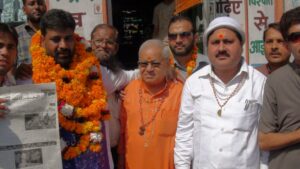
Under the leadership of Shamim Ahmed, the Urdu movement developed an inclusive and unifying character. He brought together people from different linguistic and social backgrounds, encouraging them to support the cause collectively. Individuals from various communities—Hindus, Muslims, Sikhs, Christians, and others—joined the movement, demonstrating that it was not limited to any single religious or linguistic group.
Shamim Ahmed consistently emphasized that Urdu was not a “foreign” language but an integral part of India’s cultural and historical heritage. He worked to remove misconceptions surrounding the language and highlighted its deep roots in the shared traditions of the subcontinent. Through dialogue and awareness, he was able to convince many people, including those who were not Urdu speakers, to stand in solidarity with the movement.
As a result, the movement gradually transformed into a broader social effort, where people from diverse backgrounds united around the idea of preserving linguistic rights and cultural diversity.
Major Milestones
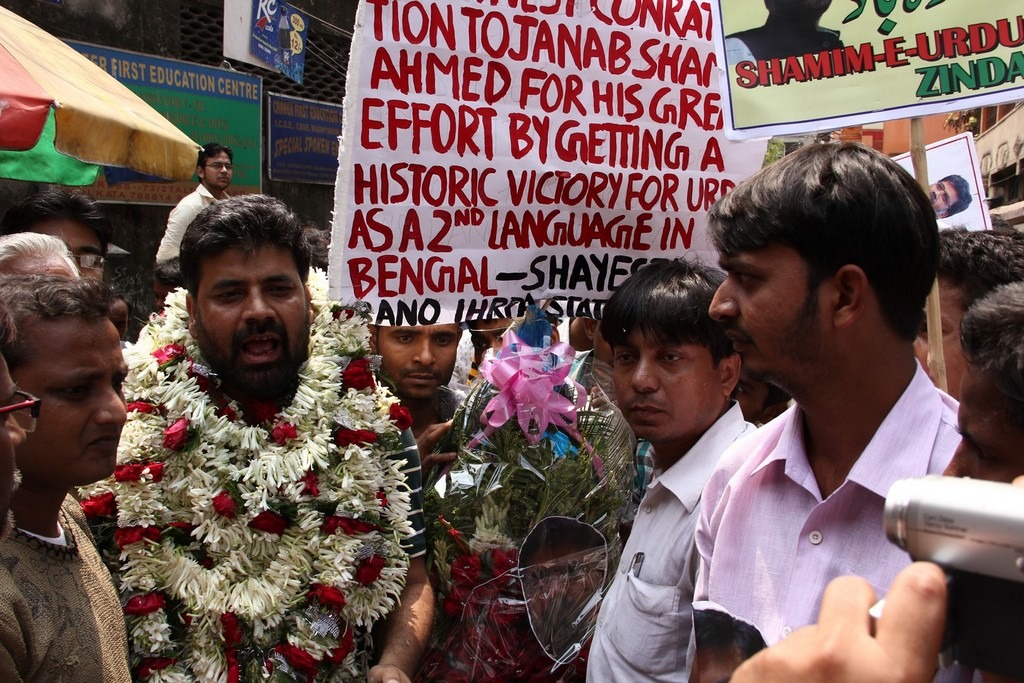
The first significant public program of the movement was held in central Kolkata in 2006. Although participation was modest, it marked the beginning of a new and more organized phase of the struggle. In the following two years, the movement expanded steadily as Shamim Ahmed worked tirelessly to build awareness and support. He reached out not only to Urdu-speaking communities but also to non-Urdu speakers, explaining the cultural, historical, and social importance of the Urdu language.
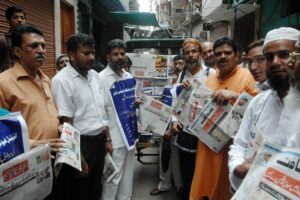
During this period, he also launched the Akhbar Faroshi (newspaper distribution/selling) campaign, which played a crucial role in spreading awareness. This campaign was carried out across different cities of West Bengal and even beyond the state. Through the circulation of Urdu newspapers, people were informed about their linguistic rights, the condition of Urdu, and the objectives of the movement. It helped connect communities and created a sense of participation at the grassroots level.
One of the most remarkable aspects of the movement was its inclusive character. People from diverse backgrounds—Hindus, Muslims, Sikhs, Christians, Jains, and Bengali-speaking communities—came together in support of the cause. This unity reflected a broader commitment to cultural diversity and linguistic rights rather than a narrow community-based demand.
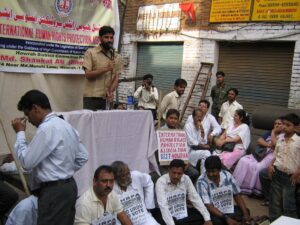
A major milestone came on June 28, 2008, when a 36-hour sit-in protest was organized near the Gandhi statue in Kolkata. This event proved to be a decisive turning point. For the first time, the Urdu movement in Bengal took the shape of a visible, organized, and disciplined public demonstration, drawing wider attention from society and authorities alike.
The momentum continued to build, and by 2010, the powerful slogan “No Urdu, No Vote” was raised. This slogan highlighted the political significance of the issue and served as a strong tool to mobilize public opinion and pressure policymakers.
The protest stood out for its peaceful and disciplined nature. There were no aggressive slogans or confrontational actions. Instead, participants used placards to express their demands in a calm and dignified manner. The event received extensive coverage in Urdu, Bengali, and English media, which helped bring the issue into mainstream public discourse and gave the movement greater visibility and legitimacy.
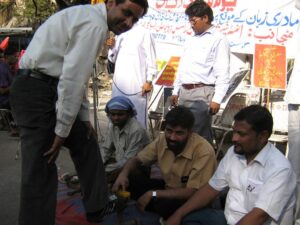
Alongside other awareness efforts, a unique and symbolic campaign known as the “Juta Polish (shoe-polishing) movement” was also launched for the cause of Urdu. This initiative was designed to convey a powerful message in a simple yet striking way. Volunteers, including educated youth and activists, publicly polished shoes in marketplaces, streets, and busy public areas.
The purpose of this campaign was not merely to attract attention, but to highlight the depth of neglect faced by Urdu-speaking communities. By engaging in such humble work, participants demonstrated that they were willing to sacrifice personal pride and social status for the protection of their language and cultural identity. It served as a form of peaceful protest, emphasizing dignity through struggle rather than confrontation.
This campaign also challenged social hierarchies and stereotypes. It sent a clear message that the demand for Urdu was not an elite or political agenda, but a grassroots movement supported by ordinary people. The visual impact of educated individuals polishing shoes in public spaces drew curiosity and conversation, encouraging people to ask questions and engage with the issue.
Like the Akhbar Faroshi campaign, the Juta Polish movement was carried out in different parts of West Bengal and even beyond. It helped in mobilizing support, spreading awareness, and strengthening the emotional connection of people with the cause. Most importantly, it reinforced the movement’s core principle—peaceful, democratic, and creative resistance.
Challenges and Resistance
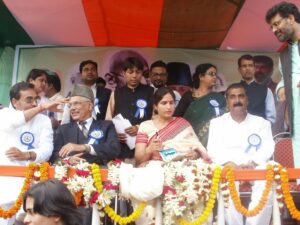
The movement faced several challenges. The political climate in Bengal at the time was dominated by the Left Front government, which enjoyed strong support. Many people were hesitant to participate in protests due to fear of political repercussions.
There was also resistance from within the Urdu community. Some sections of the elite were skeptical of Shamim Ahmed’s approach, while others were reluctant to support a movement that did not align with their interests.
Despite these obstacles, the movement continued to grow. Shamim Ahmed remained steadfast, even in the face of criticism and personal attacks. His persistence gradually won the trust of the community.
National Support and Expansion
Recognizing the importance of broader support, Shamim Ahmed reached out to national leaders and political figures. He met several prominent personalities and informed them about the situation in Bengal. This helped bring national attention to the issue and ensured that the movement could not be easily ignored.
At the same time, he continued to strengthen the grassroots base. Regular meetings, awareness campaigns, and peaceful protests kept the momentum alive.
Final Success and Achievements
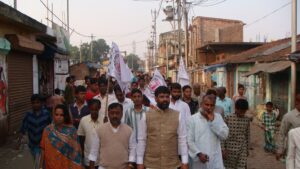
After years of sustained effort, dedication, and continuous public engagement, the movement finally achieved a historic breakthrough. The growing pressure created by organized protests, awareness campaigns, and widespread public support compelled the Government of West Bengal to take concrete and decisive action. For the first time, the demand for Urdu was addressed through proper legislative measures rather than mere symbolic assurances.
The powerful slogan “No Urdu, No Vote” played a crucial political role during this period. It significantly influenced public opinion and contributed to the end of the 35-year rule of the Left Front government. Subsequently, a new government led by Mamata Banerjee under the All India Trinamool Congress (AITMC) came to power. However, despite the change in government, the issue of Urdu did not receive immediate attention. For nearly one and a half years, the new administration remained largely silent on the matter. As a result, under the leadership of Shamim Ahmed, the movement continued with the same intensity even during the new government’s tenure.
A major milestone was finally reached in 2012 with the passage of the West Bengal Official Language (Amendment) Act, 2012 (Act VIII of 2012). This amendment formally granted Urdu the status of a second official language in areas where Urdu-speaking populations were significant. Importantly, it also led to the recognition of several other languages—Hindi, Santhali, Oriya, and Punjabi—alongside Urdu, thereby expanding the linguistic inclusivity of the state beyond Bengali and Nepali. In many ways, the success of the Urdu movement acted as a catalyst for this broader recognition.
The amendment received official sanction and was published in the Kolkata Gazette on May 17, 2012, giving it full legal and administrative authority. This marked a decisive turning point, as the recognition was no longer merely declaratory but backed by enforceable provisions.
This achievement was not just symbolic; it had real and practical implications. Urdu could now be used in administration, educational institutions, and public communication in designated areas. Government offices were expected to provide services in Urdu where applicable, and the language secured a legitimate place within the state’s official framework. Above all, it affirmed the constitutional rights of Urdu-speaking citizens and validated their long struggle for linguistic dignity, recognition, and equal participation in public life.
Significance of the Movement
The Urdu movement in Bengal holds great significance beyond its immediate outcome. It demonstrated that a determined and disciplined movement can succeed even in challenging circumstances. It also highlighted the importance of grassroots participation and honest leadership.
The movement reaffirmed that language is not merely a tool of communication; it is an essential part of cultural identity. By securing recognition for Urdu, the movement helped preserve a rich cultural heritage.
The Urdu movement in Bengal, particularly under the leadership of Shamim Ahmed, stands as a powerful example of democratic struggle. It transformed a stagnant and symbolic campaign into a vibrant and effective movement. Through patience, persistence, and principled action, it achieved what had long seemed unattainable.
The journey from neglect to recognition was not easy, but it proved that when people unite with clarity of purpose and commitment, they can overcome even the most entrenched challenges. The success of this movement is a reminder that rights are not granted automatically—they must be claimed through awareness, unity, and sustained effort.