


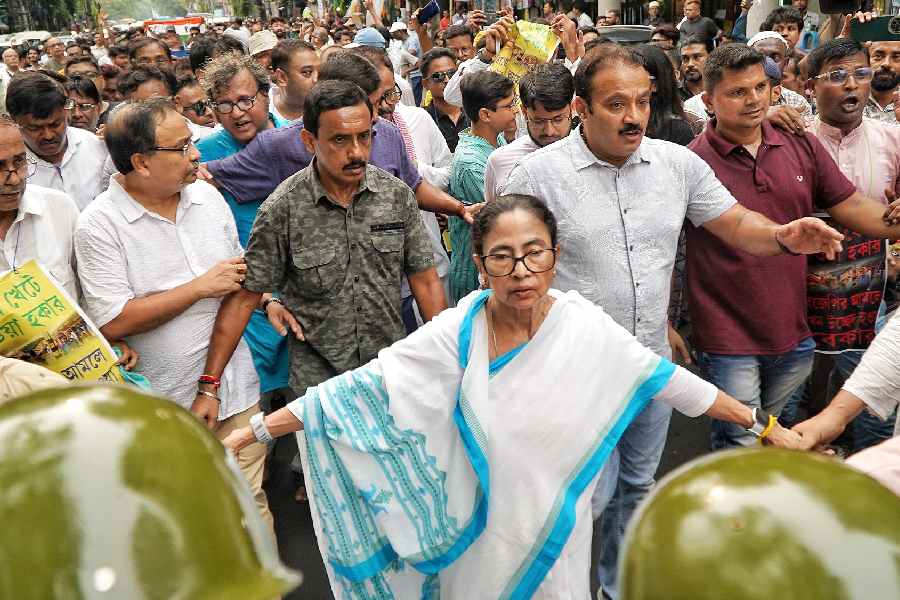
Hawker Eviction Crisis has sparked protests across West Bengal as political parties and hawkers demand rehabilitation before eviction. The debate highlights the balance between urban development, public spaces and the right to livelihood.
Protests Across Bengal Reflect a Larger Debate Over Hawker Eviction, Urban Development, Rehabilitation and the Right to Earn a Living
Qalam Times News Network
Kolkata | June 17, 2026
Hawker Eviction Crisis is no longer merely an administrative issue. It has evolved into a larger social, economic and political debate about how cities should balance development with human dignity. The growing protests across West Bengal over the removal of hawkers from roadsides, railway premises and public spaces reveal a deep anxiety among thousands of families whose livelihoods depend on small-scale trading.

The Hawker Eviction Crisis has triggered demonstrations by political parties, trade unions and hawkers’ organizations alike. While authorities argue that eviction drives are necessary to reduce congestion, improve traffic movement and restore public spaces, the concerns raised by affected vendors cannot simply be ignored. Urban planning may require regulation, but regulation without rehabilitation often translates into hardship for those who have the least capacity to absorb economic shocks.
At the heart of the Hawker Eviction Crisis lies a fundamental question: Can a government remove people from their places of work without first ensuring an alternative means of livelihood? For decades, street vendors have been an integral part of the urban economy. They provide affordable goods and services, create self-employment opportunities and support local supply chains. Behind every stall is a family that depends on daily earnings for food, education, healthcare and shelter.

The recent political mobilization around the issue reflects the scale of public concern. Opposition parties have demanded a halt to evictions without rehabilitation, while several organizations have gone a step further by launching community kitchens to support affected families. Such initiatives highlight the immediate economic distress being experienced by vendors who suddenly find themselves without income.
However, the debate should not be reduced to a confrontation between governance and street commerce. Cities require order, accessibility and safe public infrastructure. Pedestrians deserve unobstructed walkways, and emergency services must have clear access to roads and public spaces. Yet development loses its moral legitimacy when it overlooks the people most vulnerable to its consequences.
The solution lies neither in indiscriminate eviction nor in unrestricted occupation of public land. Instead, policymakers must pursue a balanced framework that protects both public interest and human welfare. Proper surveys, transparent identification of legitimate vendors, designated vending zones and meaningful rehabilitation packages can help achieve that balance.
The issue also exposes a broader challenge confronting modern Indian cities. Rapid urban expansion often places informal workers at the margins of planning processes. Street vendors, daily wage earners and small traders contribute significantly to local economies but frequently remain excluded from policy discussions that directly affect their future.
As political parties intensify their campaigns and protests, the focus should remain on finding sustainable solutions rather than scoring political points. The livelihood of thousands of families should not become collateral damage in administrative exercises or political battles.
Ultimately, a civilized society is judged not only by the roads it builds or the markets it modernizes, but also by how it treats those whose survival depends on modest daily earnings. Development and rehabilitation must move together. One without the other creates not progress, but displacement.
The ongoing Hawker Eviction Crisis offers policymakers an opportunity to demonstrate that urban development can be both efficient and humane. Whether that opportunity is seized will determine not only the future of street vendors but also the character of governance itself.