


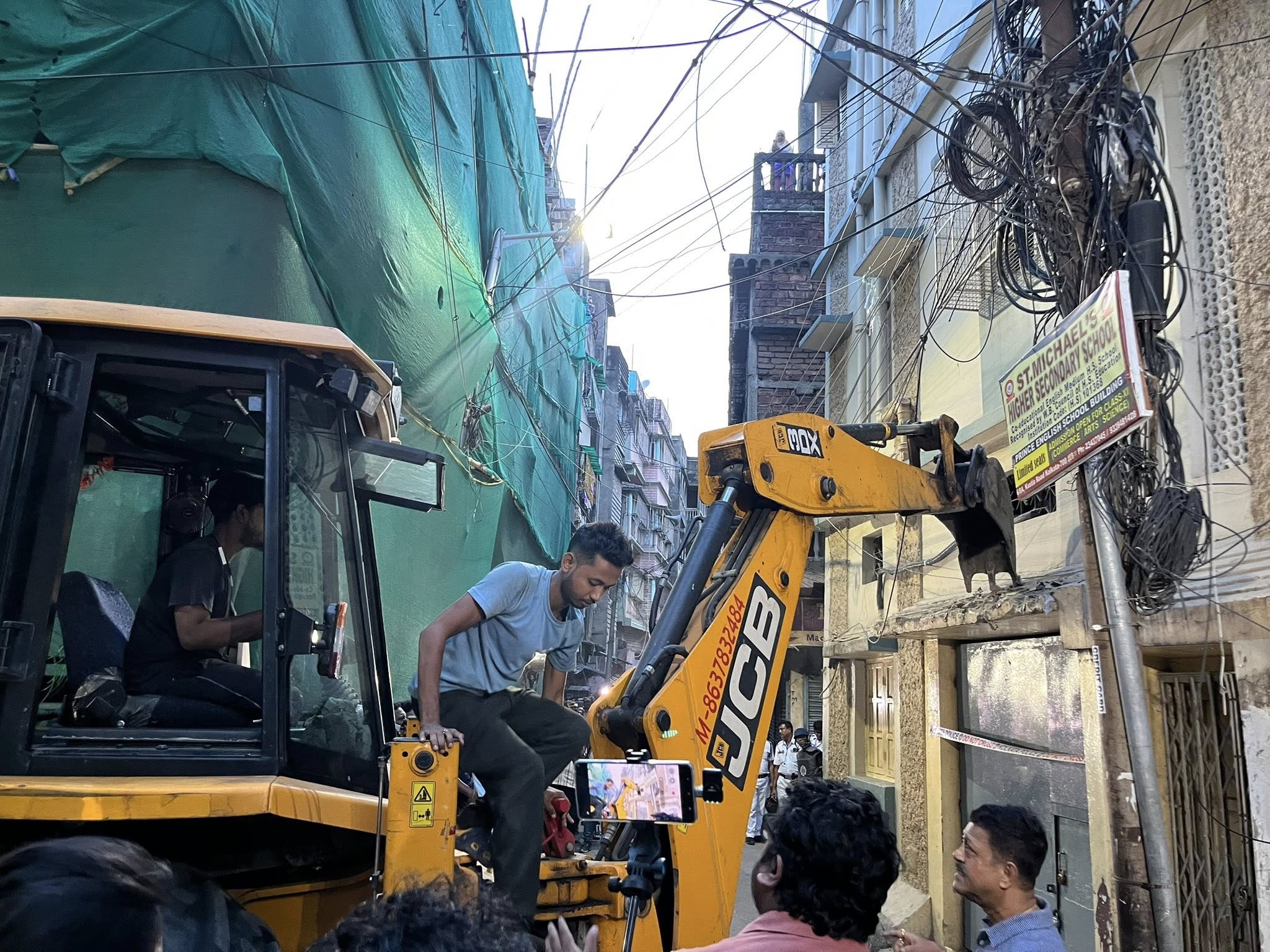
Bulldozer Action in Kolkata’s Topsia after the Delta Leather factory fire has sparked major controversy. Factory owner Zafar Nisar claims he possessed valid licences, insurance papers and government-approved factory plans before authorities demolished the building and arrested him. Questions are also being raised over the silence of local MLA Javed Ahmed Khan and civic authorities.
Qalam Times News Network
Kolkata | May 14, 2026
Amid intense Bulldozer Action in Kolkata’s Topsia area, the multi-storey building of Delta Leather Corporation was demolished by the administration following a devastating fire incident that claimed two lives and left several workers seriously injured. Soon after the tragedy, the state administration declared the building “illegal” and bulldozers were sent to the site within hours.
However, serious questions are now being raised over the entire operation, as factory owner Zafar Nisar claims that he possessed all the required government approvals, licences, insurance papers and official permissions necessary to run the factory, but authorities allegedly ignored those documents before arresting him and razing the building.
Fire, Arrest and Sudden Demolition
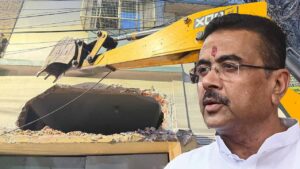
The fire broke out at a leather goods factory located on G.J. Khan Road in Topsia. Two people died in the incident, while several others suffered severe burn injuries and were admitted to hospitals.
Soon after the incident, police arrested factory owner Zafar Nisar. Within hours, the administration declared the building illegal and began demolition work using bulldozers.
Government officials claimed that the structure lacked proper fire safety certification and that the factory was operating illegally inside a residential building. The Chief Minister described the action as part of a “zero tolerance policy” against illegal factories and constructions across Kolkata, particularly in densely populated minority areas.
But amid this ongoing Bulldozer Action, documents now emerging from the factory owner’s side are creating a completely different narrative.
Factory Owner Claims He Had Valid Licences and Insurance
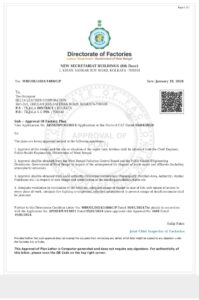
According to Zafar Nisar, Delta Leather Corporation has been registered since 1998 and holds a valid factory licence issued by the Directorate of Factories, Government of West Bengal, valid until December 31, 2029.
Documents reviewed in connection with the case show:
- The factory licence was officially renewed up to 2029.
- The factory building plan received official approval in January 2024.
- Tata AIG General Insurance had issued a policy worth ₹1.05 crore covering machinery, stock and factory operations.
- Factory layouts, machinery details, worker capacity and fire safety-related provisions were mentioned in the submitted plans.
The insurance policy clearly identifies the premises as a “Factory: Manufacturer & Exporter of Leather Goods” at the same G.J. Khan Road address where the incident occurred.
Zafar Nisar has alleged that despite possessing these approvals, authorities neither examined the documents properly nor provided him an opportunity to present his side before initiating demolition.
Was the Demolition Carried Out Without Proper Verification?
The case has now sparked a larger debate over whether the administration acted in haste without adequately reviewing the factory’s legal status.
If the factory already had a valid licence, insurance coverage and officially approved plans, critics are asking why the building was instantly branded “illegal.” Legal observers say that even if certain fire clearances were pending or incomplete, questions remain over whether immediate demolition without judicial review was justified.
People close to the factory owner allege that no fair hearing was provided and that the entire action appeared pre-decided.
Silence of MLA Javed Ahmed Khan and Local Councillor Son
The incident has also drawn attention toward local MLA Javed Ahmed Khan and his son, reportedly a ward councillor in the area. Residents claim that despite the political influence exercised over local civic matters in Topsia for years, neither of them publicly appeared after the tragedy and demolition.
Local residents are questioning how a supposedly illegal structure could continue operating for years if authorities and political representatives were unaware of it. Others argue that if legal documents existed, responsibility should not fall entirely on the factory owner alone.
The controversy has intensified demands for a broader investigation into the role of political patronage and civic oversight in allegedly unauthorized constructions across the area.
Debate Rekindled Over Illegal Constructions
Following the Topsia incident, discussions have once again intensified regarding illegal constructions and unregulated commercial units operating in densely populated minority neighborhoods.
Some political analysts argue that years of vote-bank politics allowed unauthorized structures to flourish without proper enforcement of civic laws. Others, however, warn that demolitions carried out immediately after tragedies risk bypassing constitutional and legal safeguards.
Human rights activists have also questioned whether bulldozer-based punishment without due legal process sets a dangerous precedent.
Administration’s Claims vs Documents on Record
The official inquiry committee reportedly concluded that the building lacked adequate fire safety systems and that industrial activity was being carried out improperly within a residential structure.
However, available documents indicate that the factory had approved plans mentioning fire-fighting arrangements, worker access routes, ventilation systems and machinery layouts.
The official factory plan approval letter issued in January 2024 also stated that fire safety measures and emergency escape arrangements were to be ensured.
As the controversy deepens, the central question remains: if approvals and licences existed on paper, why did the administration move so swiftly toward arrest and demolition without a transparent verification process?