

Marginalisation in West Bengal politics grows as only 33 Muslim MLAs are elected in the 294-member Assembly. Detailed analysis of Muslim representation, BJP rise, minority voice, and democratic participation.
Only 37 Muslim MLAs elected in the 294-member House despite Muslims forming nearly 27% of the state population
Qalam Times News Network
Kolkata | May 6, 2026
Marginalisation Visible in New West Bengal Assembly
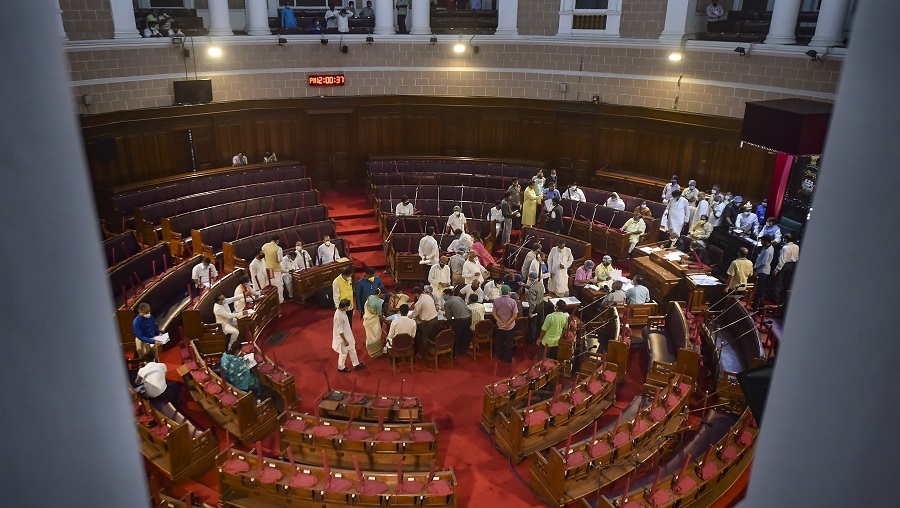
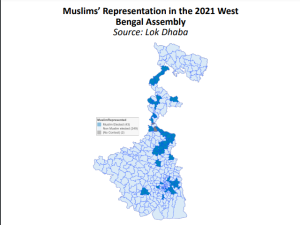
Marginalisation of Muslims in West Bengal politics has become more visible after the formation of the Seventeenth West Bengal Legislative Assembly, where only 37 Muslim MLAs have been elected in the 294-member House. The figure represents nearly 12.6 percent of the Assembly strength, far below the community’s share in the state population, which stands close to 27 percent according to Census data.
For the first time since Independence, the ruling BJP does not have a single Muslim MLA in the Assembly. As a result, there is no Muslim minister from the ruling party in the state government. Political observers believe this absence could significantly reduce minority participation in policymaking and governance.
Total Muslim MLAs in the Assembly
Out of the 294 elected MLAs in the West Bengal Assembly, 37 are Muslims, which means Muslim representation in the Assembly stands at approximately 12.6%, while Muslims make up nearly 27% of West Bengal’s total population.
Political analysts say this gap highlights a growing imbalance between demographic presence and political representation. Earlier Assemblies had comparatively higher Muslim representation. In 2011, Muslims accounted for around 20.4 percent of MLAs, while the number reportedly declined to nearly 14.7 percent in later years before dropping further in the present Assembly.
Religious Polarisation and BJP’s Rise
The BJP’s electoral expansion in West Bengal has largely been linked to consolidation of Hindu votes. Senior BJP leader Suvendu Adhikari repeatedly used strong rhetoric targeting Muslims during the election campaign. Analysts believe religious polarisation played a major role in shaping voting patterns across the state.
At the same time, concerns around Marginalisation have deepened among minorities who fear that the absence of adequate representation may weaken their voice in public institutions and policy discussions.
Why Political Representation Matters
The framers of the Indian Constitution recognised the importance of inclusive governance and attempted to create safeguards for marginalised communities. Political thinkers argue that representation is not merely symbolic but essential for ensuring that different social groups can raise concerns and influence policy decisions.
Economist Albert O. Hirschman’s theory of “Exit, Voice, and Loyalty” is often cited in this context. When communities cannot “exit” from a system, their only democratic tool is their “voice,” which becomes effective through political representation.
A Long Pattern of Underrepresentation
Muslims in West Bengal have historically remained underrepresented in major political structures despite being a large minority community. During the Congress era, only a few leaders such as A.B.A. Ghani Khan Choudhury and Abdus Sattar emerged prominently.
Even during the Left Front rule, Muslim leadership remained limited to a small number of leaders including Mohammed Salim, Mohammed Amin, and Saifuddin Choudhury. Critics argue that upper-caste dominance within political institutions often restricted broader Muslim participation in governance and party structures.
Committee Positions Also Reflect the Gap
The issue extends beyond the Assembly floor. Muslims reportedly hold only around 14.8 percent of committee positions in the current Assembly. The number reportedly falls further when the Minority Affairs Committee is excluded, suggesting that representation remains concentrated in minority-related departments rather than mainstream governance structures.
Fragmented Minority Politics
The rise of identity-based political formations such as the Indian Secular Front (ISF) and initiatives led by leaders like Humayun Kabir has also changed the political landscape.
Observers believe these developments fragmented Muslim votes in several constituencies, reducing the community’s collective political bargaining power during elections.
Debate Over Development and Representation
Despite continuous political debates around “minority appeasement,” many social indicators suggest that Muslims in West Bengal still lag behind in education, employment, healthcare, and economic opportunities.
Critics argue that while symbolic welfare measures have been introduced over the years, they have not substantially improved the overall socio-economic condition of the community. The latest decline in Muslim representation has therefore intensified discussions about inclusion, equality, and democratic participation in the state.