


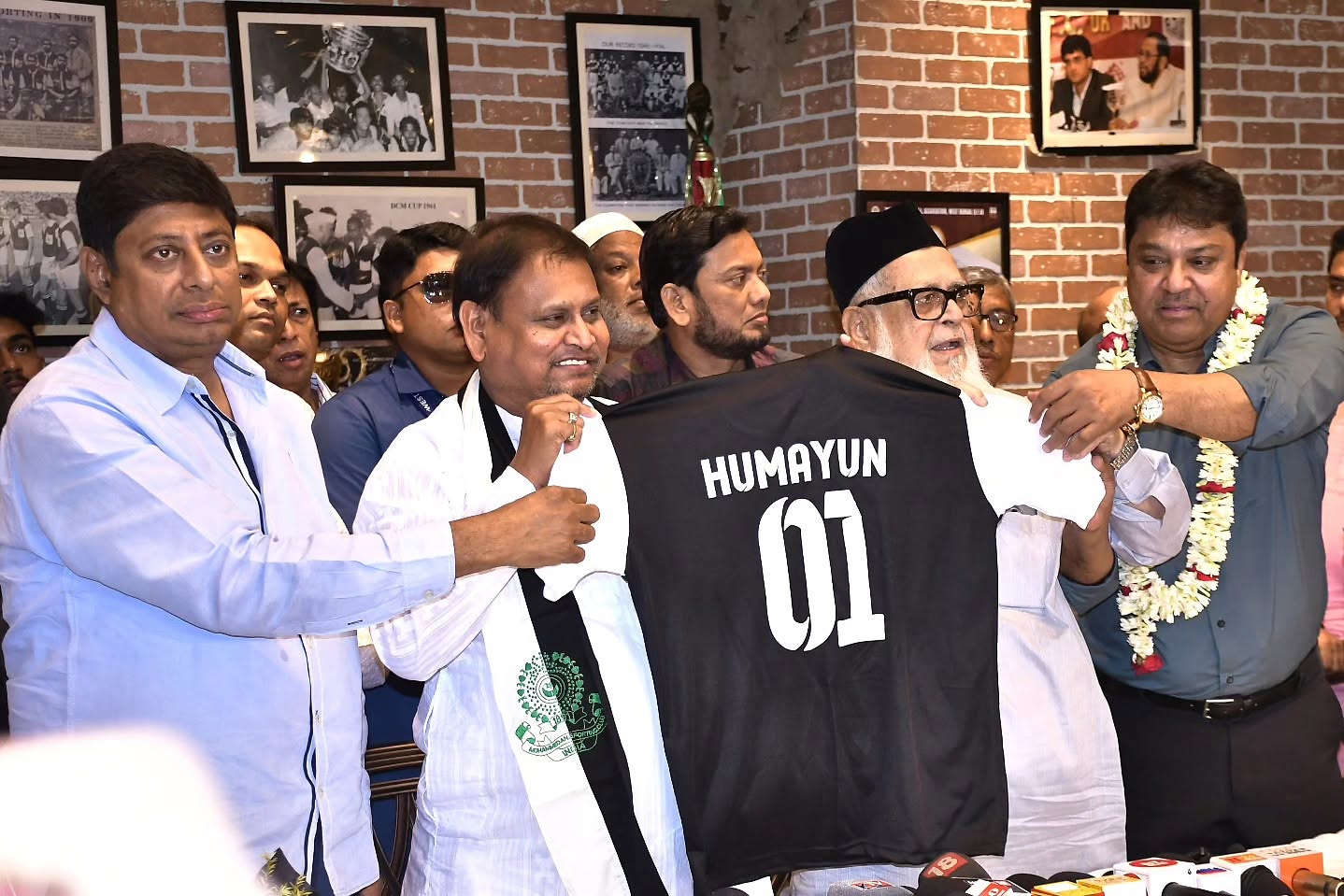
Mohammedan Sporting Club Presidency: A hard-hitting editorial questioning the selection of Humayun Kabir as club president amid transparency concerns, political contradictions, and demands for governance reform.
Qalam Times News Network
Kolkata, June 7, 2026
Mohammedan Sporting Club Presidency: The manner in which Humayun Kabir has been elevated to the presidency of Mohammedan Sporting Club raises serious questions about consistency, credibility, and governance. The club’s leadership has attempted to present his appointment as the beginning of a glorious new chapter, but supporters have every reason to ask whether this is truly a renewal or merely another exercise in political convenience. A historic institution cannot be strengthened through ceremonies, slogans, and public relations campaigns alone. It requires transparency, accountability, and moral consistency.


The most striking contradiction is impossible to ignore. Mohammedan Sporting Club Presidency: many of the same voices that are today celebrating Humayun Kabir were, until recently, publicly accusing him of being a “BJP dalal.” If those accusations were genuine, then the sudden embrace of Kabir exposes breathtaking opportunism. If those accusations were false, then those who made them owe an apology to supporters and members. Either way, the club’s stakeholders are entitled to an explanation. A leadership transition that rests on contradictory political rhetoric damages the institution far more than it strengthens it.
The Real Issue: Governance, Not Ceremonies
The timing of this appointment is equally troubling. Only days before the felicitation ceremony, the Tehreek Foundation submitted a formal deputation demanding greater transparency and accountability. The organization sought disclosure of financial statements, balance sheets, and key administrative records. Those demands were not made by outsiders seeking controversy; they reflected growing concern among supporters about how one of India’s oldest football institutions is being managed.
Instead of addressing those concerns head-on, the club leadership chose to stage a celebratory event. The optics are unfortunate. When questions about governance are met with fanfare rather than answers, suspicion naturally deepens. Supporters are not asking for speeches; they are asking for facts.
A Club Cannot Survive on Sentiment Alone


Mohammedan Sporting Club has always been more than a football team. It carries historical, cultural, and emotional significance for generations of supporters. Precisely because of that legacy, the club deserves standards higher than ordinary political bargaining. Invoking emotion while avoiding institutional reform is not leadership. It is deflection.
The claim that people from different political ideologies have united to save the club sounds noble, but unity without transparency is meaningless. A coalition formed around convenience can quickly become a coalition of silence. What supporters need is not political symbolism; they need clear governance, audited accounts, and accountable decision-making.
Questions That Demand Answers
Why was there no comprehensive public explanation of the selection process for the presidency?
What criteria were used to determine that Humayun Kabir was the best candidate to lead the club at this critical moment?
Will the club immediately release audited financial statements and administrative records, as demanded by concerned stakeholders?
How does the leadership reconcile the sudden reversal from branding Kabir a political agent to celebrating him as the club’s savior?
Until these questions are answered, the club’s appeals for unity will sound hollow.
The Risk to the Institution
Historic clubs do not decline only because of poor results on the field. They decline when trust collapses. Once supporters begin to believe that leadership decisions are driven by factional calculations rather than institutional interest, rebuilding confidence becomes extraordinarily difficult.
Mohammedan Sporting Club should be focusing on strengthening its football structure, improving administration, and restoring faith among members and supporters. Instead, it has invited controversy by elevating a figure whose relationship with sections of the club’s political ecosystem has been marked by public hostility and sudden reconciliation. That is not a stable foundation for renewal.
Humayun Kabir may ultimately prove capable of leading the club effectively. But capability is not the only issue. Legitimacy matters. Transparency matters. Consistency matters. A club of Mohammedan Sporting Club’s stature deserves a presidency that inspires confidence through openness, not confusion through contradictions.
The leadership cannot expect supporters to forget yesterday’s accusations simply because today’s ceremony was well staged. If the club truly seeks a new era of growth and progress, it must begin with honesty about its own decisions. Otherwise, the Mohammedan Sporting Club Presidency will be remembered not as the start of renewal, but as another chapter in the club’s ongoing crisis of credibility.