

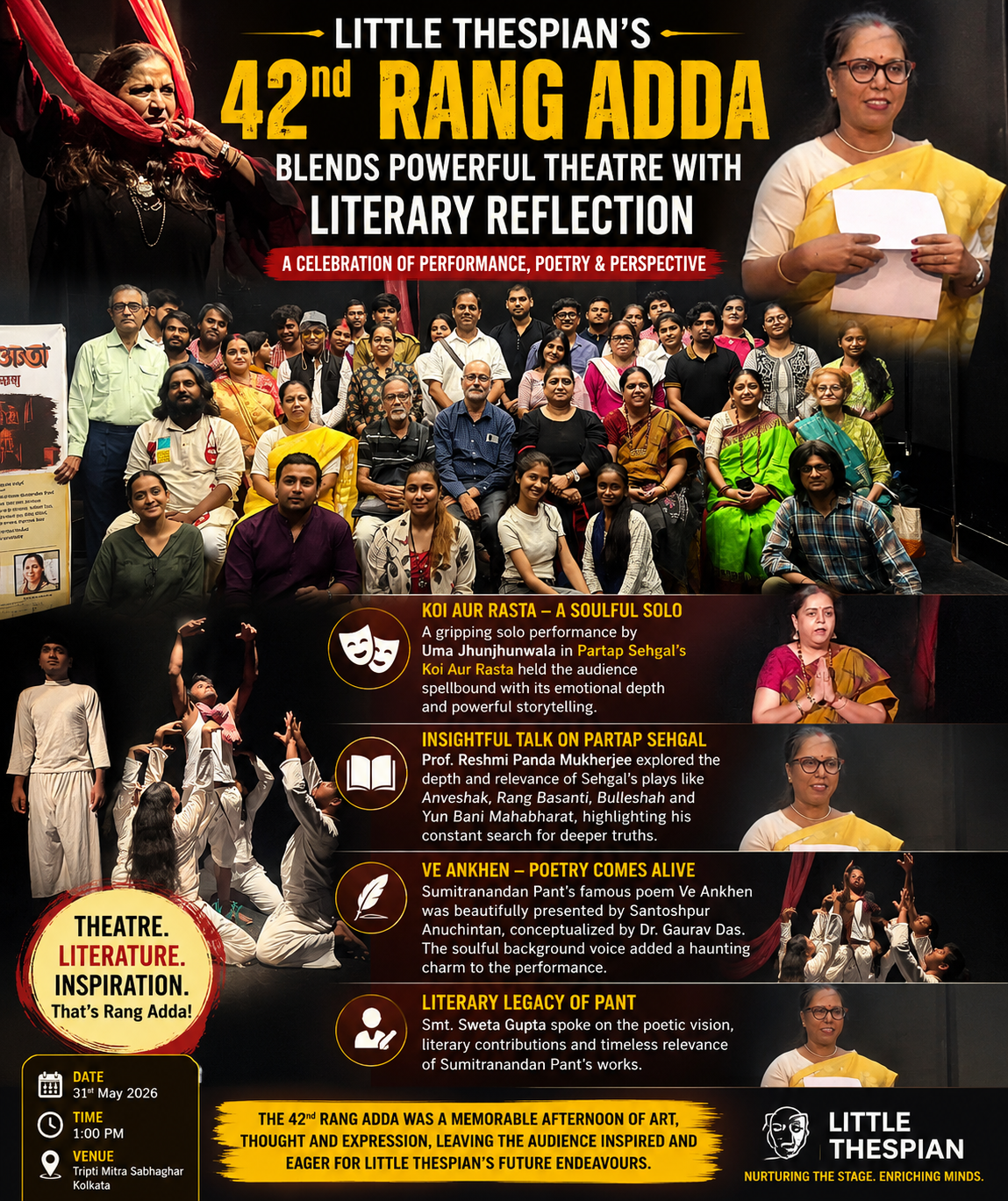
Rang Adda returned with its 42nd edition in Kolkata, featuring powerful theatre performances, literary discussions on playwright Partap Sehgal, and a captivating presentation of Sumitranandan Pant’s poetry, celebrating the richness of Indian arts and culture.
Acclaimed performances, insightful literary discussions, and poetic presentations made the 42nd Rang Adda a memorable cultural gathering in Kolkata.
By Qalam Times News Network
Kolkata | June 1, 2026
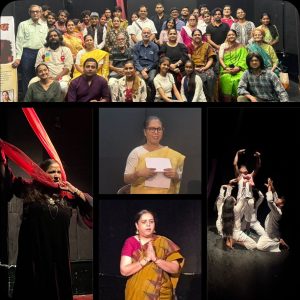
Rang Adda once again brought together theatre lovers, literary enthusiasts, and cultural thinkers as Kolkata’s distinguished Hindi-Urdu theatre collective, Little Thespian, successfully hosted the 42nd edition of its popular cultural forum on May 31, 2026, at Tripti Mitra Sabhaghar. The event offered an engaging blend of dramatic performance, literary reflection, and artistic expression, leaving the audience enriched and inspired.
The afternoon commenced with a compelling solo performance of Koi Aur Rasta, a thought-provoking play penned by renowned playwright Partap Sehgal of New Delhi. The production was performed by Uma Jhunjhunwala, director of Little Thespian, whose powerful stage presence and nuanced portrayal captivated spectators from beginning to end. Through an emotionally layered performance, she brought the play’s complex themes to life, prompting viewers to reflect on the deeper social and philosophical questions embedded within the narrative.
Rang Adda Highlights the Literary Vision of Partap Sehgal
A major highlight of the programme was an illuminating lecture by Prof. Reshmi Panda Mukherjee of the Department of Hindi at Gokhale Memorial Girls’ College. Speaking on the dramatic works of Partap Sehgal, she explored the intellectual depth and philosophical inquiry that characterize his writing.
During her address, Prof. Mukherjee observed that Sehgal’s plays are often driven by an ongoing search for truths that lie beyond conventional understanding. She emphasized that one of the playwright’s greatest strengths is his active engagement with audiences, directors, and performers, enabling his works to remain vibrant and relevant across generations.
The Rang Adda gathering also provided an opportunity to revisit some of Sehgal’s most influential works. Prof. Mukherjee discussed the enduring relevance of plays such as Anveshak, Rang Basanti, Bulleshah, and Yun Bani Mahabharat. Referring to Anveshak, she highlighted its central message that rigid and orthodox thinking often becomes an obstacle to progress, creativity, and social development.
A Poetic Performance Captivates the Audience
The second half of the programme featured a striking theatrical interpretation of Sumitranandan Pant’s celebrated poem Ve Ankhen. The presentation was performed by the artists of Santoshpur Anuchintan and conceptualized by its Director, Dr. Gaurav Das.
Elegantly designed and artistically executed, the performance combined visual expression, movement, and recitation to create a deeply immersive experience. Adding another layer of emotional resonance was Dr. Das’s evocative voice, which served as a haunting musical backdrop throughout the presentation. The audience responded enthusiastically, rewarding the performers with sustained applause.
Literary Legacy of Sumitranandan Pant Explored
The event concluded with an insightful lecture by Smt. Sweta Gupta, President of the Educational Wing of the West Bengal Unit of Vishwa Hindi Parishad. Her address focused on the literary achievements, poetic philosophy, and continuing significance of Sumitranandan Pant in modern Indian literature.
Gupta highlighted Pant’s contribution to Hindi poetry and examined how his works continue to inspire readers through their sensitivity, humanism, and aesthetic depth. Her engaging presentation provided valuable context for understanding the poet’s enduring place in India’s literary tradition.
A Successful Celebration of Art and Culture
The 42nd edition of Rang Adda concluded on a high note, reaffirming Little Thespian’s commitment to nurturing meaningful artistic dialogue and cultural engagement. By bringing together theatre, literature, poetry, and scholarly discussion under one roof, the event created a vibrant platform for creative exchange and intellectual reflection.
Participants and audience members left the venue inspired by the performances and discussions, while eagerly looking forward to Little Thespian’s future productions and cultural initiatives. The programme once again demonstrated the power of theatre and literature to provoke thought, foster dialogue, and strengthen cultural connections within the community.