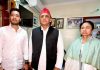


The FOOD FOR ALL Movement in West Bengal under the Leadership of Shamim Ahmed and the Banner of the Human Rights Protection Association (HRPA)
Qalam Times News Network
Kolkata, 12 May 2026
Human Right to Food & Humanitarian Mission
Food is not merely a necessity for survival; it is a fundamental human right and the foundation of human dignity. Every individual, regardless of social status, religion, nationality, or economic condition, deserves access to sufficient, safe, nutritious, and affordable food. Hunger is one of the harshest realities faced by humanity. It weakens not only the human body but also destroys confidence, dignity, opportunity, and hope. A hungry society cannot progress toward peace, equality, or justice.
Across the world, millions of people continue to suffer from malnutrition, poverty, and food insecurity. For countless families, even two meals a day remain uncertain. Children are forced to sleep hungry, elderly people are neglected, and helpless individuals living on streets struggle every day merely to survive. In such circumstances, humanitarian efforts become essential for restoring hope and protecting human dignity.
As Mahatma Gandhi rightly said:
“There are people in the world so hungry, that God cannot appear to them except in the form of bread.”
The mission “Food for All” was established with the noble vision of ensuring that no human being sleeps hungry. The mission is built upon the principles of compassion, humanity, equality, and respect. It seeks not only to distribute food but also to restore dignity and emotional belonging among marginalized people.
HUMAN RIGHT TO FOOD
The right to food is universally recognized as a basic human right. It ensures that every person has physical and economic access to adequate food necessary for a healthy and dignified life. The concept of the right to food goes beyond simply feeding people; it includes ensuring nutritional quality, accessibility, sustainability, and equality.
Fundamental Principles of the Right to Food
Availability
Food must be available in sufficient quantity and appropriate quality to meet the dietary needs of individuals. This means societies and governments must ensure proper agricultural systems, food production, storage, and supply chains so that people can access healthy and nutritious meals regularly.
Availability also means that food should be culturally acceptable and suitable for different communities and lifestyles.
- Accessibility
Food must be physically and economically accessible to every person. No individual should be denied food because of poverty, disability, social exclusion, or geographical limitations.
Economic accessibility means people should be able to afford food without sacrificing other basic needs such as education, healthcare, or shelter. Physical accessibility ensures that elderly persons, children, disabled individuals, and vulnerable communities can also obtain food safely and conveniently.
- Sustainability
The right to food must be protected not only for present generations but also for future generations. Sustainable food systems are essential for ensuring long-term food security. Proper environmental protection, responsible use of resources, and sustainable agriculture are necessary so future generations can also enjoy adequate nutrition and food availability.
- Non-Discrimination
Access to food must be guaranteed equally to all individuals without discrimination on the basis of:
- Race
- Colour
- Gender
- Language
- Religion
- Political opinion
- National or social origin
- Property
- Birth
- Age
- Disability
- Any other social status
Any denial of food access based on discrimination is considered a violation of human rights.
International Protection of the Right to Food
The right to food is protected under several important international human rights instruments, including:
- Article 25 of the Universal Declaration of Human Rights
- Article 11 of the International Covenant on Economic, Social and Cultural Rights
- Articles 24 and 27 of the Convention on the Rights of the Child
- Article 11 of the American Declaration on the Rights and Duties of Man
In addition, various United Nations treaty bodies and international organizations supervise the implementation of these rights. Governments are regularly monitored through reports, recommendations, and international observations to ensure that the right to food is respected and protected.
FOOD FOR ALL
Program Details at a Glance
The mission “Food for All” functions through multiple humanitarian initiatives designed to address hunger, malnutrition, emotional neglect, and social exclusion. The mission operates mainly through three major programs:
- Distribution of Cooked Food for the Destitute
- Monthly Ration for Distressed Families
- Dastarkhwan – Traditional Fine Dining with the Poor
The central philosophy behind all these programs is simple:
“Serve humanity with dignity, compassion, and respect.”
- Distribution of Cooked Food for the Destitute
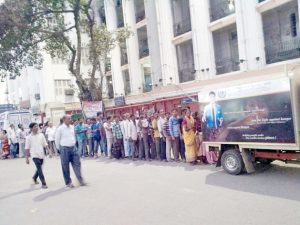
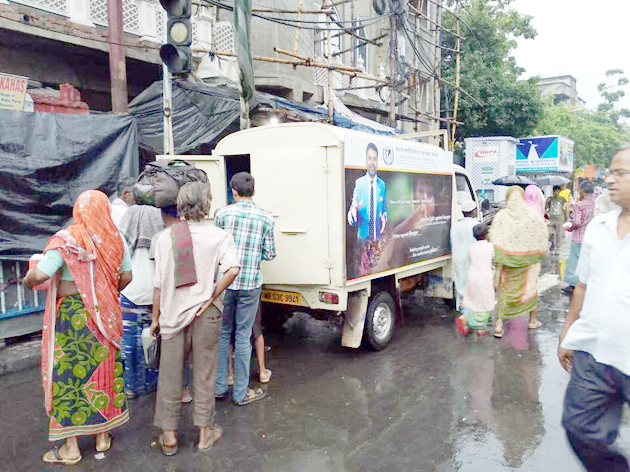
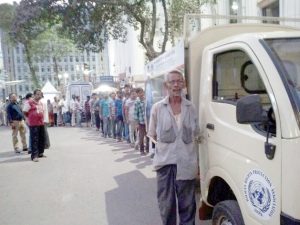
This is one of the most important and active programs under the “Food for All” mission. The initiative serves freshly cooked meals and drinking water daily to homeless individuals, poor laborers, abandoned elderly people, and others living in extreme poverty who cannot afford regular meals.
Hygienic Food Preparation
Meals are prepared in a sanitized community kitchen under strict hygienic conditions. Professional cooks and volunteers ensure cleanliness and quality during the cooking process.
The meals generally include:
- Rice
- Dal (lentils)
- Fresh vegetables
- Chapattis (on certain days)
Only high-quality rice, lentils, spices, vegetables, and cooking oils are used. The organization prioritizes nutrition, hygiene, and freshness in every meal prepared.
Distribution Locations
Food packets are distributed across numerous locations in Kolkata, including:
- Moulali
- Taratala
- Kyd Street
- Dharmatala
- Khidderpore
- Shyambazar
- Raja Bazaar
- Sealdah Railway Station
- Howrah Railway Station
- Kalighat Temple
- Calcutta Medical College & Hospital
- S.S.K.M. Hospital
- Chittaranjan Hospital
These locations were carefully selected because they contain large numbers of homeless individuals, migrant workers, patients’ families, and vulnerable populations.
Daily Operations
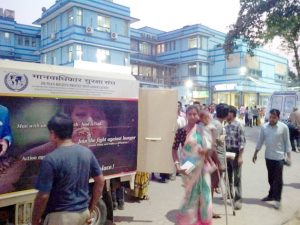
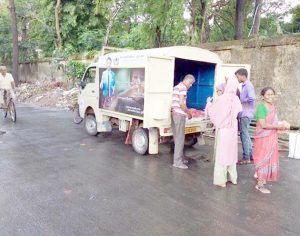
Every afternoon, freshly cooked meals are packed carefully along with purified drinking water and loaded into vehicles for distribution. Around 4 PM daily, volunteers begin their journey across the city carrying the banner:
“Fight Against Hunger”
The food distribution vehicles travel nearly 45 kilometres every day to ensure maximum outreach to people in need.
Each food packet contains approximately 500 grams of nutritious food along with one litre of purified drinking water.
- Monthly Ration for Distressed Families
The “Monthly Ration Program” is designed to support families facing severe economic hardship due to sudden tragedy, illness, unemployment, or death of the sole earning member.
Purpose of the Program
Life can change unexpectedly. A single accident, chronic illness, or financial crisis can destroy the stability of an entire family. Families often struggle to provide:
- Food
- Medicines
- Education
- Shelter
In many cases, widows or elderly parents are left helpless without any source of income.
The mission identifies such vulnerable families through careful investigation and counseling. Families are encouraged to continue their children’s education, and in return, the organization provides them monthly ration assistance.
This approach not only addresses hunger but also protects children from dropping out of school due to poverty.
Monthly Ration Package
Each selected family receives:
- 25 kg Rice
- 10 kg Atta
- 1 kg Mung Dal
- 1 kg Masur Dal
- 1 kg Sugar
- 4 kg Refined Oil
- 1 kg Surf
- 250 g Coconut Oil
- 250 g Tea
- 100 g Colgate
- 2 Dettol Soaps
Currently, approximately 150 families receive monthly support under this initiative, and the organization aims to expand this number in the future.
- Dastarkhwan – Traditional Fine Dining with the Poor
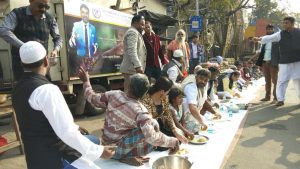
“Dastarkhwan” is one of the most unique and emotionally meaningful initiatives of the mission. It was conceptualized by Mr.Shamim Ahmed with the belief that poor people need emotional respect as much as food.
Philosophy BehindDastarkhwan
According to Mr. Ahmed, hunger is not only physical but also emotional. Homeless people, footpath dwellers, and abandoned individuals often feel isolated and humiliated by society.
The Dastarkhwan initiative attempts to restore:
- Human dignity
- Emotional warmth
- Respect
- Social inclusion
During festivals such as:
- Holi
- Diwali
- Ram Navami
- Eid
special dining events are organized where volunteers and poor people sit together and share meals equally.
This act symbolizes brotherhood, equality, and compassion.
Additional Humanitarian Care
Apart from food distribution, the organization also:
- Provides medicines
- Offers nursing care
- Helps physically disabled individuals
- Supports hospitalization of sick persons
The initiative attempts to bring marginalized individuals back into the mainstream of society with dignity and compassion.
As Fidel Castro once stated:
“More than 820 million people in the world suffer from hunger and 790 million of them live in the third world.”
Charity with a Difference
The “Food for All” mission strongly believes that charity without dignity is incomplete. Traditional charity often humiliates recipients and creates a sense of inferiority among the poor.
Philosophy of Respectful Charity
This mission follows a different approach:
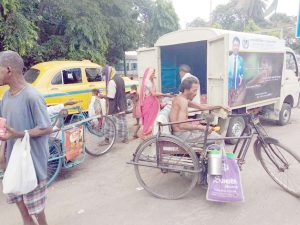
- Food is served respectfully
- Hygiene is maintained strictly
- Volunteers interact compassionately
- Recipients are treated with equality
Food packets are never thrown toward people. Instead, they are handed respectfully with care and humanity.
The organizers believe that those receiving assistance are actually honoring the volunteers by accepting their service.
Hygienic Standards
The mission operates through:
- Sanitized kitchens
- Modern cooking systems
- Proper ventilation
- Refrigeration facilities
- Running water
- Clean utensils
- Hygienic packaging systems
Volunteers wear gloves during food handling to ensure safety and cleanliness. Fresh vegetables, branded spices, and quality cooking oils are used in every meal.
Nutritional Focus
The organization carefully plans meals according to nutritional needs. The menu changes regularly and includes:
- Various lentils
- Protein-rich soybean
- Leafy vegetables
- Rice
- Chapattis
There are future plans to include eggs regularly in meal packets to increase protein intake among beneficiaries, especially children and elderly individuals.
Area of Operation
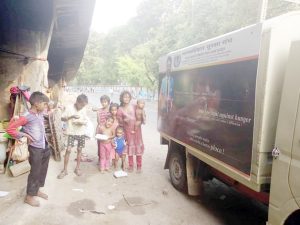
Currently, the “Food for All” mission operates in several areas of Kolkata and other parts of West Bengal. However, the organization plans to expand rapidly into:
- Rural districts
- Remote villages
- Other Indian metropolitan cities
Every successful mission is driven by a strong vision. The vision behind “Food for All” is vast, ambitious, and deeply humanitarian.
Long-Term Goals
Mr.Shamim Ahmed envisions:
- Coverage of every district of West Bengal
- Food distribution in every ward of Kolkata
- Establishment of a massive automated community kitchen
- Distribution of 10 lakh food packets daily
- Serving both lunch and dinner
- Inclusion of eggs and protein-rich meals
- Expansion of the mission across India and globally
The mission encourages people from every section of society to join hands in fighting hunger and human suffering.
As Pearl S. Buck said: “A hungry man can’t see right or wrong. He just sees food.”
“Food for All” is not simply a charitable initiative. It is a humanitarian movement dedicated to protecting human dignity, fighting hunger, promoting equality, and restoring hope among the most vulnerable sections of society.
The mission believes that every human being deserves:
- Food
- Respect
- Compassion
- Inclusion
- Dignity
Its vision is clear and powerful:
“No human being should remain hungry, neglected, or humiliated.”
Through compassion, collective effort, and social responsibility, the mission hopes to build a future where hunger no longer exists and humanity stands united in service of one another.