
Women Short Story Writers of Bengal explored at a state-level Urdu seminar in Kolkata, highlighting feminist fiction, literary history, and contemporary trends.
Qalam Times News Network
Kolkata | February 5, 2026
A vibrant academic gathering at Surendranath College for Women celebrates Bengal women’s Urdu fiction
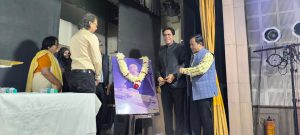
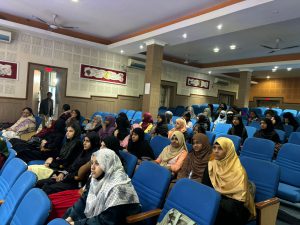
Women Short Story Writers of Bengal took center stage at a thought-provoking one-day state-level seminar held on Thursday, February 5, 2026, at Gitanjali Auditorium, Surendranath College for Women. Organized by the Department of Urdu with the financial support of the West Bengal Urdu Academy, the seminar brought together scholars, researchers, and literary critics to reflect on the rich tradition, social consciousness, and evolving trends of women’s Urdu short fiction in Bengal. The event was conducted in two academic sessions marked by serious scholarship and lively intellectual exchange.
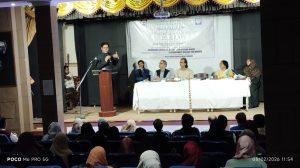
Presiding over the inaugural session, Teacher-in-Charge Dr. Uma Shankar Pandey delivered an eloquent address in fluent Urdu, demonstrating his deep attachment to the language and its literary culture. Referring to Mirza Ghalib’s emotional bond with Kolkata, he remarked that the city is not merely a geographical space but “a city of emotions and the heart,” where the fragrance of Urdu is embedded in the soil itself. Emphasizing that humility and cultural rootedness outweigh power and authority, he described Urdu as a language of love and harmony, reaffirming the college’s commitment to its promotion. He also expressed special gratitude to the West Bengal Urdu Academy and appreciated the Department of Urdu for organizing such a meaningful academic event.
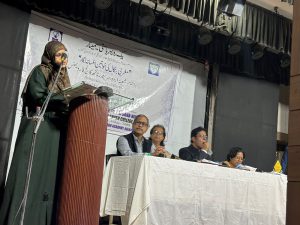
The Head of the Department of Urdu and Seminar Coordinator, Dr. Nuzhat Zahra, presented the welcome address and introductory remarks. Thanking Dr. Pandey for his encouragement and patronage of Urdu, she explained the objectives of the seminar and highlighted Bengal’s longstanding literary heritage. She noted that women in Bengal had begun writing even before the Partition of India, foregrounding social, domestic, and familial issues in their fiction. From the women writers of the twentieth century to the voices of the twenty-first, she observed, Women Short Story Writers of Bengal have powerfully articulated female psychology, social struggle, and resistance, making their work an invaluable asset to Urdu literature and a catalyst for social change.
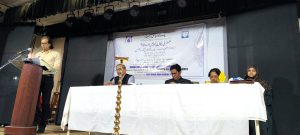
Delivering the keynote address, Dr. Umar Ghazali, Associate Professor at Hooghly Mohsin College, shed light on lesser-known dimensions of Bengal’s Urdu short story tradition. Beginning with the early twentieth century, he explained how women writers took up the pen during a time of intense social restrictions. Referring to the era of Begum Ruqeeya Sakhawat Hossain and her contemporaries, he emphasized that their writings not only nurtured feminist consciousness but also provided Urdu fiction with a new intellectual foundation. Tracing different phases of Bengal’s literary history, he outlined the journey from traditional domestic storytelling to symbolic and abstract modes of expression. Discussing contemporary trends, he noted that today’s writers are no longer confined to “women’s issues” alone; instead, they engage with global politics, environmental concerns, and existential dilemmas. He stressed that the linguistic flavor and cultural diversity contributed by Women Short Story Writers of Bengal demand far more extensive research.
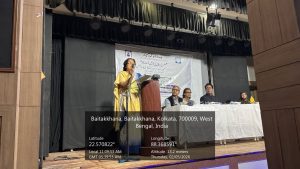
Dr. Afroza Khatoon, in her address, paid tribute to towering figures such as Begum Ruqeeya Sakhawat and Ashapurna Devi. She described Begum Ruqeeya’s educational and social reform efforts and Ashapurna Devi’s gender-conscious writings as the foundation of feminist literature in Bengal. According to her, the intellectual legacy of these pioneers continues to inspire younger generations of women writers to explore modern themes with confidence. Dr. Rayees Ahmad was the moderator of this inaugural session.
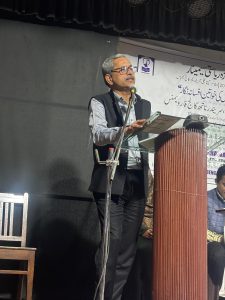
The first academic session was chaired by Dr. Nayeem Anis, Associate Professor at Calcutta Girls’ College, with Dr. Nuzhat Zahra conducting the proceedings. Research papers were presented by Dr. Shehnawaz Alam (Islampur College), Dr. Sufia Shireen (Surendranath Evening College), Dr. Sabiha Tazeen (Bangabasi Morning College), Dr. Mohammad Farooque, and research scholar Afaque Haider.
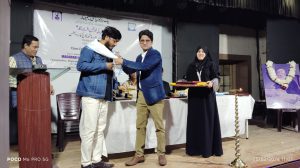
In his presidential remarks, Dr. Nayeem Anis appreciated the scholarly rigor of the presenters. While commending Dr. Mohammad Farooque’s paper for its focus on historical aesthetics, he suggested incorporating discussions on the “aesthetic grandeur and beauty” found in contemporary women writers when the work is published as a book. He expressed concern over the tendency to marginalize significant writers due to restrictive labels, citing Shahnaz Nabi as an example of quality outweighing quantity. He urged scholars to critically engage with post-1970, post-1990, and twenty-first-century women writers.
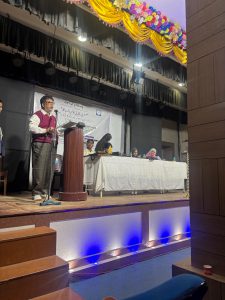
The second session was presided over by Dr. Syeed Irfan Ali Naqvi, Head of the Urdu Department at Khidderpore College, with Dr. Mohammad Farooq as the moderator. Speakers included Ms. Sheereen Zafar (Calcutta Girls’ College), Ms. Nikhat Jahan, Faizan Alam, and Mohammad Afsar. In his presidential address, Dr. Naqvi asserted that women short story writers have not indulged in mere emotionalism; instead, they have courageously portrayed burning social issues and the complexities of human relationships. He emphasized that within Bengal’s unique cultural context, feminist fiction functions not only as literature but also as a living social document. He further advised the department to encourage female students to actively engage in writing and presenting research papers.
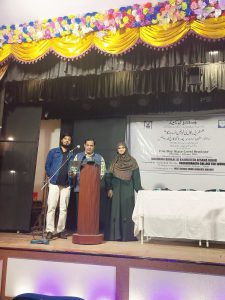
The seminar concluded with a formal luncheon. In the closing moments, Dr. Mohammad Farooque expressed heartfelt thanks to all guests, paper presenters, participants, and the West Bengal Urdu Academy. He also acknowledged the tireless efforts of Seminar Coordinators Dr. Nuzhat Zahra, Dr. Rayees Ahmad, and Afaque Haider, whose dedication ensured the seminar’s success. This impactful academic gathering has infused fresh energy into Bengal’s Urdu literary circles and opened new avenues for discussion on feminist literature.