
Backlog in West Bengal’s special intensive revision of electoral rolls has exposed severe administrative delays, risking voter exclusion ahead of elections and raising serious questions about the Election Commission’s capacity to deliver on time.
Qalam Times News Network
Kolkata | January 18, 2026
Backlog : As deadlines close in, administrative delays and rising unrest threaten to leave millions of voters unheard
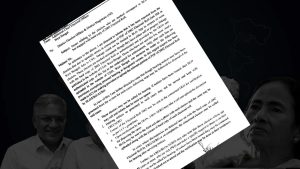
Backlog is now the single word that best captures the state of West Bengal’s Special Intensive Revision (SIR) of electoral rolls. Launched in mid-December after the publication of draft rolls, the exercise was meant to verify voters and correct errors before the upcoming elections. Instead, halfway through the allotted timeline, official data from the Election Commission of India (ECI) reveals a process struggling to even get off the ground.
The backlog is stark when viewed through the ECI’s own progress figures. As of January 16, only 49.6% of the required hearing notices had been generated. In simple terms, half the work had not begun even on paper. Among the notices that were generated, just 47.7% were actually served to voters. That leaves nearly one in two eligible individuals unaware that they are expected to appear before election officials to safeguard their voting rights.
The problems compound further at the final stage. Of the notices that were successfully served, only 33.7% resulted in actual hearings. When all three bottlenecks are taken together—generation, service, and hearings—the overall completion rate stands at a mere 7.8%. Out of every 100 hearings the system says are required, fewer than eight have actually happened.
At this stage, doubts about the ECI’s efficiency are no longer political accusations; they are mathematical facts. With the February 14 deadline looming, the commission is operating at roughly 31,000 hearings per day. At that pace, officials estimate it would take nearly 450 days to complete the exercise. Only 30 days remain. Meeting the deadline would require an immediate acceleration of nearly 1,400%—a fourteenfold increase in daily output.
The consequences of this delay are not abstract. Unresolved cases could push millions of voters into legal uncertainty, potentially stripping them of their right to vote. The rigid election calendar leaves little room for error, and any unfinished hearings risk translating directly into voter exclusion.
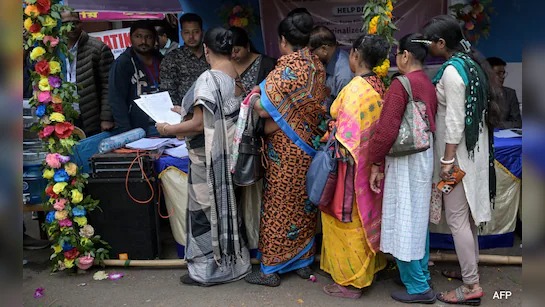
On the ground, the strain is already visible. Booth Level Officers (BLOs), tasked with executing the process, are facing what many describe as impossible targets and constantly shifting instructions. In districts such as Malda, North 24 Parganas, and Murshidabad, BLOs have cited physical exhaustion and growing hostility from the public. This has triggered mass resignations and indefinite “pen-down” strikes, signalling a breakdown from the bottom up.
Delays in generating notices also compress the time available to voters. Many may receive communications with only a few days to respond, leaving little opportunity to collect documents or travel to hearing centres. The burden falls hardest on those with the least flexibility—daily-wage workers, the elderly, people with limited mobility, and families living far from administrative hubs.
The crisis is uneven across the state, creating pockets of heightened risk. Murshidabad stands out as the most acute example. Despite a “No Mapping” rate of just 2%—meaning 98% of electors could link their names to the 2002 voter list—over 30% of voters have been flagged for hearings due to “logical discrepancies” identified by the ECI using 2011 Census data. Shockingly, 77% of notices in the district have not even been generated yet.
Malda mirrors this pattern. With a negligible 1.88% No Mapping rate, more than 28% of its electorate is under scrutiny, while only 2.62% of hearings have been completed. Hundreds of thousands of notices may be issued at the last moment, effectively denying voters a fair chance to respond. Minority communities, in particular, face a disproportionate risk of being removed from the rolls due to procedural lapses rather than substantive verification.
Adding to public mistrust are regulatory reversals, such as the ECI’s recent decision to reject the Madhyamik (secondary examination) admit card as a valid document for the SIR. These shifts have fuelled suspicion and anger, leading to protests and sporadic violence across districts, organised by both the Trinamool Congress and Left parties.
The unfolding situation echoes earlier large-scale policy shocks. Demonetisation in 2016 promised reform but delivered chaos. The sudden nationwide lockdown in 2020 triggered a migrant crisis. The NRC in Assam consumed Rs 1,600 crore, took five years, excluded 19 lakh people, and was later disowned by its political backers. Each initiative followed a familiar pattern: ambitious announcements, inadequate preparation, and citizens left to absorb the fallout.
The SIR in West Bengal now risks joining that list. A massive bureaucratic exercise, launched without sufficient infrastructure, is faltering under its own weight. As deadlines close in, the fundamental right to vote hangs in the balance—threatened not by fraud, but by delay.