

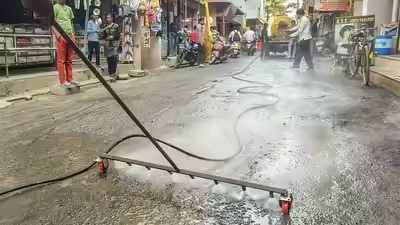
Water Divide highlights India’s growing piped water crisis as contaminated municipal supply in Indore exposes serious gaps in water quality monitoring, public health safeguards, and infrastructure management.
Qalam Times News Network
Indore | January 2, 2026
Water Divide :Contaminated municipal supply raises urgent questions on water quality monitoring
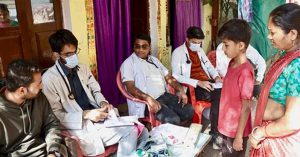
Water Divide has once again come into sharp focus after a tragic incident in Indore, Madhya Pradesh, where contaminated municipal water is suspected to have caused multiple deaths and widespread illness. At least four people, including an infant, have officially lost their lives, while more than 2,000 residents have reported falling sick. Over 200 patients are currently hospitalised, with several in intensive care. The scale of the crisis has shaken public confidence, especially because Indore has repeatedly been ranked among India’s cleanest cities for its waste management and sanitation efforts.

The unfolding tragedy exposes a deeper Water Divide between access and safety. Municipal water supply is widely assumed to be safe, yet this incident shows how fragile that assumption can be when monitoring fails. Authorities have attributed the contamination to delays in laying a new pipeline, but such explanations offer little comfort to affected families. A probe committee has been announced, but the fact remains that early detection could have prevented a health emergency of this magnitude. This is not an isolated case either. Just weeks earlier, students at a university campus near Bhopal protested after polluted water led to a spike in jaundice cases.
Despite flagship programmes like the Swachh Bharat Mission and the Jal Jeevan Mission, unsafe drinking water continues to threaten lives. National survey data suggest that a vast majority of households now rely on “improved” water sources, yet the Indore episode highlights how infrastructure alone is not enough. What matters is consistent quality testing at the delivery point, transparency in reporting contamination, and swift public alerts when risks emerge.
India’s growing population already carries a heavy burden of water-borne diseases. Adding unsafe piped water to the mix only deepens the crisis. States must urgently audit water supply systems for chemical and sewage contamination, repair ageing pipelines, and strictly enforce environmental and public health regulations. Awareness campaigns should also inform citizens about early warning signs and safe alternatives during emergencies.
Indore’s experience should serve as a national warning. Unless cities address the Water Divide between supply and safety, similar tragedies may repeat elsewhere — with devastating consequences.