
URDU revival in Bengal: The historic movement led by Shamim Ahmed, the Muslim Institute Hall gathering, twelve years of silence, and a renewed call to restore Urdu’s constitutional rights.
URDU and the Long Struggle on Bengal’s Political Terrain
Qalam Times News Network
Kolkata | 24, February 2026
URDU has endured a long and testing journey on the कठोर political soil of Bengal. The history of nurturing this linguistic sapling is as prolonged as it is demanding. A closer look at the movement’s ups and downs reveals that when the demand to grant Urdu the status of second official language was first raised in 1980, a cautious game of compromise began between the influential circles of Anjuman Taraqqi-e-Urdu and the government. That political maneuvering stretched over three decades, offering Urdu speakers little more than promises and distant hopes.
Former Chief Minister Jyoti Basu’s firm stance—that a language spoken by three percent of the population could not be imposed on others—and Professor Haider Hasan Kazmi’s courageous rebuttal form an important chapter in the history of URDU. Yet the bitter truth remains that the outcome of that struggle was a lifeless notification restricted to a few specific areas.
Sacrifice, Compromise, and a Turning Point
The story of the Urdu movement in Bengal is marked by sacrifice on one side and indifference on the other. For a long period, its leadership remained in the hands of an Urdu elite that confined it to drawing-room discussions, ineffective seminars, and conventional mushairas rather than taking it to the corridors of power.
At a time when sincere Urdu supporters were wandering in deep frustration and Professor Kazmi’s popular wave had been crushed under political compromises, a new figure emerged on Bengal’s horizon around 2005. That figure was Shamim Ahmed—a name that would go on to reshape the direction, temperament, and destiny of the movement. His arrival proved to be a defining milestone in Bengal’s linguistic history.
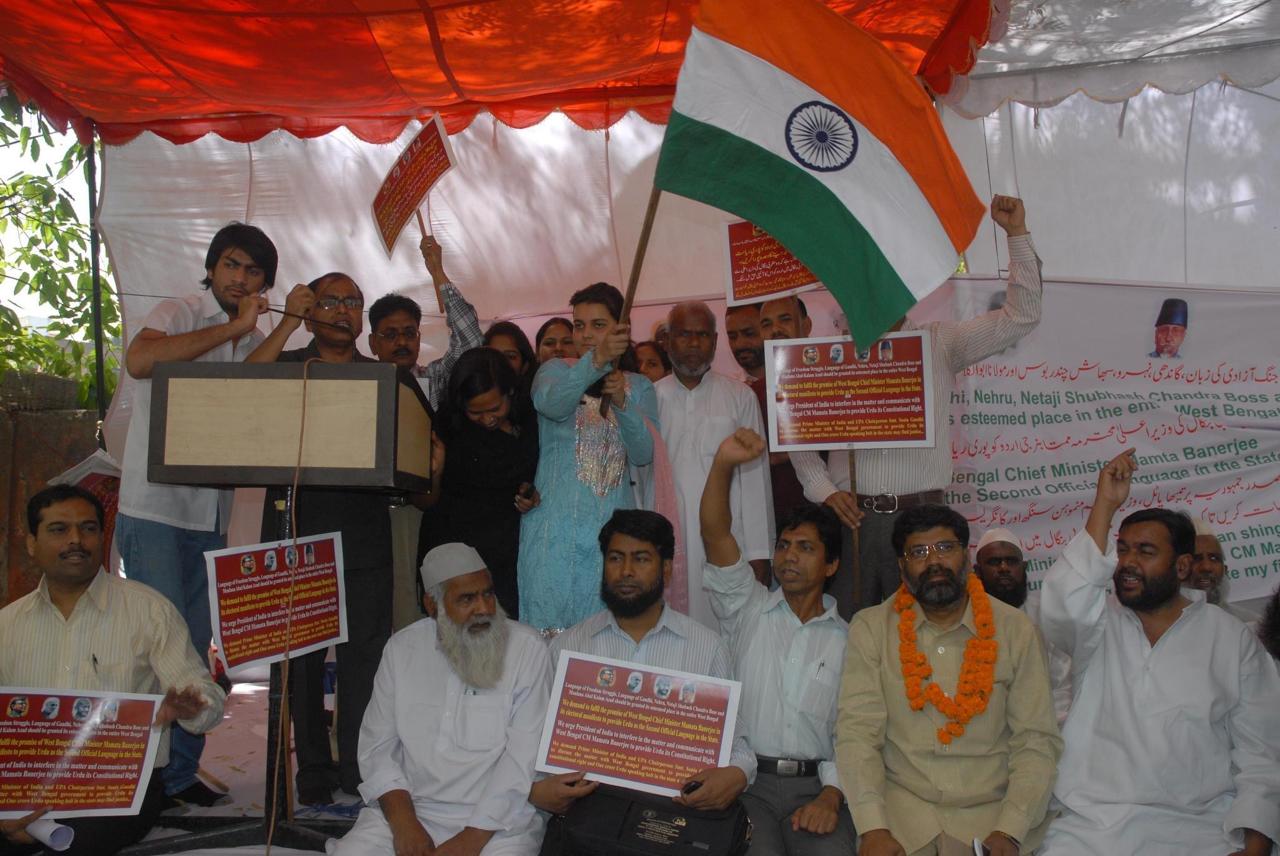
Shamim Ahmed’s greatest distinction was that he did not treat Urdu merely as a means of livelihood. He framed it as an issue of mother-tongue identity and collective dignity. When self-proclaimed champions of the language were busy appeasing the government, he launched a historic grassroots movement under the shadow of the Gandhi statue—an initiative unprecedented in Bengal. The movement passed through many trials, yet its resolve never wavered.
The Historic Muslim Institute Hall Gathering
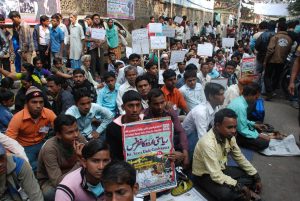
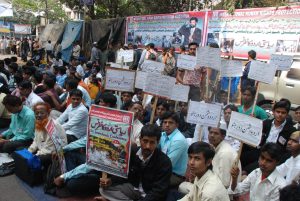
The most radiant and electrifying chapter of this movement was the historic program at Muslim Institute Hall—an event I personally witnessed. I saw a scene that has rarely been repeated in the history of Urdu.
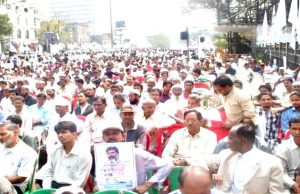
In the biting cold of December, Urdu supporters began arriving in large numbers as early as 9 a.m. By evening, the gathering had turned into a sea of humanity. Contemporary Urdu, Hindi, and English newspapers—whose photographs still testify to that great struggle—reported crowds ranging from 30,000 to 40,000 people. The entire stretch of Rafi Ahmed Kidwai Road was filled with people who had come without food or water, responding solely to the call of their language.
It was this public force that compelled the government to yield. The bill was passed in the Assembly, and after the Governor’s assent, Urdu secured its constitutional right in Bengal.
Achievement Without Safeguard
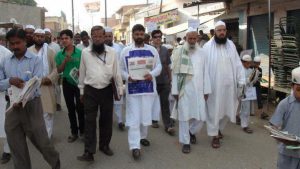
The tragedy of the Urdu movement in Bengal is that while milestones were achieved, their protection was neglected. Shamim Ahmed had united scattered forces with passion and sincerity, achieving the historic passage of the bill. Yet his sudden silence afterward proved devastating for the cause of Urdu.
Regrettably, neither intellectual circles nor the general public seriously reflected on the reasons behind his withdrawal. No one truly asked what circumstances halted such a powerful movement.
Today’s landscape is a lament of collective apathy. Whether it is International Mother Language Day or any other linguistic event, activities have been reduced to mere formalities. The painful reality is this: when a sincere leader sacrifices everything to transform a community’s destiny and is then ignored, decline becomes inevitable. Many in the Urdu community drifted toward superficial leadership and short-term gains, and as a result, the dignity of Urdu has steadily eroded before our eyes.
A Movement at Risk
If this attitude persists, no sincere individual in the future will find the courage to dedicate years of strength and ability to the community. When a nation fails to recognize its true well-wishers, movements lose their vitality. The current fragile state of Urdu reflects this ideological betrayal, which has pushed a living mission into stagnation.
Despite legal recognition and the Assembly’s approval, Urdu today appears to be in a state of decline. Schools stand neglected, teachers are insufficient, Urdu applications in government offices often go unheard, and the younger generation is increasingly disconnected from the language. The rights achieved on paper have not been fully implemented in public life.
The Call for Revival
In these dark moments, the need to revive Shamim Ahmed’s Urdu movement feels more urgent than ever. Bengal once again requires the same passion, sincerity, and unwavering leadership that brought thousands to Muslim Institute Hall in 2009, where people stood firm all day for their rights.
The vacuum created by Shamim Ahmed’s silence cannot be filled with compromise-driven politics. It demands the same revolutionary spirit that steps out of homes and onto the streets in pursuit of justice. Seminars and resolutions alone will not suffice. Public awareness, constitutional assertion, and fearless organization are essential.
Time is clearly signaling that Urdu’s dignity can only be restored if a sincere leader like Shamim Ahmed once again takes charge of the caravan and ensures that the rights written in law are realized in everyday life.
A Ray of Hope After Twelve Years
Amid this deep gloom, a recent development has rekindled hope. After twelve years, Shamim Ahmed’s public interview has emerged as nothing short of remarkable. His conversation, aired through Insaf News, has reignited passion among true admirers of Urdu.
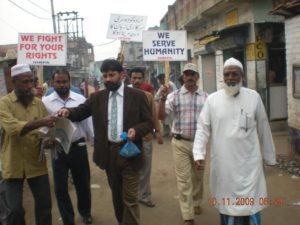
The echo of his voice after a long silence suggests that the embers beneath the ashes are still alive. This interview is not merely a dialogue; it answers long-standing questions and signals a new awakening eagerly awaited by the Urdu community.
Now, the responsibility rests with the Urdu community to break free from indifference. If unity is not achieved behind sincere leadership, history will not forgive this lapse. The revival of this movement is essential to ensure that the rights secured on paper are fully realized on the ground.