

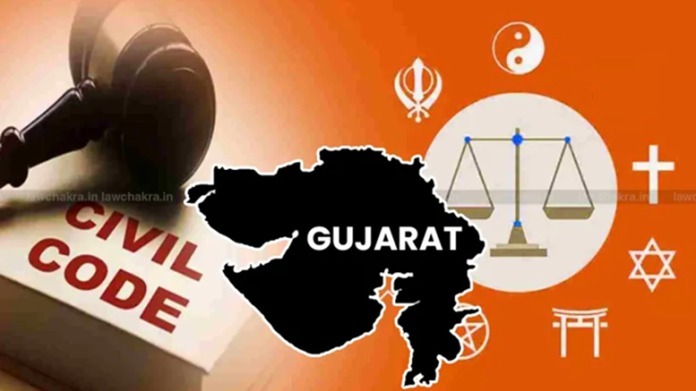
Uniform Civil Code in Gujarat sparks debate on equality, personal freedom, and state control as India tests its second UCC framework.
A step toward legal uniformity Uniform Civil Code or a deeper debate on rights and state control?
Qalam Times News Network
Gandhinagar, April 3, 2026
Uniform Civil Code has once again moved to the center of India’s legal and political discourse, this time with Gujarat stepping forward as the second state after Uttarakhand to adopt a draft framework. The move signals not just legislative ambition but also a broader ideological push—one that attempts to standardize personal laws across communities while leaving several constitutional concerns unresolved.
The Gujarat assembly’s passage of the Uniform Civil Code Bill, 2026, marks a decisive shift in how the state approaches issues like marriage, divorce, inheritance, and live-in relationships. By removing religious distinctions in these areas, the law claims to advance equality, especially for women. Yet, Uniform Civil Code as a concept continues to stir unease, particularly when its promise of fairness collides with fears of state overreach into private lives.
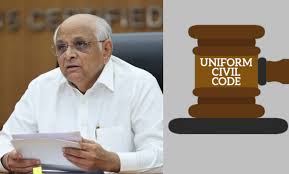
At one level, the bill introduces reforms that many have long advocated. It bans polygamy, ensures equal inheritance rights regardless of gender, and recognizes children born out of live-in relationships. These provisions directly challenge certain aspects of religious personal laws, including those under Sharia, and aim to create a uniform legal identity for citizens. However, the selective exclusion of Scheduled Tribes raises a fundamental question: how “uniform” can a code truly be if it leaves out entire communities?
Another contentious aspect lies in the regulation of live-in relationships. Gujarat’s version goes further than Uttarakhand’s earlier model by requiring formal registration of such relationships. While the state frames this as a record-keeping measure, critics see it as an intrusion into personal liberty. The concern is not merely theoretical—mandatory disclosures could open doors to surveillance, social pressure, or even misuse by authorities.
Political reactions have been swift and varied. The All India Majlis-e-Ittehadul Muslimeen has openly opposed the bill, calling it divisive. The Congress has taken a more cautious stance, questioning both the timing and intent. Within civil society, voices are equally divided. Some activists acknowledge that the law empowers women by addressing issues like polygamy and unequal inheritance. Others warn that replacing religious authority with state control may simply shift, rather than solve, the problem.
Legal experts, too, have flagged practical challenges. The procedural complexity of the law—especially around registration and compliance—could make it vulnerable to misuse. There is also concern about its extraterritorial reach, where even residents living outside Gujarat might be required to adhere to its provisions. Such clauses blur the line between governance and overregulation.
Perhaps the most striking contradiction lies in the coexistence of progressive intent and restrictive mechanisms. While the bill seeks to modernize personal laws, parallel amendments—such as those affecting marriage registration—could inadvertently reinforce older, more conservative controls. This duality reflects a deeper tension within the Uniform Civil Code debate: the balance between reform and freedom.
What Gujarat has done is not merely pass a law—it has reopened a national conversation. The idea of a Uniform Civil Code has long been part of India’s constitutional vision, yet its implementation remains fraught with complexity. The challenge is not just to unify laws, but to do so without undermining the diversity and personal freedoms that define the country.
As this “second laboratory” begins its experiment, the real test will not be in legislative success, but in how the law stands up to judicial scrutiny and public acceptance. Because in a democracy as layered as India, uniformity is not just about law—it is about trust.