

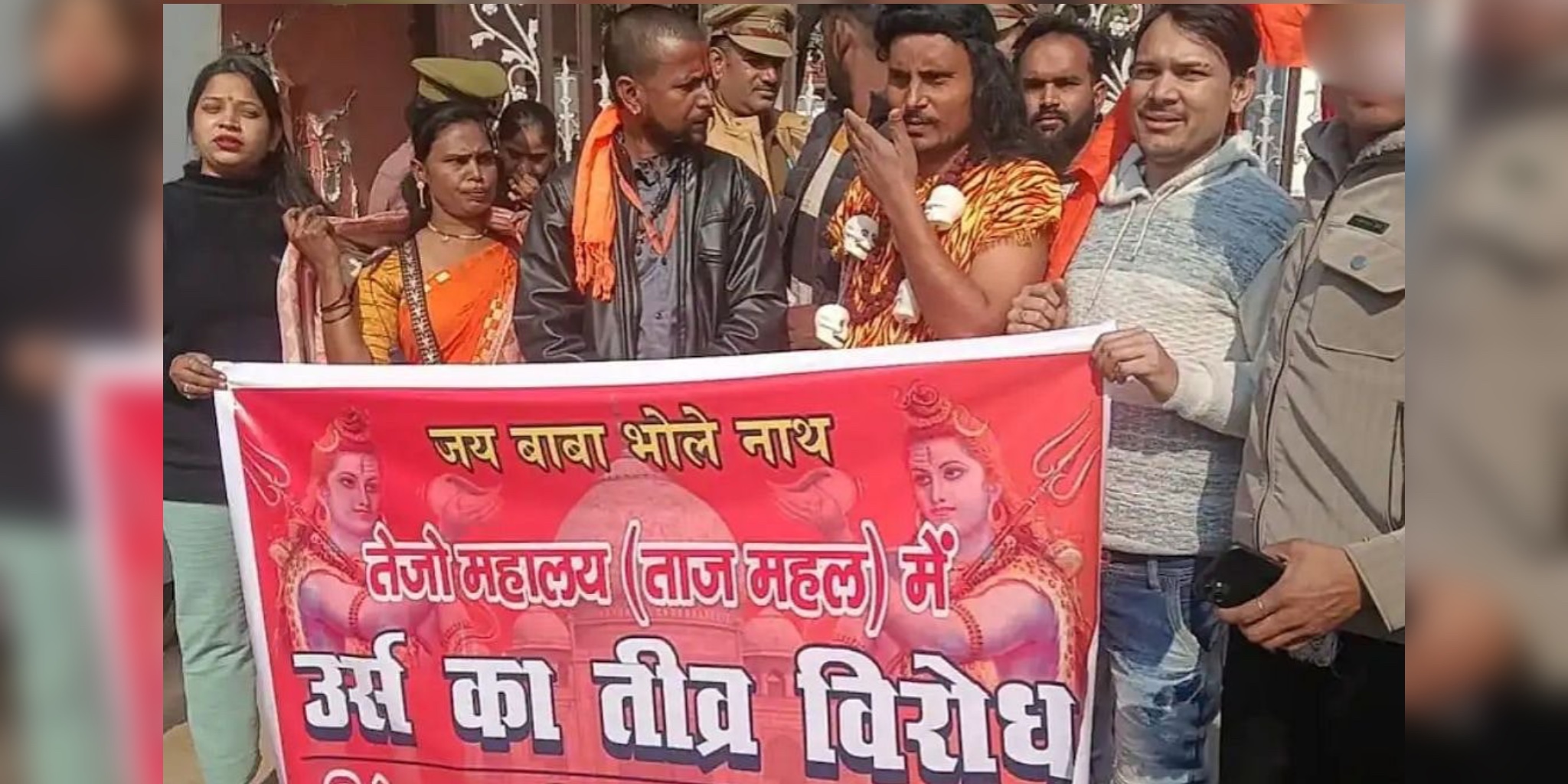
Taj Mahal Urs Row deepens as Hindu Mahasabha demands a ban on Shah Jahan’s Urs at the Taj Mahal, reigniting debate over history, religion, and shared cultural heritage in Agra.
By Qalam Times News Network
Agra, Uttar Pradesh | January 13, 2026
Taj Mahal Urs Row : Demand to Cancel Traditional Urs Triggers Fresh Debate Over Monument’s Religious Identity
Taj Mahal Urs Row has resurfaced after the Akhil Bharatiya Hindu Mahasabha submitted a memorandum to the Agra district administration, demanding the cancellation of the annual Urs marking the death anniversary of Mughal emperor Shah Jahan at the Taj Mahal.
The organisation has called for an immediate halt to the three-day observance scheduled to begin on January 15, arguing that Islamic rituals should not be permitted at the monument. The Taj Mahal Urs Row has once again brought the centuries-old structure into the centre of a political and cultural dispute.
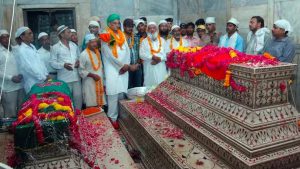
The Urs, a long-established Muslim tradition, has been observed for decades at the Taj Mahal and draws devotees, local residents, and visitors from across the country. During the observance, entry to the monument is traditionally kept free, allowing thousands to participate in prayers and rituals, including the ceremonial offering of a chadar at Shah Jahan’s tomb.
Leaders of the Hindu Mahasabha claim that the Taj Mahal is not a Mughal monument but an ancient Hindu structure they refer to as “Tejomahalaya.” One of the group’s representatives stated that no Islamic event should be allowed at the site, asserting that only Hindu symbols and rituals should be associated with the monument.
To support their demand, the organisation cited responses received under the Right to Information Act and referred to various court documents. They also pointed to a Supreme Court directive that restricts Friday prayers at the Taj Mahal to residents of the nearby Tajganj area, arguing that similar limitations should apply to the Urs.
A related petition, registered as case number 63/2024, is currently pending before the Agra Civil Court (Senior Division), seeking a formal ban on the Urs. The next hearing in the matter is scheduled for January 15, the same day the observance is set to begin. Mahasabha leaders warned that they would escalate protests if the administration does not act on their demands.
Muslim leaders, historians, and civil society voices have strongly criticised the move, describing it as an attempt to undermine Muslim heritage and erase long-standing cultural practices linked to the monument. A cleric from Tajganj said the Urs is part of the Taj Mahal’s living history and not a recent innovation. Local residents also expressed anxiety, saying repeated objections to Islamic rituals have created an atmosphere of fear and uncertainty within the Muslim community.
The claim that the Taj Mahal is “Tejomahalaya” is not new and has been repeatedly rejected by historians, archaeologists, and courts in the past. Experts maintain that there is no credible historical evidence to support the theory.
While the Agra district administration has not issued an official statement on the latest demand, security arrangements around the Taj Mahal have reportedly been strengthened to maintain law and order during the scheduled dates of the Urs.
The renewed Taj Mahal Urs Row reflects broader tensions over how India’s cultural and historical landmarks are interpreted—whether as shared heritage sites or as spaces claimed exclusively by one religious identity.
— With inputs from agencies